
Nepal on Fire: Social Media Ban or Silent Regime Change?
“Kathmandu’s biggest protest wave in years has left 14 dead and hundreds injured after a sudden ban on Facebook, Instagram, and TikTok. But is this really just a youth revolt over apps, or the front line of a deeper battle involving corruption, hidden players, and fears of regime change?”

Paromita Das
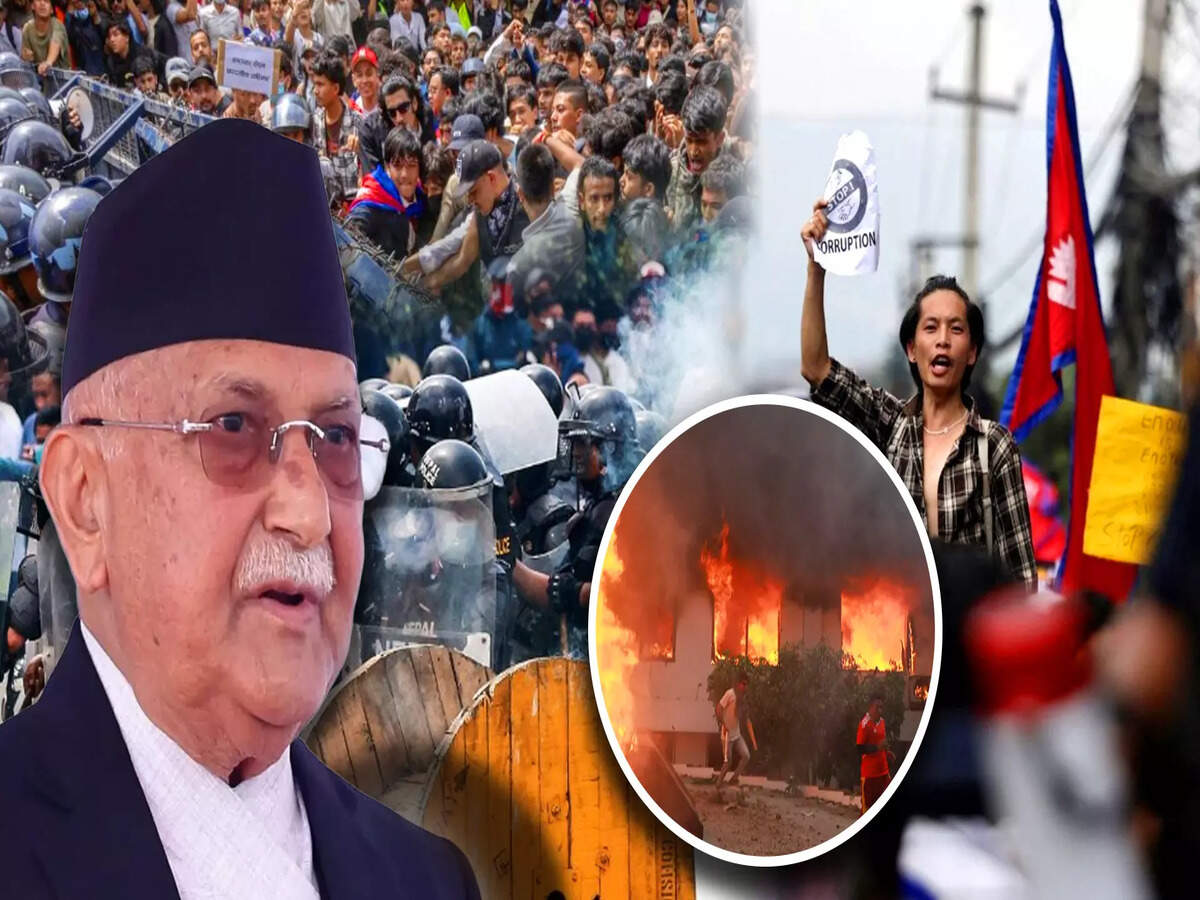
New Delhi, 10th September: In Kathmandu, the streets are burning. Water cannons roar, army boots march through smoke-filled alleys, and slogans echo against barricades. Fourteen people are already dead, over a hundred lie injured, and the Himalayan republic finds itself at the epicenter of its biggest protest wave in years. Officially, this unrest began after the government banned popular social media platforms like Facebook, Instagram, and TikTok.
But here’s the larger question: can the shutting down of apps alone push a country into such violent chaos? Or is the ban a smokescreen for something much deeper—a hidden battle over power, legitimacy, and possibly even regime change?
The Fire Beyond Social Media

At first glance, the narrative seems simple. Gen-Z protesters, angered by the sudden clampdown on social media, took to the streets. Their frustration was understandable: Nepal has 13.5 million Facebook users, nearly 4 million Instagram users, and countless livelihoods linked to online platforms. A blackout was bound to trigger resentment.
But what happened next was unprecedented. Demonstrations escalated rapidly into violent clashes. Protesters stormed restricted zones near the Federal Parliament, breaking curfew, armed with sticks and chants. Police retaliated with tear gas, rubber bullets, and water cannons.
Observers have noted something unusual: Nepal has banned social media before. TikTok, for instance, was blocked for nine months last year. Yet, those bans never triggered bloodshed of this magnitude. Why then is this protest wave so explosive?
The Shadow of the Deep State

South Asia is no stranger to sudden uprisings that later reveal hidden geopolitical games. Only last year, Bangladesh collapsed into chaos during what many analysts described as a “regime change operation,” allegedly facilitated by international networks, including the US Deep State in collaboration with Pakistan’s ISI. Islamist radicals filled the vacuum, leaving the country destabilized.
With Nepal’s streets now ablaze, the parallels are hard to ignore. Could the Himalayan republic be the next domino in a dangerous pattern? After Afghanistan’s collapse, Sri Lanka’s crisis, and Bangladesh’s turmoil, is Nepal the newest target in a broader strategy of destabilization?
And if so, who stands to gain from weakening Prime Minister K. P. Sharma Oli’s government—global powers wary of Nepal’s China tilt, regional rivals watching from across the border, or local factions waiting to exploit chaos?
Oli’s Dilemma: National Dignity or Political Survival?

Prime Minister Oli has framed the social media ban as a matter of national sovereignty. According to him, foreign tech giants have long refused Nepal’s demand to register under local laws, pay taxes, and appoint grievance officers. In his words, this is about “national dignity, not suppression.”
Yet timing matters. The crackdown comes just as anti-corruption anger is surging and discontent with governance is growing. Critics argue that Oli’s reasoning, while legitimate on paper, masks a political maneuver aimed at silencing online dissent. For millions of young Nepalis whose businesses, education, and social lives depend on these platforms, the ban feels less like dignity and more like suppression.
This dual narrative—Oli’s defense versus public outrage—creates fertile ground for both domestic opposition and foreign meddling.
Protests or Proxy War?

One of the more telling moments came when a young protest leader urged demonstrators to pull back, warning that “vested groups” had infiltrated the movement. His words raise chilling questions: who are these groups? What is their agenda?
The protests, which began with demands to restore social media access, quickly expanded into broader chants against corruption, authoritarianism, and the Oli regime itself. The shift suggests that frustration over apps may only be the spark, not the fuel. Could the real fire be geopolitical interests, with outside actors nudging the unrest into something larger—a proxy war played out on Nepal’s streets?
The regional script looks eerily familiar: popular anger weaponized, governments delegitimized, and chaos leveraged by unseen players. Nepal appears to be following this trajectory.
Nepal at a Dangerous Crossroads

With fourteen lives lost and army deployment already in place, Nepal stands at a perilous juncture. On the surface, this is a youth uprising for digital freedom. Beneath, however, lies a tangled web of corruption, political disillusionment, and possible foreign interference.
Is this truly a spontaneous rebellion of a restless generation, or is Nepal being dragged into a Bangladesh-style regime-change experiment? Is the social media ban a shield for “national dignity,” or a pretext for suppressing dissent during a larger internal battle?
The Battle for Nepal’s Future

The reality may lie somewhere in between. It is clear that the anger of young Nepalis is genuine, rooted in unemployment, lack of opportunity, and frustration with political elites. But it is equally clear that the intensity and coordination of the protests hint at forces beyond ordinary discontent.
Whether these forces are local political rivals, foreign powers, or both, the outcome could reshape Nepal’s fragile democracy. If Oli doubles down, citing sovereignty, he risks further alienating the youth. If he relents, he risks looking weak at a time when regional powers are circling.
Beyond Apps, Toward Stability
What is happening in Kathmandu is not just about Facebook, Instagram, or TikTok. It is about Nepal’s political survival in a region increasingly defined by volatility. The ban may have triggered the protests, but the real battle is about sovereignty, stability, and the future direction of Nepal’s democracy.
Nepal today stands at a dangerous crossroads. If this unrest spirals into a proxy conflict, it could destabilize not just the Himalayan republic but the wider South Asian region. The deaths of 14 citizens should be a wake-up call—not just to Oli’s government, but to those who might seek to exploit Nepal’s fragility for their own agendas.
For now, one thing is certain: what burns in Kathmandu is more than anger over apps. It is a struggle for Nepal’s very future.
