

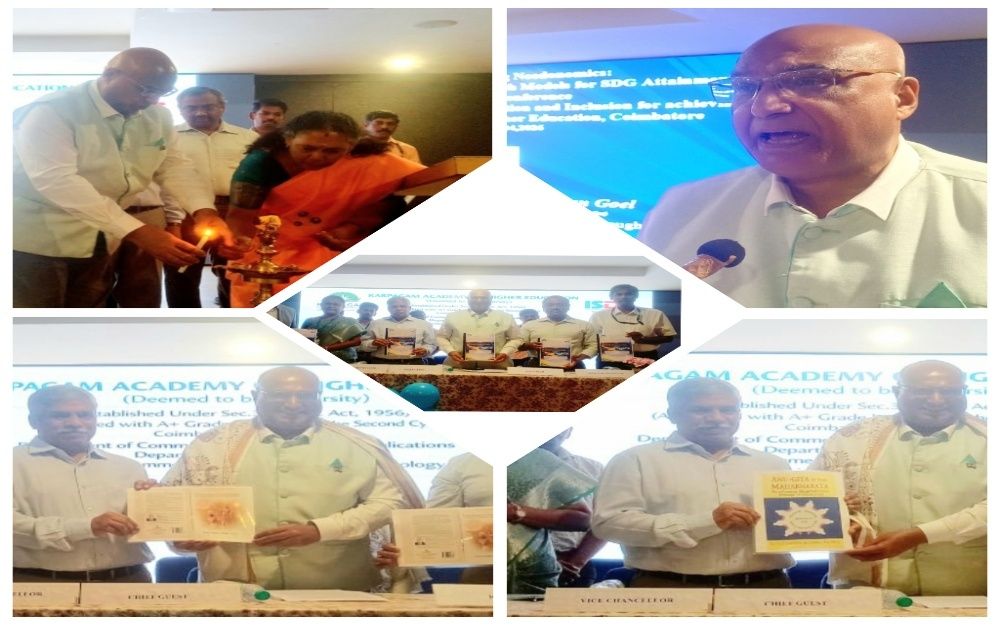
Coimbatore, March 4- Prof. Madan Mohan Goel, Propounder Needonomics School of Thought and Former Vice-Chancellor (Thrice) and superannuated Professor Kurukshetra University , delivered the keynote address at the National Conference on “Reimagining Economic Growth: Innovation and Inclusion for Achieving SDGs” organized by Karpagam Academy of Higher Education in association with International Skill Development Corporation.
The programme commenced with a welcome address by Prof. V. Ragavi, Dean – Arts, Science, Commerce and Management. Vice-Chancellor Prof. Dr. S. Ravi presided over the function. Conference Convener Dr. R. Velmurugan introduced the keynote speaker Prof M.M. Goel, and Co-Convener Dr. J. Sudarvel proposed the vote of thanks.
Prof. Goel’s address, titled “Operationalizing Needonomics: Innovation and Inclusive Growth Models for SDG Attainment,” emphasized the urgent need for a paradigmatic shift in global development thinking
He observed that although economic growth has lifted millions out of poverty, it has simultaneously deepened inequalities, strained ecological systems, normalized unsustainable consumption patterns, and left the visionary Sustainable Development Goals (SDGs) progressing unevenly and slowly worldwide.
Prof. Goel proposed Needonomics (Economics of Needs) as a transformative alternative that reorients economic systems from profit-maximization to ethical need-fulfillment, ecological balance, and intergenerational justice.
He stressed that operationalizing Needonomics requires translating its moral philosophy into measurable development frameworks embedded within innovation systems and inclusive growth models.
Prof Goel argued that innovation must serve humanity’s essential requirements rather than unchecked market expansion, while inclusive growth must ensure that development dividends reach the last mile. Such integration, he noted, creates a synergistic pathway where prosperity coexists with equity and sustainability.
Prof. Goel concluded that reimagining growth through Needonomics is indispensable for building a just, inclusive, and sustainable global future with Need Satisfaction Index (NSI) as an alternative composite development index.
