
Needonomics for a Stressful World: Reflections on Living a Stressful Life with Joy by Dr. Dewakar Goel
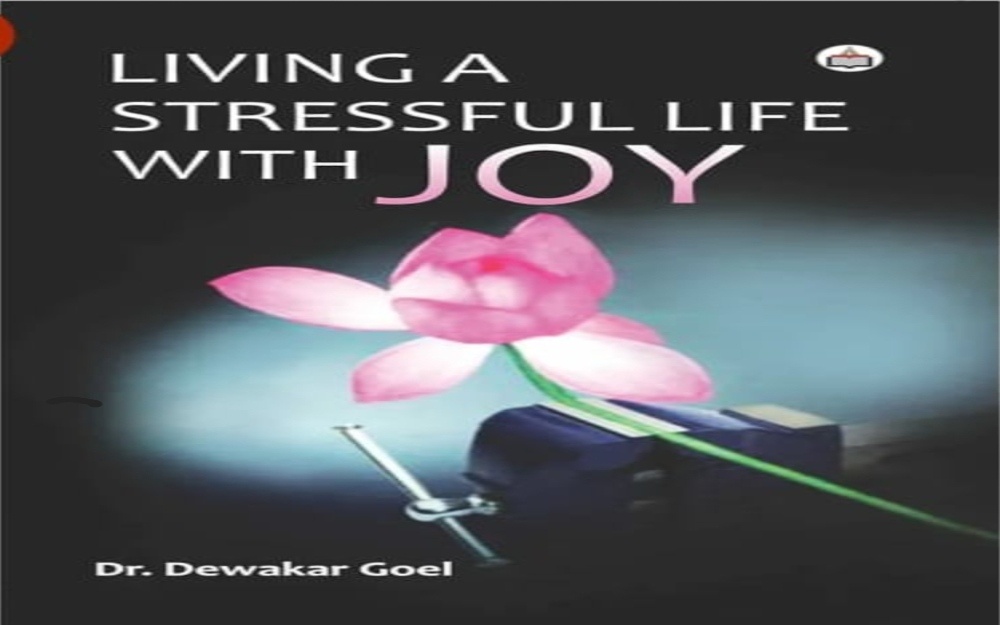
Book Review - Living a Stressful Life with Joy by Dr Dewakar Goel ISBN: 978-93-5529-511-8, ₹297, 230 pages Authors Press Printed in India at Thomson Press (India) Limited (2023)

Reviewer: Prof. M. M. Goel, Former Vice-Chancellor (Thrice) and Propounder, Needonomics School of Thought
Stress has become one of the defining conditions of modern life. In an era marked by rising aspirations, competitive pressures, and constant change, individuals across professions experience psychological and emotional strain in varying degrees.
The book addresses this universal challenge with a practical and experiential approach. When examined through the lens of the Needonomics School of Thought (NST), a Kurukshetra-based think tank propounded by the reviewer, the book becomes even more meaningful because it implicitly affirms a key insight: stress largely arises from greed-driven expectations, while joy emerges when life is guided by needs, balance, and self-awareness.
The book is structured into nine chapters and reflects the author’s long engagement with the subject of stress, both as a practitioner and as a researcher in Applied Psychology. The author’s practical orientation is evident from the beginning, as he combines personal observations, real-life experiences, and analytical insights to explore the causes, manifestations, and remedies of stress.
1 Dreams, Aspirations and Reality
The opening chapter, “Dreams Do Come True,” begins with a real-life incident to inspire readers to believe in the possibility of realizing their aspirations. In Needonomics terms, dreams are not discouraged; rather, they must be aligned with realistic needs rather than limitless greed. When dreams are grounded in purpose and moderation, they become a source of motivation rather than stress.
The chapter reminds readers that aspiration is an essential driver of human progress, but excessive expectations without a realistic understanding of circumstances often create psychological pressure. The Needonomics framework suggests that when aspirations exceed genuine needs, stress naturally emerges.
2 Understanding Stress: History and Symptoms
In Chapter Two, the author explains the concept of stress by tracing its historical evolution and highlighting its psychological and physical manifestations. Stress, according to the author, is essentially a game between expectations and reality. When reality fails to match expectations, tension arises.
This observation aligns closely with Needonomics philosophy, which distinguishes between need-based expectations and greed-based expectations. When individuals pursue more than what is necessary for meaningful living, disappointment becomes inevitable. The author’s discussion of symptoms-ranging from emotional disturbances to behavioral changes helps readers identify stress in its early stages.
The chapter also highlights the importance of body language and mental states as indicators of stress, reminding readers that unfulfilled desires often manifest physically and emotionally.
3 Causes of Stress: Individual Responsibility
Chapter Three explores what makes people stressed. The author emphasizes that stress is always present in some form and that its symptoms must be observed carefully. He identifies several causes such as job pressures, ego conflicts, and personal priorities.
A particularly insightful point is the role of individuality and personal priorities in shaping stress levels. According to the author, people often become stressed because their priorities are misaligned with their capacities or circumstances.
From the Needonomics viewpoint, this chapter highlights the importance of self-regulation and value-based living. When individuals prioritize essential needs rather than socially imposed desires, many sources of stress naturally diminish.
4 Experiencing Stress and Its Consequences
Chapter Four discusses how stress is experienced and how it affects human behavior. Stress, the author notes, is often more psychological than logical, leading to emotional suffering and sometimes harmful coping mechanisms such as alcoholism.
This insight reinforces the Needonomics perspective that psychological imbalance arises when individuals pursue excessive material or social goals. The book reminds readers that stress is not merely an external phenomenon; it is also a result of internal conflicts and unrealistic expectations.
5 Measuring Stress: Self-Assessment and Awareness
One of the strengths of the book lies in Chapter Five, which focuses on measuring and analyzing stress. The author introduces questionnaires and self-assessment tools to help readers understand their stress levels and behavioral patterns.
The chapter encourages readers to reflect on several questions:
- What motivates them?
- How do they respond to difficult situations?
- What is their attitude toward others?
The emphasis on self-talk, leadership style, career expectations, and personality reflects the author’s psychological orientation. The inclusion of profession-specific analysis is particularly useful, as stress manifests differently depending on occupational contexts.
From a Needonomics perspective, such self-analysis is crucial because awareness of one’s needs, attitudes, and expectations is the first step toward reducing stress.
6 Remedies and Practical Solutions
Chapter Six is perhaps the most comprehensive section of the book, offering multiple ways to deal with stress. The author proposes practical strategies such as planning, action plans, meditation, positive thinking, and self-development.
Interestingly, the chapter explores a wide spectrum of remedies-from meditation and imagery to Ayurveda, yoga, acupressure, homeopathy, music, religion, and even architectural concepts like Feng Shui and Vastu Shastra.
While these approaches vary in scientific validation, the author’s intention is clear: stress management requires a holistic approach that integrates physical, psychological, and spiritual dimensions.
The Needonomics philosophy strongly resonates here. By emphasizing meditation, self-discipline, and moderation, the book implicitly supports the idea that contentment and balance are essential for reducing stress.
7 Sex as Cause and Remedy
Chapter Seven addresses the sensitive topic of sexuality as both a source and a remedy for stress. The author discusses issues ranging from romantic relationships to the social problems of sexual exploitation. NST treats sex as sacred and secret activity allowed in married life only.
The chapter also includes guidance for teenagers and parents, highlighting the importance of responsible attitudes toward sexuality. By treating this subject with openness, the author acknowledges an often overlooked dimension of psychological stress.
8 Stress Across Professions
A distinctive feature of the book is Chapter Eight, where the author analyzes stressors across eighteen professions including doctors, teachers, lawyers, politicians, police personnel, industrialists, students, and senior citizens.
This profession-specific analysis is valuable because stress varies according to the nature of work and responsibilities. For example, teachers face intellectual and emotional pressures, while police personnel encounter operational stress and risk.
The author’s effort to include categories such as lovers, prisoners, and senior citizens reflects an inclusive approach to understanding stress in diverse social contexts.
9 Stress in the Work-from-Home Era
The final chapter, “Managing Stress in Work from Home Scenario,” addresses the transformative impact of the COVID-19 pandemic. The pandemic, described as an unexpected catastrophe, reshaped work patterns and introduced new stressors related to technology, isolation, and uncertainty.
The author emphasizes the need for mindset change, technological adaptation, and emotional resilience in coping with post-pandemic realities. His suggestions for creating comfortable work environments and maintaining work-life balance remain highly relevant for NST.
10 Author’s Voice and Research Journey
In the section titled “In the Voice of the Author,” Dr. Dewakar Goel reflects on the journey of writing the book and later pursuing a PhD in Applied Psychology. Remarkably, the book preceded his doctoral research, demonstrating his deep experiential engagement with the subject.
The author’s workshops across India and abroad further testify to the practical relevance of his ideas are in tune with NST.
11 Needonomics Perspective: From Greed to Need
Viewed through the Needonomics School of Thought, the book conveys an implicit but powerful message: stress is often the by-product of greed-driven lifestyles. When individuals pursue unlimited desires, they create expectations that reality cannot fulfill.
Needonomics proposes an alternative path inspired by the wisdom of the Bhagavad Gita:
- Distinguish needs from greed.
- Align aspirations with ethical and sustainable living.
- Cultivate contentment and inner discipline.
In this sense, Living a Stressful Life with Joy complements the Needonomics philosophy by encouraging self-awareness, moderation, and spiritual balance.
12 Conclusion
Dr. Dewakar Goel’s Living a Stressful Life with Joy is a thoughtful and practical contribution to the literature on stress management. By combining psychological insights, experiential narratives, profession-specific analysis, and holistic remedies, the book provides readers with valuable tools for understanding and managing stress.
From the perspective of the Needonomics School of Thought, the book’s central message can be summarized simply: stress arises when life is driven by excessive expectations, while joy emerges when life is guided by meaningful needs and balanced aspirations. In a world increasingly dominated by material competition and psychological pressures, this book reminds readers that true well-being lies not in eliminating stress entirely but in transforming it into an opportunity for self-awareness, discipline, and joyful living.
