
MP Gets ₹3,839 Cr Expressway Connectivity Boost
80 km four-lane corridor to connect Ujjain with Delhi–Mumbai Expressway via tribal districts

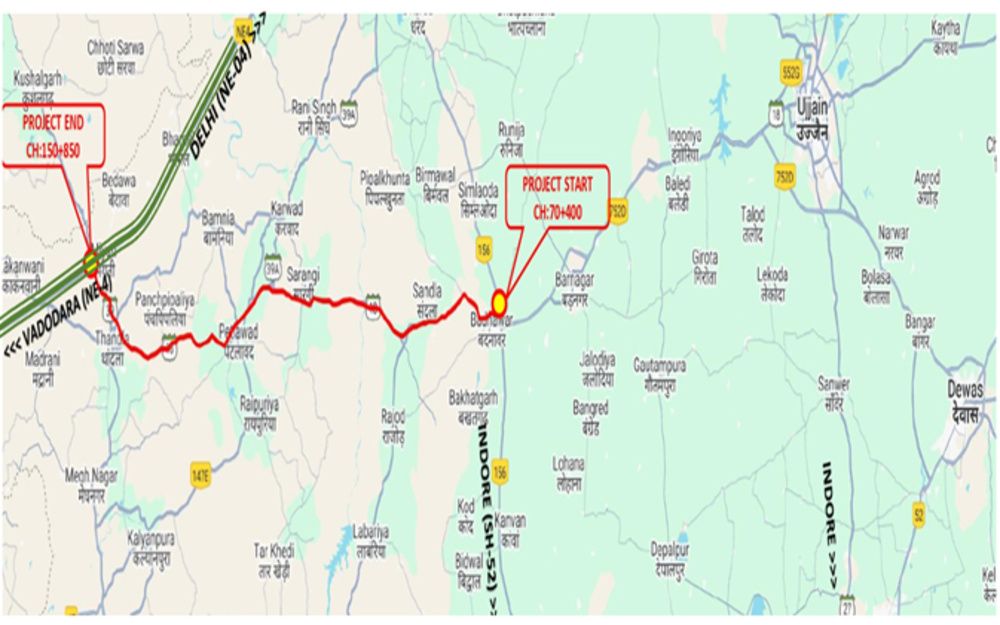
- Cabinet approves ₹3,839.42 crore highway project in Madhya Pradesh
- 80.45 km four-lane corridor from Badnawar to Timarwani on NH-752D
- Project to link Ujjain with Delhi–Mumbai Expressway
- Expected to cut travel time by nearly one hour
GG News Bureau
New Delhi, 10th March: The Union Cabinet on Tuesday approved the construction of a four-lane highway from Badnawar–Petlawad–Thandla–Timarwani on NH-752D in Madhya Pradesh, with a total capital cost of ₹3,839.42 crore.
The 80.45-kilometre corridor, to be developed under the Hybrid Annuity Mode (HAM), will connect Ujjain with the Timarwani interchange of the Delhi–Mumbai Expressway, significantly improving regional connectivity.
According to the government, the project aims to enhance travel efficiency and reduce journey time by around one hour.
Currently, the Badnawar–Timarwani stretch is an intermediate lane road with a width of about 5.5 metres and poor geometric alignment, allowing vehicle speeds of only 20–50 kmph. After the upgrade, the corridor will support speeds of 80–100 kmph, enabling faster and safer travel.
The Ujjain–Badnawar section of about 70.40 km has already been upgraded to a four-lane highway, and the new project will complete the entire four-lane connectivity from Ujjain to the Delhi–Mumbai Expressway.
Officials said the Timarwani–Thandla–Petlawad–Badnawar–Ujjain route is the shortest link for traffic travelling from Gujarat and Maharashtra to Ujjain. The improved corridor is also expected to handle the surge in traffic during the Simhastha Kumbh Mela scheduled in April 2028.
The highway passes through tribal regions of Dhar and Jhabua districts, with parts of Dhar falling under NITI Aayog’s Aspirational Blocks Programme. The government said the project will help boost infrastructure and economic development in these areas.
The upgraded corridor will also improve access to major industrial hubs and logistics centres in Indore, Pithampur, Ujjain and Dewas, helping reduce logistics costs and improve the movement of goods and raw materials.
Key features of the project include six major bridges, 34 minor bridges, one road under bridge and several vehicle underpasses.
The project is scheduled to be completed within 24 months, while the concession period under the HAM model will be 17 years, including two years for construction and 15 years for operation and maintenance.
The government said the new corridor will strengthen inter-state connectivity, improve safety and support economic growth in western Madhya Pradesh while enhancing access to the Delhi–Mumbai Expressway corridor, one of India’s largest highway infrastructure projects.
