
Mokama’s Battle: Caste, Crime, and Power in Bihar 2025
In Mokama, old rivalries and caste politics return as Bihar heads into a fiercely contested 2025 election.

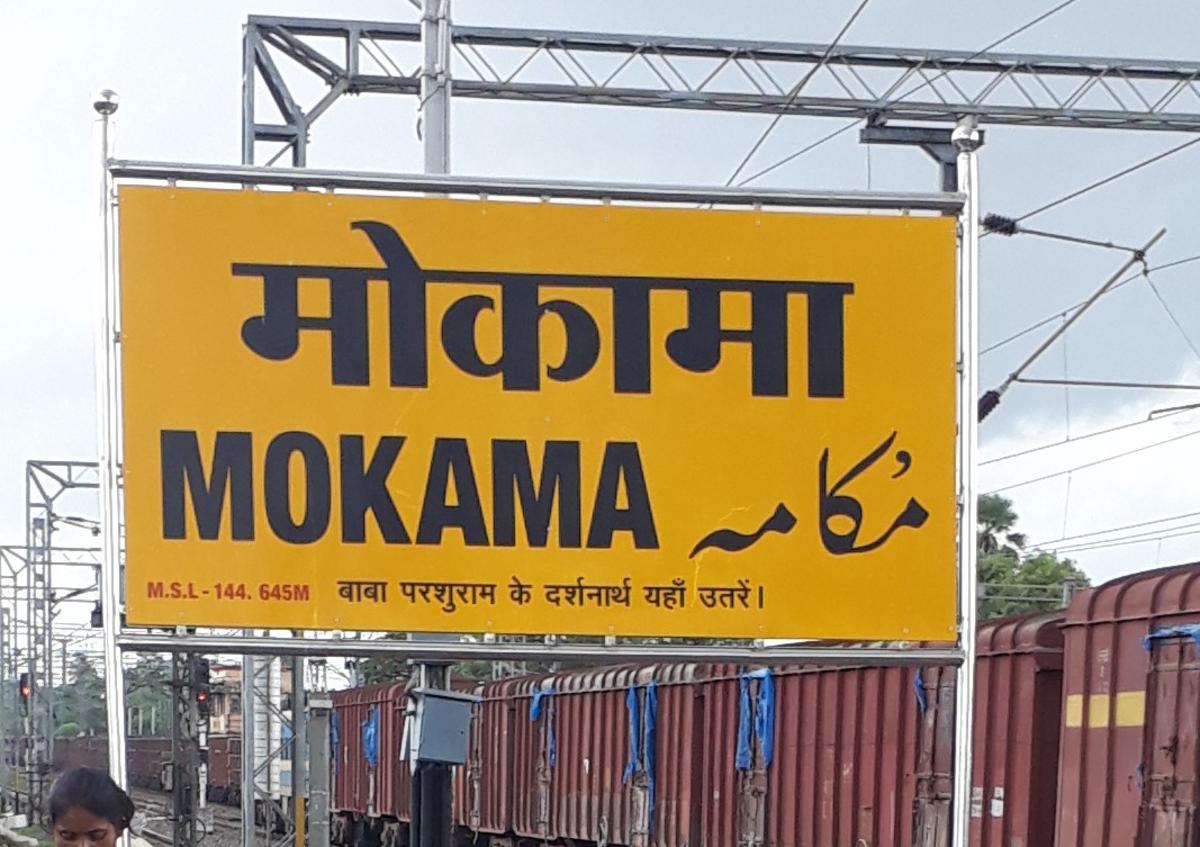
Along the wide, tranquil flow of the Ganges lies Mokama — a town that carries the weight of Bihar’s turbulent past and uncertain present. Once known for its lentil fields and factories, Mokama today stands at the uneasy crossroads of history and politics. Its name has long been synonymous with strongmen, shootouts, and political ambition — a place where power was often earned not through persuasion, but through the barrel of a gun.
Now, as Bihar inches closer to the 2025 Assembly elections, this small town near Patna once again finds itself at the heart of a political storm.
A Rivalry That Refuses to Die
The arrest of Anant Singh, a 64-year-old JD(U) leader with a legendary — and infamous — reputation, has reignited old tensions. Singh, often called the “Don of Mokama,” now stands accused in the murder of Dular Chand Yadav, a 75-year-old former gangster and Jan Suraaj supporter.
The killing, during a clash between rival groups, was more than just a violent episode — it reopened wounds that never really healed. It brought back the decades-old rivalry between Anant Singh and Suraj Bhan Singh, another formidable figure from the same Bhumihar community.
Their story stretches back to the 1980s — a time when politics in Bihar was shadowed by gunfire, and strongmen were both feared and admired. While Anant Singh built his empire in Mokama, Suraj Bhan rose in Munger. Both drew power from the same caste identity, yet stood on opposite sides of a bloody divide.
Today, that rivalry plays out differently. With Suraj Bhan barred from contesting elections after a murder conviction, his wife Veena Devi carries the political mantle. Her face on campaign posters is a reminder that in Bihar, political legacies are often family heirlooms — passed on when the men can no longer stand in the field themselves.
The Power of a Small Community
At the heart of this saga lies the Bhumihar caste — a community that makes up less than 3% of Bihar’s population, yet exerts an influence that far outweighs its numbers.
Traditionally landowners, the Bhumihars were once the ruling class of Bihar’s countryside. Their roots go deep — into zamindaris, princely estates, and the pages of Bihar’s cultural history. From Ramdhari Singh Dinkar, the poet of national pride, to Shri Krishna Sinha, Bihar’s first Chief Minister, their contributions to politics, literature, and administration are immense.
Even today, Bhumihar leaders dominate the upper echelons of state and national politics — from Union Minister Giriraj Singh to Lt Governor Manoj Sinha, Deputy CM Vijay Sinha, and JD(U)’s Lalan Singh. Across party lines — be it BJP, JD(U), or Congress — the community’s influence runs deep.
It’s no wonder, then, that both the NDA and Mahagathbandhan are pulling every string to win them over. The NDA has fielded 32 Bhumihar candidates this year; the opposition, 15. The message is clear — no one can afford to ignore this small yet powerful bloc.
Echoes of the Ranvir Sena
Mokama’s unrest also brings back memories of the Ranvir Sena — the Bhumihar militia that emerged in the 1990s during the violent “Jungle Raj” era. The Sena, formed to protect upper-caste landlords against Maoist insurgents, unleashed a series of retaliatory massacres that left deep scars across Bihar.
While the guns have long fallen silent, the shadow of that violence still hangs over towns like Mokama and Jehanabad. It shaped the psyche of a generation — one that grew up believing that survival in Bihar’s political jungle demanded strength above all else.
The latest killing, many say, feels like history repeating itself — a tragic reminder that Mokama’s peace has always been fragile.
Bhumihar vs Bhumihar
This year’s elections have produced an unusual twist — the Bhumihar versus Bhumihar contests. In several constituencies, candidates from the same caste are fighting one another, splitting votes and loyalties alike.
In Bikram, BJP’s Siddharth Saurabh faces Congress’s Anil Kumar, both Bhumihars. In Lakhisarai, Congress’s Amresh Anish is challenging Deputy CM Vijay Sinha, another Bhumihar heavyweight. And in Mokama, the fight between Anant Singh and Veena Devi embodies this intra-caste rivalry — where pride, history, and vengeance all converge.
This isn’t just about party lines; it’s about identity, about who speaks for the community in a changing Bihar.
Loyalty or Change?
For years, the Bhumihars have leaned toward the BJP — drawn by shared upper-caste solidarity and a sense of security. But times are changing. A new generation within the community — educated, aspirational, and connected — is beginning to question the old order.
The Mahagathbandhan’s outreach, especially through RJD’s inclusion of upper-caste candidates, hints at this shifting tide. Younger voters are asking for roads, schools, and jobs — not just caste pride or historical dominance.
The outcome in Mokama, therefore, may hold lessons far beyond one constituency. It may reveal whether Bihar’s politics is still bound by old loyalties, or whether a new era is quietly taking shape.
Mokama: A Mirror of Bihar
As election day draws near, Mokama feels like a living metaphor for Bihar itself — a place where the past never truly dies, where caste and power continue their uneasy dance, and where every election is both a battle for survival and a struggle for change.
In this town where the Ganges flows past memories of factories and gunfights alike, one truth endures: politics here is personal, fierce, and deeply human. The people of Mokama know that their votes carry the weight of history — and perhaps, this time, the promise of breaking free from it.
