
Modi’s Linguistic Gamble: Hindi at the G7 and the Politics of Pride

Paromita Das
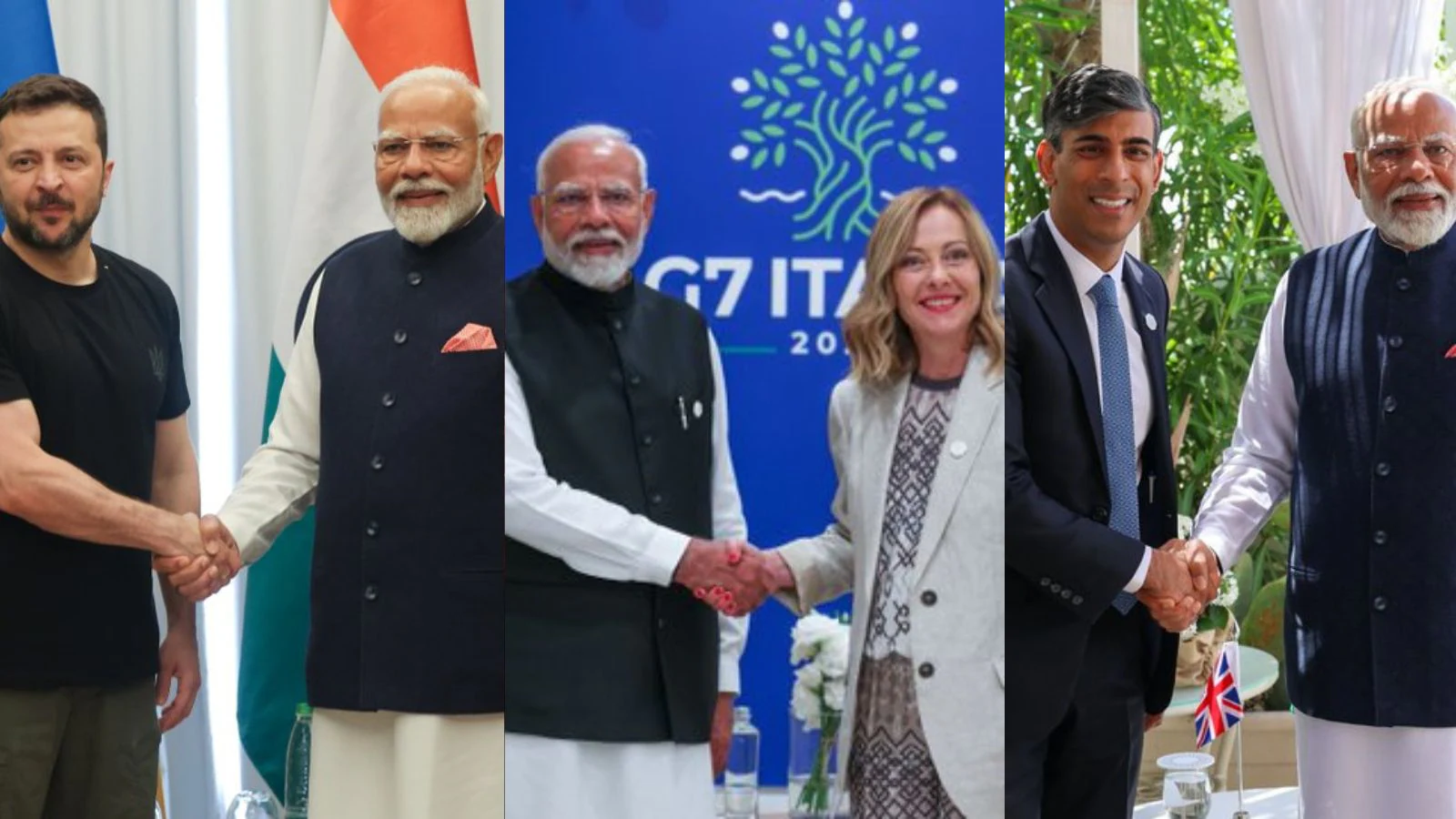
New Delhi, 21st June: Prime Minister Narendra Modi’s recent appearance at the G7 Summit in Canada sparked controversy—not for his diplomatic engagements or policy stances, but for the language he chose to speak. During a bilateral meeting with French President Emmanuel Macron, Modi began in English but shifted seamlessly into Hindi. What should have been a non-event suddenly snowballed into a subject of mockery, as opposition leaders and sections of social media criticized the Prime Minister, suggesting he lacked fluency in English. But the critique missed the larger picture entirely.
This incident isn’t about grammar or vocabulary. It’s about sovereignty. It’s about cultural pride. And most of all, it’s about leadership rooted in identity. In fact, far from being a limitation, Modi’s linguistic choices form a key pillar in his broader ideological and political vision.
Hindi on the Global Stage: A Cultural Assertion, Not a Deficiency
To understand why Modi speaks Hindi internationally is to understand his mission of restoring Bharat’s cultural self-confidence. His linguistic choices mirror a leader who believes that Bharatiya languages deserve global recognition, just as much as French, Mandarin, or Russian. After all, when leaders from China, Russia, and France communicate in their native languages, they’re lauded for cultural authenticity. Why should Bharat’s Prime Minister be judged differently?
Critics often forget that Modi has consistently addressed global forums, including the United Nations, in Hindi. It’s not about his inability to speak English—which he demonstrably can—but about reinforcing that Bharat doesn’t need a foreign tongue to be respected.
This cultural self-assertion is deeply intertwined with Modi’s idea of ‘New India’—an Bharat that is not just economically and militarily strong but culturally proud and unapologetically Bharatiya.
Tharoor’s Perspective: A Voice of Reason in a Sea of Mockery
Interestingly, the most compelling defense of Modi’s choice came from an unlikely corner—senior Congress leader Shashi Tharoor. Known for his own eloquence in English, Tharoor showed political maturity by pointing out that there’s nothing wrong in a leader preferring to speak in his mother tongue. He rightly compared Modi’s practice to global norms, where heads of state routinely use interpreters and local languages without ridicule.
Tharoor’s measured view highlighted the irony and hypocrisy in the opposition’s stance. That someone with Tharoor’s linguistic credibility would defend Modi speaks volumes. It also underlines a critical point: real leadership transcends language; it connects with emotion, identity, and purpose.
Modi’s Broader Language Vision: Rooted in Policy, Not Just Symbolism
Modi’s embrace of Bharatiya languages isn’t limited to symbolic gestures at global summits. It is enshrined in national policy and institutional reform. The National Education Policy (NEP) 2020, for instance, advocates primary education in the mother tongue. This shift marks a radical break from colonial-era assumptions about language and knowledge transmission.
Moreover, government apps, portals, and even official communication channels like Mann Ki Baat now operate in multiple Bharatiya languages. Modi has ensured that the Bharatiya state speaks not just to the people, but in the people’s languages. For him, language is a gateway to inclusive governance, a tool of empowerment, and a symbol of identity.
Union Home Minister Amit Shah, echoing Modi’s vision, went a step further by asserting that pride in Bharatiya languages will soon replace the post-colonial mindset that privileges English. His call for a “society where speaking English will feel out of place” was provocative but rooted in a genuine push to decolonize the Bharatiya mind.
The Irony of Criticism: When Cultural Confidence Becomes a Punchline
The outrage from critics reveals a deeper cultural insecurity. Bharat’s elite, long conditioned to equate English with intelligence and leadership, seem uncomfortable with the rise of a leader who flips that narrative. This discomfort is not about Modi’s words, but about what his words represent—a disruption of the old order, where fluency in English often determined one’s political capital.
Ironically, this very mindset reflects a colonial hangover that Modi’s language politics seeks to shed. In choosing Hindi, he is not rejecting English but rebalancing the scales—reclaiming space for Bharat’s own languages on the world stage.
A Linguistic Revolution Masquerading as Controversy
Criticism of Modi’s language choice misses the forest for the trees. In a country as diverse and multilingual as Bharat, what matters most is not the language itself, but what it symbolizes. Modi’s Hindi is not just a language; it’s a political and cultural statement.
His critics often claim he’s staging these moments for optics. But even if optics are involved, they serve a larger cause: instilling pride in Bharatiya identity. In doing so, Modi has created a new standard for leadership—one that’s not beholden to Western norms but confident in its own skin.
The irony is that the same critics who ridicule Modi for speaking Hindi are the first to praise foreign leaders for their authenticity. This selective outrage suggests that the issue is not Modi’s language, but Modi himself.
Redefining Global Leadership—The Bharatiya Way
As Bharat strides forward on the global stage, it must do so not just with economic or military might, but with cultural confidence. Prime Minister Narendra Modi’s choice to speak in Hindi at the G7 is part of that broader vision. It’s a challenge to outdated norms, a reaffirmation of identity, and a reminder that respect on the world stage doesn’t require a British accent—it requires conviction.
The real test of leadership is not the language spoken, but the vision conveyed. In that regard, Modi continues to set a precedent that’s as political as it is cultural—and one that’s undoubtedly Bharatiya.
