
Modi’s Critic or Diplomatic Liability? Rahul Gandhi’s Remarks Stir Global Debate
“Rahul Gandhi’s relentless attacks on PM Modi have backfired, drawing sharp rebukes from global voices and raising questions about his political judgment.”

Paromita Das
New Delhi, 20th October: In the charged arena of Bharatiya politics, Rahul Gandhi has built a reputation over the years as a relentless critic of Prime Minister Narendra Modi. However, his recent habit of public condemnation has not only drawn sharp domestic reactions but also backlash from influential global figures, exposing a pattern that undermines his own credibility and political ambitions.
Rahul Gandhi’s Persistent Attacks: From National to Global Stage
Rahul Gandhi’s criticism of PM Modi is no secret, spanning issues from economic policy to diplomatic decisions. Yet, his latest salvo, branding Modi as “frightened of [US President Donald Trump]” because of Bharat’s supposed compliance regarding Russian oil imports, marks a new low in political rhetoric. Claiming that Modi “allows Trump to decide and announce” Bharat’s policies and accusing him of “sending congratulatory messages despite repeated snubs” and “not contradicting” the US President on sensitive matters like Operation Sindoor, Gandhi not only questions Modi’s leadership but insinuates weak sovereignty on the international stage.
PM Modi is frightened of Trump.
1. Allows Trump to decide and announce that India will not buy Russian oil.
2. Keeps sending congratulatory messages despite repeated snubs.
3. Canceled the Finance Minister’s visit to America.
4. Skipped Sharm el-Sheikh.
5. Doesn’t contradict him…— Rahul Gandhi (@RahulGandhi) October 16, 2025
This line of attack, reiterated publicly on social media, quickly sparked backlash beyond Bharatiya borders.
US Singer Mary Millben’s Scathing Rebuttal

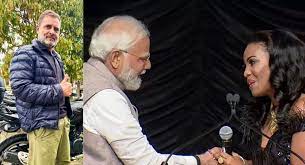
Mary Millben, a US singer and cultural ambassador known for her admiration of PM Modi, did not mince words in her response. She told Rahul Gandhi to “return to his ‘I hate India tour’”—a sharp rebuke reflecting the extent to which Gandhi’s comments have alienated even sympathetic foreign audiences. Millben underscored Modi’s strategic diplomatic acumen, emphasizing that both Modi and Trump act in the best interests of their respective countries, a concept Gandhi apparently fails to grasp.
Millben’s rebuke is significant because it highlights how Gandhi’s unrelenting criticism is not only viewed as unsubstantiated domestically but also as politically naive and diplomatically damaging by discerning observers abroad. This public airing of international disagreement undermines Bharat’s image and portrays Gandhi more as a habitual detractor than a constructive opposition leader.
The Ill Effect of Rahul Gandhi’s Habitual Criticism

While dissent and criticism are healthy components of democracy, Rahul Gandhi’s pattern of negative rhetoric appears more self-defeating than strategic. His repeated public attacks—often inflammatory and lacking nuanced understanding of complex diplomatic relations—do not position him as a credible national leader. Instead, they project a leader who thrives on controversy but fails to offer coherent alternatives or respectful debate.
Moreover, his criticisms come at a time when Bharat’s foreign policy requires delicate balancing and strategic patience, especially in matters involving the US, Russia, and global energy markets. Publicly undermining Bharat’s diplomatic decisions risks eroding trust not only within the ruling establishment but also at bilateral and multilateral levels.
Critique Should Foster Progress, Not Political Carnage

Rahul Gandhi’s rhetoric, particularly against a figure as dominant as PM Modi, would be better served if it adopted the tone of constructive criticism rather than habitual disparagement. The recent episode with US singer Mary Millben serves as a stark reminder that political jabs can reverberate on the international stage, where image, respect, and diplomacy are paramount.
Gandhi’s repeated tendency to single out Modi for blame without recognizing the complexities of governance and diplomacy weakens his position and plays into narratives crafted by his political opponents. It is imperative for leaders of the opposition to present reasoned arguments, backed by facts and foresight, rather than petulant accusations that ultimately isolate them.
The Peril of Being Known as the Perpetual Critic
Rahul Gandhi’s habit of persistent criticism against PM Modi reflects a deeper challenge—the failure to transcend the role of perennial detractor to become a visionary leader. His inability to grasp or respect strategic diplomacy, coupled with his public and often provocative allegations, risks alienating both national and international audiences.
As the global backlash from figures like Mary Millben shows, such behavior damages his political capital and raises questions about his readiness for higher leadership. For an opposition leader aspiring to national significance, winning debates is not just about louder criticism but about earning respect through insightful policies and measured communication.
In the political theatre of modern Bharat, constant censure without credibility is a downward spiral—one that Rahul Gandhi must reconsider if he wishes to truly challenge PM Modi’s leadership and resonate beyond fiery tweets.
