
Modinomics: Bharat’s Decade of Unstoppable Growth
“Bharat’s economic renaissance under PM Modi blends bold reforms, digital innovation, and inclusive growth to propel the nation from fragility to global leadership.”

Paromita Das
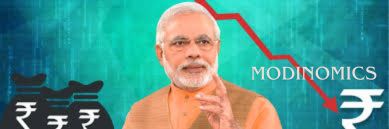
New Delhi, 18th September: Once counted among the world’s most fragile economies, Bharat’s economic landscape has undergone a remarkable metamorphosis over the past decade. What was once a simmering story of uncertainty has evolved into a narrative of strength, resilience, and vision under Prime Minister Narendra Modi’s leadership. From grappling with vulnerabilities in 2013, Bharat has catapulted itself into the ranks of global economic giants, now proudly holding the position as the world’s fourth-largest economy in 2025. This journey, often encapsulated by the term “Modinomics,” is much more than a tale of numbers and growth rates—it is a saga of reforms, inclusivity, innovation, and unwavering ambition—setting Bharat on a course toward its destiny as a defining global force in the decades to come.
The Foundation of Sustainable Growth

Bharat’s GDP growth over the past decade has remained robust, averaging between 6.5 to 7 percent annually, with inflation stabilized around 4 percent. This macroeconomic balance has set Bharat apart globally, especially amid advanced economies struggling with weak growth and persistent inflation. This stability has attracted unprecedented foreign investment, boosted domestic consumption, and expanded Bharat’s influence in global trade.
At the heart of this success is the government’s comprehensive reform agenda designed to overhaul economic institutions and empower citizens across societal strata. One monumental reform was advancing universal financial inclusion through the Pradhan Mantri Jan Dhan Yojana (PMJDY), which by August 2025, created over 56 crore new bank accounts and mobilized deposits totaling Rs 2.68 lakh crore. This financial democratization has woven millions into the formal economy, providing them access to savings, credit, and insurance.
Fueling entrepreneurship has been another pillar of Modinomics. The Pradhan Mantri Mudra Yojana has disbursed over 52 crore loans worth Rs 33 lakh crore to small entrepreneurs and micro-enterprises, sparking vibrant grassroots economic activity. This has complemented the dynamic rise of Bharat’s start-up ecosystem, which now boasts more than 100 unicorns. Together, these initiatives reflect Modi’s twin economic pillars: inclusion and advancement.
Tax Reforms and Consumption Boost

Bharat’s tax regime experienced a pivotal overhaul with the introduction of the Goods and Services Tax (GST) in 2017, unifying diverse state and central levies into one streamlined market. In 2025, the GST 2.0 reforms simplified the tax structure further by consolidating rates into just two primary slabs of 5 and 18 percent, easing compliance and lowering costs of everyday products. Alongside this, the government raised the income tax exemption threshold to Rs 12 lakh, increasing disposable income in middle-class households. According to SBI Research, these fiscal measures are estimated to boost consumption demand by Rs 5.31 lakh crore, contributing nearly 1.6 percent to GDP growth. This exemplifies how policy interventions directly impact household welfare and fuel the broader economy.
Digital Revolution and Market Optimism

Modinomics’ transformative power extends beyond fiscal reform into digital infrastructure, revolutionizing how Bharatiya transact and invest. The Unified Payments Interface (UPI), a flagship digital payment platform, is now deeply embedded in daily commerce, with over 20 billion transactions valued at Rs 90,000 crore handled daily by August 2025. This has transformed Bharat’s economy into a frictionless, largely cashless system—from local vendors to multinational corporations.
The capital markets mirror this optimism, with the BSE Sensex soaring from 24,000 points in 2014 to over 81,000 in 2025. Retail participation has surged, evidenced by the addition of 192 million demat accounts, mostly held by investors under 30. Wealth creation through stock markets is no longer a privilege of the few but a mass economic phenomenon.
Banking Sector Revival and Institutional Reforms

Bharat’s financial system has been revitalized. The gross non-performing assets (NPA) ratio in banks plummeted from over 9 percent in 2021 to a historic low of 2.58 percent by 2025, reflecting improved asset quality and regulatory efforts. Institutional reforms have accompanied this financial strengthening. More than 1,600 outdated laws have been repealed, and an additional 1,800 identified for removal, simplifying compliance and fostering enterprise growth. Consequently, Bharat jumped from 142nd to 63rd place in the World Bank’s Ease of Doing Business rankings between 2014 and 2019—a leap that signifies deep, structural improvements, not superficial changes.
Social Progress: Poverty Alleviation and Employment Creation

The economic transformation under Modi has translated into remarkable social outcomes. Between 2011 and 2023, approximately 171 million Bharatiya escaped extreme poverty, slashing the poverty rate from 16.2 percent to just over 2 percent. This progress stems from sustained GDP growth complemented by targeted welfare programs and investments in rural infrastructure and financial inclusion.
Employment has surged as well. From 2014 to 2024, Bharat created nearly 179 million new jobs, reversing decades of stagnation. Government initiatives like the PM Viksit Bharat Rozgar Yojana aim to add another 3.5 crore jobs by 2027 by subsidizing hires of first-time job seekers. Formal employment growth is evident from over 1.13 crore new Employees’ Provident Fund Organization (EPFO) subscribers in FY25, signaling expanding social security coverage.
Vision for 2047: Viksit Bharat

All these achievements build toward Bharat’s ambitious long-term vision, Viksit Bharat @2047, aiming to transform the nation into a developed economy by the centenary of independence. The roadmap envisions a $30 trillion economy with a per capita income of $26,000, reflecting not just growth in size but quality and inclusiveness.
Modinomics is more than an economic strategy; it is a national philosophy that intertwines growth with stability, ambition with social equity, and reform with effective delivery. It epitomizes how visionary leadership, paired with the determination of 1.4 billion citizens, can turn daunting challenges into unprecedented opportunities.
The Balancing Act of Progress

While the trajectory is impressive, sustaining this momentum presents challenges. Rapid growth can risk exacerbating inequalities if progress is not inclusive. Therefore, the continuation and deepening of reforms focused on financial inclusion, job creation, and institutional transparency is crucial. Digital empowerment and entrepreneurship should remain focus areas to harness the demographic dividend. The GST reforms and banking sector revival are positive signals, but constant vigilance is needed to ensure stability amid global uncertainties.
A New Economic Dawn
Bharat’s economic renaissance under Prime Minister Narendra Modi stands as a testament to resilience, visionary reform, and the relentless pursuit of shared prosperity. From being labeled among the fragile, Bharat now commands a pivotal role in the global economy with a sustainable growth model. Modinomics has not only reshaped the nation’s economic destiny but also ignited hope for a truly Viksit Bharat—an Bharat ready to shape the future of the world.
This story exemplifies how policy clarity, innovation, and inclusivity can transform millions of lives and reposition a nation with a confident stride on the global stage, heralding a new dawn for Bharat and its citizens alike.
