
Missiles or Meals? Pakistan’s Risky Gamble After Operation Sindoor
A World on Edge: Rethinking National Security

Paromita Das
New Delhi, 14th June: When Bharat launched Operation Sindoor — a swift and precise military response against cross-border terrorism — it sent shockwaves through global military and political establishments. The operation, which exposed the vulnerabilities of terror havens in Pakistan, not only reaffirmed Bharat’s military readiness but also sparked a wider reassessment of defence policies across nations.
From Beijing to Brussels, military strategists are urging governments to raise defence spending, modernize arsenals, and rethink security doctrines. Pakistan, which bore the brunt of Operation Sindoor’s message, responded not with diplomacy, but by hiking its defence budget — despite a crippling economy. But this raises deeper questions: Is defence spending the only barometer of a nation’s security? And is war a viable solution in today’s complex geopolitical matrix?
The China Conundrum: Muscle Without Momentum?
China’s People’s Liberation Army (PLA) is the world’s largest military force. Yet, Operation Sindoor offered an uncomfortable glimpse into the limitations of sheer numbers. Despite backing Pakistan’s strategic goals indirectly, Beijing’s silence and lack of intervention exposed a reality: numerical superiority means little without diplomatic finesse and tactical edge.
Moreover, questions remain about the quality and effectiveness of Chinese-made weaponry, particularly warheads, which failed to act as a deterrent for Bharatiya action or provide Pakistan any real defensive capability. China’s strategy of exporting its arms to buffer states like Pakistan may now come under scrutiny, especially after their limitations were exposed under real-time pressure.
Pakistan: Prioritizing Guns Over Grain
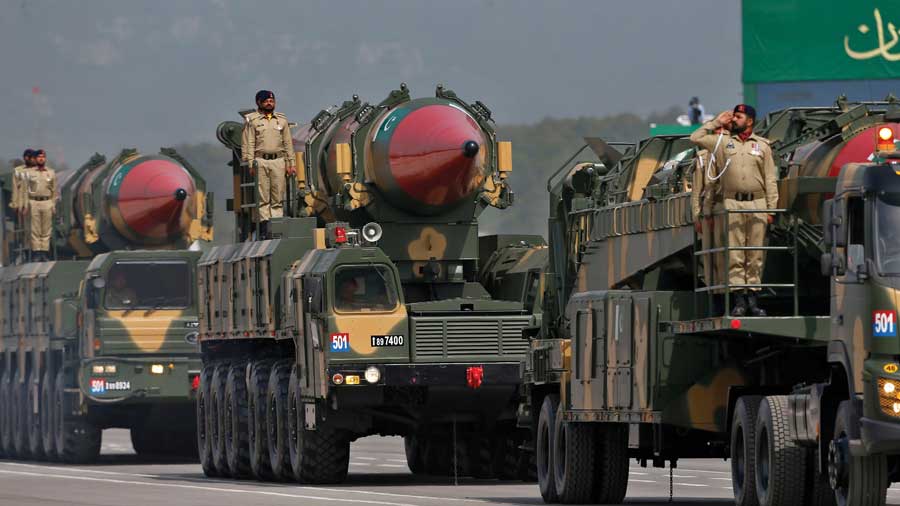
Following its military embarrassment, Pakistan took an economically reckless decision — prioritizing defence over growth. The federal budget for FY 2025–26 stands at PKR 17.573 trillion (approx ₹5.27 lakh crore), yet a staggering PKR 2.55 trillion (₹76,500 crore) is allocated to defence, up from PKR 2.12 trillion the previous year.
This hike comes amid worsening economic conditions:
- Debt Crisis: Total external debt exceeds USD 274 billion.
- Poverty Spike: 45% live below poverty, with 16.5% in extreme poverty.
- Agricultural Collapse: Agriculture growth barely touched 0.6%, missing the 2% target.
- Energy Crisis: Costly power plants are being shut due to inefficiency.
Ironically, Pakistan relies heavily on foreign aid — including a recent $1 billion IMF package and $800 million from the ADB — while directing more money towards defence than development.
This fiscal strategy, described by economists as “fiscal handcuffing,” reflects not strategic wisdom but political optics. Dr Mohammad Ahmed Zubair, a former chief economist, denounced the budget as a surrender to debt and military pressure, not a growth-oriented blueprint.
Is Militarism a Measure of Advancement?
Military strength has often been equated with global status. However, modern security is multidimensional — encompassing food security, digital infrastructure, education, economic resilience, and social cohesion. A nation’s true power lies not just in missiles and tanks, but in its ability to uplift its people, ensure justice, and foster innovation.
Bharat’s own military evolution post-2014 has been balanced with digital advances, clean energy initiatives, and welfare programs. Operation Sindoor was not just a show of strength — it was a message of strategic resolve, backed by economic and technological confidence.
War: The Last Resort, Not a Default Strategy
History repeatedly shows that wars rarely deliver lasting peace. From Afghanistan to Syria, prolonged conflict only deepens humanitarian crises, destabilizes regions, and fuels extremism.
Dialogue, diplomacy, and deterrence — these remain essential. Operation Sindoor was a targeted strike to eliminate terror, not an escalation into war. Bharat’s posture remains defensive, not expansionist.
Pakistan, however, continues to operate under an outdated mindset — reacting militarily rather than introspecting diplomatically. Its misplaced priorities endanger not only its own citizens but also regional peace.
The Path Pakistan Refuses to Take
Pakistan had an opportunity to recalibrate — to rethink its policies and focus on recovery. Instead, it doubled down on militarism. This is not strategic thinking; it’s denial.
A nation that cannot feed its people but continues to fuel its army is not protecting itself — it is postponing its collapse.
Had Pakistan directed even a portion of its defence budget towards education, agricultural reform, and healthcare, its global standing could have shifted. But until Islamabad breaks free from its militaristic obsession, its citizens will remain hostage to hunger and hopelessness.
Redefining Security for the 21st Century
Operation Sindoor was more than a tactical win for Bharat — it was a wake-up call for the world. Military might has its place, but it cannot substitute economic resilience or social well-being.
Countries must rethink what it means to be secure. Pakistan’s example is a cautionary tale — that neglecting economic fundamentals for the illusion of strength can backfire disastrously. Real strength lies in empowering people, not in parading parades.
As the world races to militarize post-Sindoor, it must also pause to ask: Are we securing our borders while losing our futures?
