
UGC Merit, Migration, and Marginalisation Who Speaks for the General Category then?

Poonam Sharma
In recent years, India has witnessed an intensification of caste-based discourse in education, politics, and public life. Policies framed in the name of social justice—especially under the banners of SC, ST, and OBC protection—are often presented as morally unquestionable. Any attempt to ask for balance or fairness is quickly labelled as “anti-Dalit,” “anti-constitutional,” or “privileged whining.” But beneath this moral absolutism lies a hard, uncomfortable truth: General Category students in India have been systemically ignored, excluded, and penalised despite merit, ability, and eligibility.
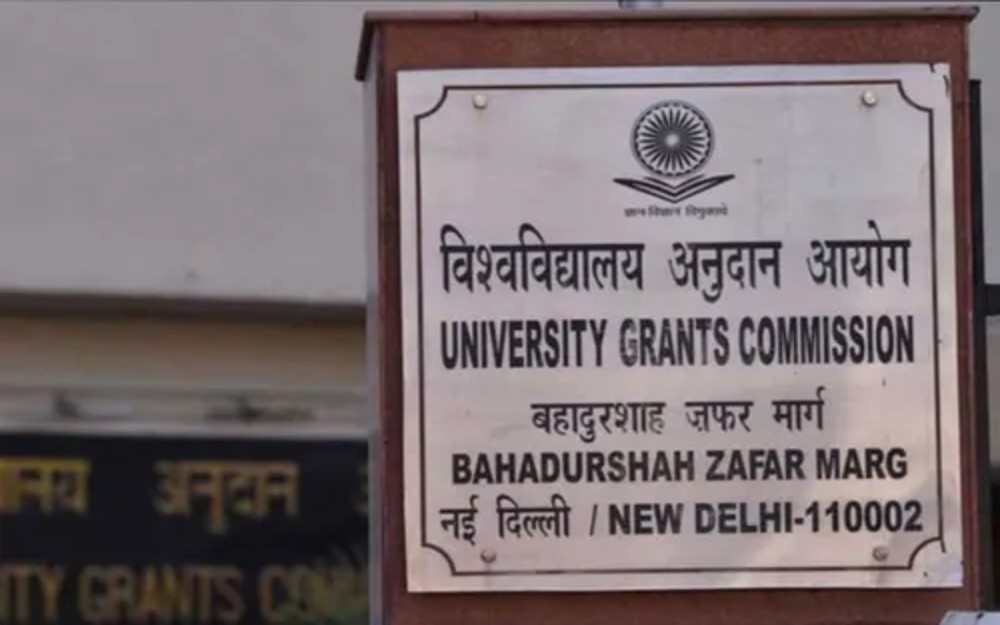
The new UGC guidelines and Karnataka Assembly’s move to institutionalise further protections and safeguards exclusively for select categories raise a fundamental question:
Is the Indian state committed to equality for all, or only to selective protection?
Reservation and affirmative action were conceived as temporary correctives, not permanent entitlements. Dr. B.R. Ambedkar himself envisioned a time-bound framework aimed at bringing historically marginalised communities to parity—not at creating a reverse hierarchy where merit becomes irrelevant. Yet, decades later, reservation has expanded not only in scope but also in moral immunity. It is no longer open to scrutiny, reform, or even academic debate.
For a General Category student, the reality is stark. A student scoring 95–98% may be denied admission, while another with significantly lower marks gains entry solely due to category status. Competitive exams, faculty recruitment, fellowships, promotions—nearly every ladder of academic and professional mobility is weighted. Merit is acknowledged rhetorically but dismissed structurally.
What protection exists for the General Category student who fails not because of lack of effort, but because the system is mathematically stacked against them?
When Merit Becomes a Disadvantage
There is no SC-ST Act equivalent for General Category . There is no grievance cell for merit-based exclusion. There is no policy recognition of psychological stress, suicides due to academic pressure, or long-term economic stagnation faced by families who receive no state support across generations.
This silent marginalisation has had one profound consequence: brain drain.India’s most competitive, globally employable talent—largely from the General Category—has steadily migrated to the United States, Europe, Canada, and Australia. These students are not fleeing India because they hate their country; they are leaving because India has made it clear that excellence alone is not enough. When merit is penalised at home but rewarded abroad, migration becomes a rational choice, not a betrayal.
IITs, AIIMS, IISc, and top central universities proudly advertise global alumni networks—yet rarely acknowledge that a disproportionate number of those alumni left India precisely because opportunity here was rationed, not earned.
Ironically, while policymakers lament brain drain, they continue to design systems that push talent out.
Selective Protection Weakens Justice Itself
Equally troubling is the growing weaponisation of identity laws. Incidents where disagreement, refusal to chant a slogan, or ideological difference is met with threats under the SC-ST Act are not isolated anomalies; they reflect a climate of fear. A law meant to prevent atrocities must not become a tool for intimidation. Justice loses legitimacy when it appears selective.
This does not mean discrimination against SC, ST, or OBC communities has vanished. It has not. Social prejudice still exists and must be confronted firmly. But acknowledging one injustice does not require institutionalising another. True equality is not achieved by permanent imbalance.
The Karnataka government’s intention to push UGC-aligned protections without parallel safeguards for General Category students exposes a dangerous assumption: that some citizens deserve perpetual scrutiny while others deserve perpetual sympathy. Democracies do not survive on moral hierarchies of citizenship.
The real tragedy is that this polarisation benefits no one. It pits communities against each other while allowing systemic failures—poor school education, unemployment, corruption, and political opportunism—to escape accountability.
If India truly believes in Sabka Saath, Sabka Vikas, then the conversation must mature. Merit and social justice are not enemies. A balanced framework can—and must—exist: economic-based support, creamy-layer enforcement across all categories, time-bound reservations, and legal safeguards against misuse of identity laws.What worries people today is not the idea of protection—it is the fear of unchecked power. When laws meant to shield the vulnerable start being used without scrutiny, society slips into anxiety and silence. That is exactly what many General Category families and students are experiencing now.
The most disturbing shift is this: a single complaint from an SC, ST, or OBC individual can trigger immediate police action against someone from the General Category, often before facts are verified. The intention behind such laws was to prevent atrocities. But in reality, the absence of preliminary checks has created fear, misuse, and deep mistrust.
This fear is no longer theoretical. It is entering homes.
There have been growing reports of false or exaggerated complaints used as pressure tactics. Recently, a troubling incident surfaced where a young man proposed to a girl. When she refused, he allegedly threatened her father, claiming she rejected him due to caste bias and warning of a complaint under caste-protection laws. Terrified of police action and social humiliation, the family reportedly paid ₹50,000 just to avoid trouble. Folded hands. No complaint. No justice—only fear.
This is not social justice. This is coercion.
When families start settling matters with money to avoid legal harassment, the system has failed—not just one group, but everyone. Innocent people are left unprotected, while genuine victims lose credibility because the law appears misused.
The General Category citizen today feels defenseless. There is no equivalent safeguard against false complaints. No mandatory inquiry before arrest. No punishment for misuse. The message being sent is dangerous: some accusations are unquestionable, and some citizens are automatically suspect.
This is not what equality looks like.
Laws should protect without terrorizing. Justice should empower without silencing others. A democratic society cannot function when people are afraid to speak, interact, or even disagree because of the threat of legal action.
The new UGC guidelines and related state actions must be reviewed urgently. Safeguards such as preliminary inquiry, penalties for proven false cases, and equal protection mechanisms are not anti-Dalit or anti-backward—they are pro-justice.
General Category citizens are not asking for dominance. They are asking for fairness, due process, and dignity.
If fear replaces trust, and silence replaces dialogue, the damage will be long-lasting. Laws that divide society instead of protecting it weaken democracy itself.Until then, the General Category student remains the invisible citizen—expected to compete without support, comply without complaint, and sacrifice without recognition. A nation that neglects its merit does not uplift its marginalised; it merely replaces one inequality with another. And history shows us this clearly: no society progresses by punishing its competence or silencing its questions.
