
Melody Meets Mandate: Maithili Thakur’s Political Debut Remakes Bihar

Paromita Das
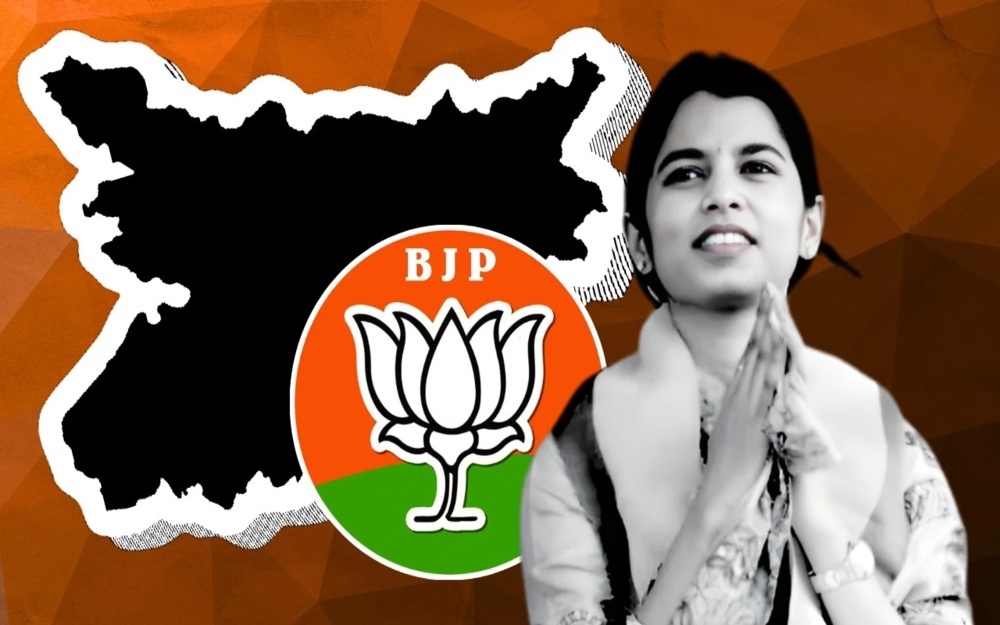
New Delhi, 16th November: There are election results — and then there are moments that feel like the beginning of a new story. Maithili Thakur’s win in the Bihar Assembly belongs to the second category. It doesn’t feel like a statistic on a screen or a headline that will fade tomorrow. It feels personal. It feels like Bihar finally paused, took a breath, and said, “Let’s try something different. Let’s try someone who actually understands us.”
At just 25, Maithili has stepped into politics with the kind of innocence and courage that rarely survive in that world. And yet, here she is — the youngest MLA in the state — walking into the Assembly not with swagger, but with a quiet confidence born from years of singing, learning, and holding on to her roots with both hands.
A Victory That Felt Like a Hug From Home
There’s something about Maithili that makes people feel seen. Maybe it’s because she grew up the way many young people in Bihar do — in a home where tradition and ambition wrestle gently with each other. Maybe it’s because she didn’t come into politics with a team of strategists telling her how to behave. She came in with her real self, her Maithili accent, her folk songs, her calm smile.
And voters responded to that sincerity. Especially the youth, who’ve watched the same tired faces dominate politics for decades. They rallied behind someone who actually sounds like them, who knows the smell of mitti after rain in Mithila, who carries culture not as a costume but as a heartbeat.
Her victory margin wasn’t just a number — it was a message. A message that Bihar is ready to trust someone honest. Someone unpolished in the best ways. Someone who knows where she comes from.
She Didn’t Just Win a Seat — She Broke a Pattern
What makes her win even more striking is the seat she won. A seat her party often struggled with, a seat where political lines run deep and old loyalties don’t shift easily. And yet, they did.
People from different communities – elderly villagers, young students, homemakers, shopkeepers – lined up for her. Not because she promised miracles, but because she offered something rarer: dignity, respect, and a sense that she would not forget them once the microphones were off.
Maithili managed something seasoned politicians often fail at: she made people believe again.
The Girl Who Kept Coming Back
Anyone who has followed Maithili’s life knows she didn’t end up here by accident. Her story is stitched with rejections. Talent shows where she sang her heart out only to fall short of the trophy. Competitions where she was told she was “good, but not enough.”
But she never broke. She absorbed every setback like a lesson, not a punishment. That resilience — the ability to rise again, to keep singing even when the spotlight turned away — is the same strength she’s carrying into politics.
In a way, her entire journey has trained her for this moment. Singing on stage teaches you rhythm, but it also teaches you presence, humility, and how to connect with a room full of strangers. Politics needs that more than it admits.
The Weight of Expectations, The Lightness of Hope
Now that she is an MLA, the weight on her shoulders is immense. People expect her to bring change — real change. They want safer schools for their daughters, more dignity for local artists, opportunities that don’t force their children to migrate in search of work.
Maithili has spoken about integrating Mithila arts into education, improving opportunities for girls, and championing local culture as a path to development. These aren’t abstract promises; they come from her lived experience. She is someone who grew up surrounded by music, hard work, and a deep respect for tradition. She knows the power that cultural pride can have in shaping a young mind.
But what reassures many is her attitude. She doesn’t pretend she knows everything. She doesn’t carry arrogance. She listens. She asks questions. She remains accessible — the daughter of the soil first, the politician second.
Bihar Wanted Renewal — And It Finally Spoke
What Maithili’s rise really reflects is a shift in the mood of Bihar. The state that’s often labeled by its past decided it wanted a different future. A future that allows young women to lead. A future where cultural heritage is not just celebrated in festivals but woven into development. A future that doesn’t mock ambition but nurtures it.
Her story may encourage other young people — especially young women — to imagine themselves in positions they were told weren’t meant for them. And that, perhaps, is the real revolution.
More Than a Win — An Invitation to Dream
In Maithili Thakur, Bihar hasn’t just elected a representative. It has chosen a reminder. A reminder that authenticity still matters. That you don’t need a political surname to lead. That the voices from small towns and villages carry as much wisdom as those from the capital.
Her journey is still unfolding, and only time will tell what shape her political career takes. But for now, she stands as a symbol of what can happen when determination meets opportunity — when culture chooses to step into the corridors of power instead of staying confined to stages.
Bihar has changed its tune.
And perhaps, with a leader like her, the country might find itself listening.
