
“Married Hindu Women Should Make a Will”: SC
Court highlights inheritance disputes under Hindu Succession Act for childless widows

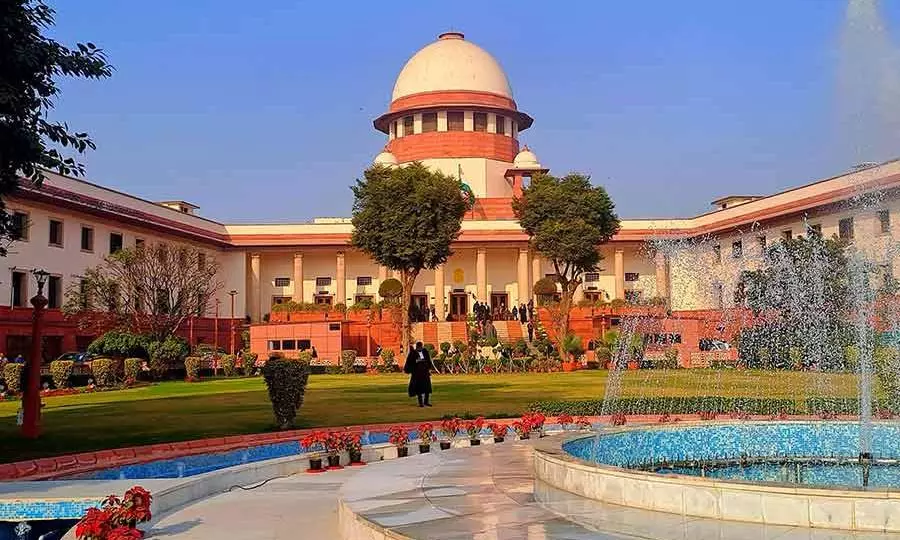
- Supreme Court appeals to married Hindu women to leave a will to avoid disputes
- Current law transfers a childless widow’s property to husband’s family after death
- Bench refuses to rule on constitutional validity of Section 15(1)(b) in PIL
- Court stresses mediation for parental claims before litigation
GG News Bureau
New Delhi, 19th Nov: The Supreme Court has asked married Hindu women to ensure they leave a will if they want their assets to pass to their own family members after their death. The advice comes in the backdrop of the Hindu Succession Act (HSA), which mandates that the property of a childless widow first devolves upon the husband’s heirs.
A Bench of Justice B.V. Nagarathna and Justice R. Mahadevan made the observation while hearing a petition filed by a woman advocate challenging certain provisions of succession law affecting Hindu women. The Court, however, declined to examine the constitutional validity of Section 15(1)(b) of the HSA in the current case, noting that the petitioner had no personal claim and that only affected parties should bring such challenges.
“We reserve liberty to persons affected by this provision to challenge the constitutionality of the same in appropriate proceedings,” the Bench said.
To reduce lengthy disputes, the Court added that if parents of a deceased woman lay claim to her property, mediation must be attempted before litigation. The judges urged all Hindu women, regardless of age, to prepare a will or testament to protect their intentions and prevent family conflicts.
Additional Solicitor General K.M. Nataraj, appearing for the Centre, argued that such issues must be raised specifically by those directly impacted.
The Hindu Succession Act currently prioritises the husband and children for inheritance. If a woman dies without children, the husband’s heirs take precedence over her parents. Lower on the list are heirs from her father’s and mother’s side — a provision that has led to disputes in cases of premature deaths.
The Supreme Court reiterated that while women’s property rights are essential, any changes must balance social structures and equity under the law.
