
Maharashtra Civic Polls on Jan 15, Results Next Day
Mumbai to elect mayor after three years as Sena split, BJP push reshape BMC battle

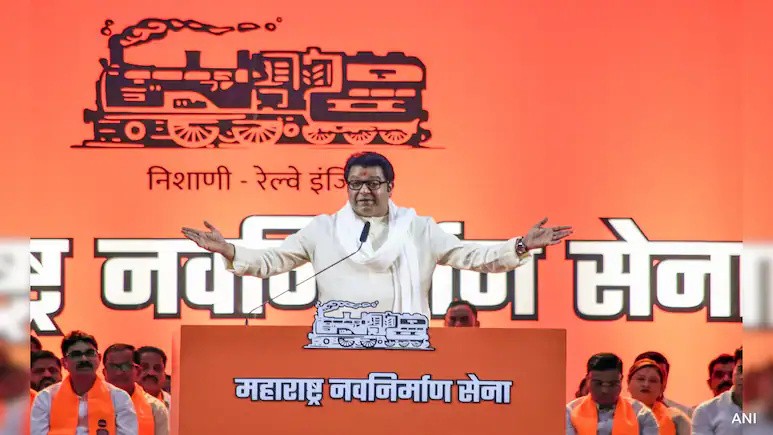
- Municipal corporation elections on January 15 across 29 urban centres
- Results to be declared on January 16
- Mumbai to get elected mayor after three-year gap
- Shiv Sena split and BJP strategy redraw political equations
GG News Bureau
Mumbai, 16th Dec: The much-anticipated municipal corporation elections in Maharashtra will be held on January 15, with counting of votes scheduled for the following day, covering 29 urban centres across the state.
The elections will be particularly significant for Mumbai, which will get an elected mayor after a gap of three years. However, the political landscape of the state capital has undergone dramatic changes since the Brihanmumbai Municipal Corporation (BMC) last went to the polls in 2017.
In the 2017 civic elections, the then-undivided Shiv Sena emerged as the single largest party with 84 corporators. Following the results, four independent corporators joined the Sena, taking its tally to 88. This was followed by the controversial induction of six corporators from the Maharashtra Navnirman Sena (MNS), pushing the number to 94. By the end of the term, after by-elections, the Sena’s strength in the BMC stood at 99 corporators.
Since then, the Shiv Sena has split, fundamentally altering Mumbai’s political arithmetic. Of the 99 former Sena corporators, 44 are now with the Eknath Shinde-led Shiv Sena, while 55 remain loyal to the Uddhav Thackeray-led Shiv Sena (UBT). In contrast to 2017, when Uddhav Thackeray was an ally of the ruling coalition at both the Centre and the state, the Sena is now divided, the Thackeray cousins have shown signs of political camaraderie, and the BJP is determined not to concede ground in the civic body.
In 2017, the BJP had finished a close second with 82 corporators, just two behind the Shiv Sena. Despite the narrow gap, the Sena-BJP alliance went on to form the civic administration. The political script changed sharply in 2019, when Uddhav Thackeray emerged as the BJP’s principal rival, and again in 2022, when Eknath Shinde led a factional split and claimed the party’s name and symbol.
The BMC elections were originally due in 2022 after the expiry of the five-year term. However, they were repeatedly postponed due to legal and political hurdles. A Supreme Court ruling made it mandatory for states to complete an empirical “triple test” before granting OBC reservations in local body elections. Mumbai also witnessed disputes over ward delimitation, including changes in the number of corporator seats. With reservation norms and ward boundaries under litigation, and courts maintaining status quo at different stages, the State Election Commission said it was not legally feasible to notify the elections, leaving the civic body under an administrator.
During this period, the impact of the Shiv Sena split became increasingly visible in the BMC. A steady stream of former corporators from the 2017 batch defected, weakening the organisational base of the Shiv Sena (UBT) and strengthening the Shinde-led Sena’s claim as the political inheritor of the party.
After setbacks in the 2024 Assembly elections, Eknath Shinde announced “Operation Tiger”, aimed at further eroding the UBT by inducting grassroots leaders into the ruling Sena. The strategy has since resulted in fresh defections, including former corporators.
On the day the civic poll schedule was announced, former Shiv Sena (UBT) corporator Tejasvi Ghosalkar joined the BJP in the presence of senior leaders. Responding to questions on the continuing exodus, Shiv Sena (UBT) leader Aditya Thackeray said, “There is a lot for us to say too, but we won’t say it now.”
As campaigning begins, the January 15 polls are expected to serve as a crucial test of strength for all major parties in Maharashtra, particularly in Mumbai, where control of the country’s richest civic body remains fiercely contested.
