
Lineage on Trial: Rahul, Priyanka, and the Nehru Forgotten Doctrine
“Nehru’s 1950 royal ruling resurfaces as Congress faces a storm over dynastic succession, foreign lineage, and Rahul Gandhi’s citizenship controversy.”

Paromita Das
New Delhi, 29th October: It was a chilly morning in Simla, 1950. Jawaharlal Nehru, weary yet resolute, penned a statement that would silently echo through generations. In it, he drew an uncompromising line defining who could inherit power in a newly independent Bharat. The trigger? Maharaja Yashwant Rao Holkar of Indore, whose third wife—a foreigner—had given birth to a son, Richard Holkar. Nehru decided, unambiguously, that Bharat would deny the succession of any royal heir born of a foreign mother, fearing divided loyalty and foreign influence in the heart of the nation.
This precedent, deeply buried in Congress history, has returned to haunt its contemporary leadership. As Bharatiya democracy approaches a crossroads, one wonders if the party that built its legacy on Nehru’s nationalism is now ready to erase principles for dynastic continuity.
When Nehru Blocked the Foreign Heir

In 1948, Indore’s Maharaja merged his kingdom into the Bharatiya Union. His marital history, however, set the stage for political drama: his first wife—a Hindu—died early, leaving behind Usha Raje Holkar. His second marriage to a foreigner ended without issue. The third marriage, to Euphemia Watt, produced Richard Holkar, whom the Maharaja named as successor.
But Nehru intervened. In a written statement, he dictated that “no child born to a foreign woman shall ever inherit sovereignty in Bharat,” citing concerns that “foreign genes” could risk national loyalty. The baton passed to Usha, the daughter of an Bharatiya mother, closing Holkar’s dynastic chapter—and sealing a doctrine that would persist for decades.
A Historical Precedent, A Modern Paradox

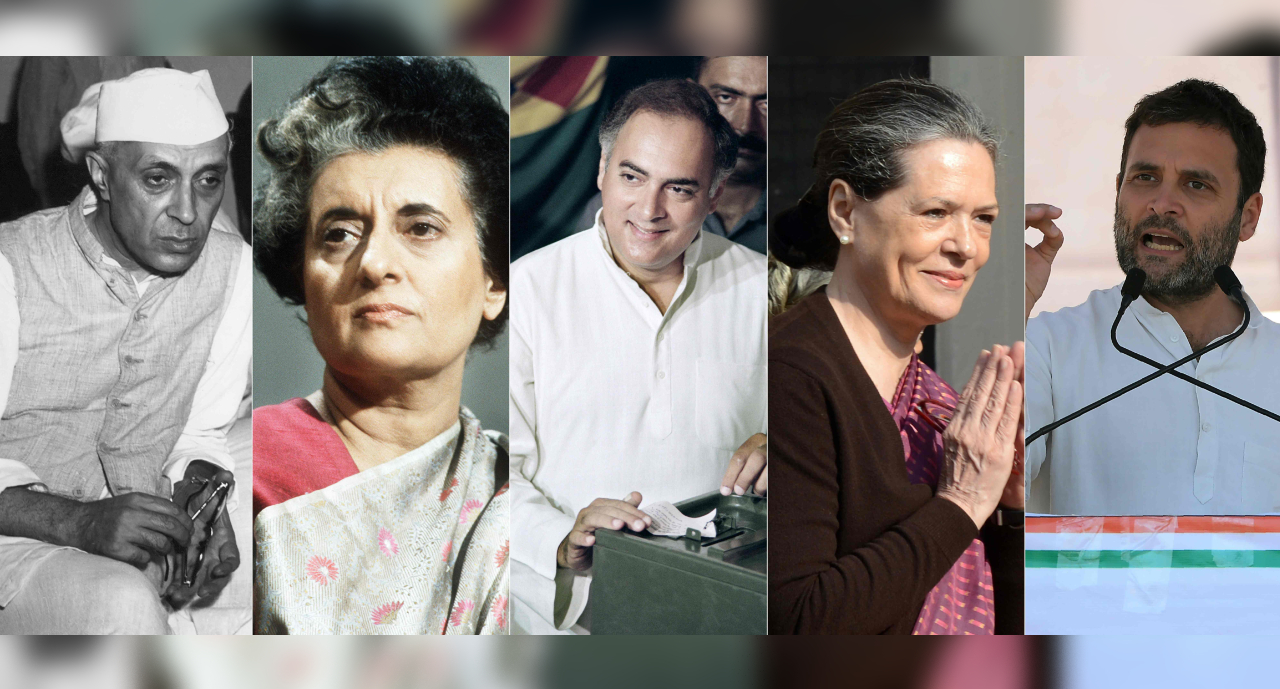
Fast forward to today. Sonia Gandhi, an Italian by birth, not only leads the Congress but has positioned her children, Rahul and Priyanka Gandhi, as heirs apparent. The irony is glaring: under Nehru’s own logic, both would be excluded from succession. Rahul and Priyanka, much like Richard Holkar, are born to a foreign mother, raising uncomfortable questions about the party’s ideological about-face.
Rahul Gandhi: Three Passports and a Stormy Inquiry

The controversy intensifies with Rahul Gandhi’s alleged multiple passports and questions about his citizenship. Recent years have seen Parliamentary petitions, legal cases, and media investigations into whether Rahul Gandhi holds, or has held, British and Italian passports under variants like “Raol Vinci”. Evidence submitted to the Allahabad High Court includes documents and communications from the UK Government, which reportedly shared details of Rahul’s British passport after review requests by Bharatiya authorities.
The crux: Bharatiya law does not permit dual citizenship. If Rahul Gandhi is proven to have held citizenship or a valid passport from another country, his Bharatiya parliamentary membership—and his eligibility to be Prime Minister—would be instantly revoked under Section 9(2) of the Citizenship Act, 1955. Investigations by the Ministry of Home Affairs and the Central Bureau of Investigation remain ongoing, with courts demanding urgent clarification. The matter remains unresolved, but the seriousness is underscored by the government’s repeated requests for legal representation—and Rahul’s conspicuous absence in proceedings.
Priyanka Gandhi: Legacy Under Scrutiny

Priyanka’s prospects are equally shadowed by the foreign lineage question. Born to an Italian mother and Bharatiyafather, her eligibility faces the same historic precedent as her brother—a precedent created not by a political rival, but by her own grand father-in-law. The modern Congress Party, it seems, now stands in direct contradiction to the very rationale that shaped its foundation.
Is Sonia Gandhi Disobeying Nehru’s Law?

In the face of these challenges, Sonia Gandhi’s stewardship represents either an evolution of Congress thought or a betrayal of its own ideological roots. Nehru’s doctrine was adamant: loyalty to Bharat must be undivided, entirely immune to foreign influences. Sonia Gandhi’s open project to elevate her children, despite their maternal heritage, flies in the face of this foundational belief. The party’s readiness to abandon Nehru’s standard for political convenience invites charges of hypocrisy—and raises alarm about integrity in leadership.
Country Before Dynasty

Bharat’s unity has always been fragile, forged from diverse identities and historic wounds. Nehru recognized this and acted, however harshly, to minimize any possibility of split allegiances. In today’s world, global citizenship and mobility have changed the landscape. However, Bharat’s laws—and the original reasoning—remain clear: public office is a duty of undivided loyalty.
Questions about Rahul Gandhi’s nationality and Priyanka’s succession prospects are not just political mudslinging. They are serious, constitutional questions about sovereignty and identity. If proven, holding dual or foreign citizenship should disqualify anyone from leading the world’s largest democracy.
Lessons for Today’s Bharat
Nehru’s forgotten verdict is a haunting reminder that the business of nation-building is never truly finished. Bharat’s leaders, old and new, must answer whether the pursuit of power is worth eroding hard-won principles. Ideological consistency in public office must matter—otherwise, the precedent set in Simla will continue to echo not as a proud doctrine, but as a rebuke to those who rewrite history for convenience.
Bharatiya deserve clarity, integrity, and allegiance from those who seek to represent them at the highest level. As the debate over foreign lineage and citizenship once again grips the Congress, perhaps it is time for Parliament—and the people—to reevaluate the doctrine Nehru himself wrote nearly seventy-five years ago.
