
Learjet Crash: Visibility Below VFR Minima, Safety Lapses Flagged
AAIB Preliminary Report Flags Poor Visibility, Faded Runway, No ARFF at Baramati

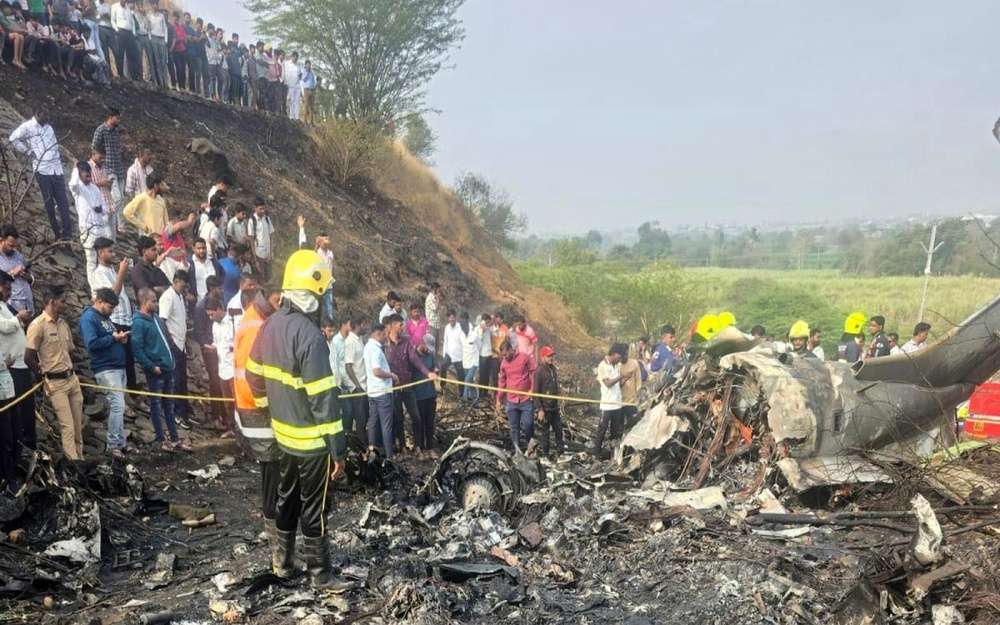
- Visibility 3 km, below 5 km VFR minimum at time of landing
- No in-house fire unit; faded runway markings, loose gravel noted
- Aircraft crashed 50 metres left of Runway 11
- CVR damaged; US assistance sought for data retrieval
GG News Bureau
Baramati, 1st March: Poor visibility below prescribed limits and multiple infrastructure gaps at an uncontrolled airfield have come under scrutiny in the preliminary report into the January 28 Learjet 45XR crash that killed Maharashtra Deputy Chief Minister Ajit Pawar and four others.
The Aircraft Accident Investigation Bureau (AAIB) said visibility at the time of landing was reported as 3 kilometres, well below the 5-kilometre minimum required for Visual Flight Rules (VFR) operations. The crash occurred at Baramati, an uncontrolled airfield operating only under VFR conditions.
The Learjet 45XR (VT-SSK), operated by VSR Ventures Pvt Ltd, was on a non-scheduled VIP charter from Mumbai and crashed while attempting to land on Runway 11 at approximately 8:46 am IST. All five on board — the Pilot-in-Command, First Officer, cabin attendant and two passengers — were killed.
Approach and Go-Around
According to the report, the aircraft first contacted Baramati tower at 8:19 am. At 8:31 am, the crew sought current visibility and were informed it was 3 km. Despite this, the approach continued.
The first landing attempt was aborted at 8:36 am when the crew announced a “go-around.” During the second approach, at 8:43:55 am, the crew reported “Field in sight” and were cleared to land. Seconds before impact, the cockpit voice recorder captured the words, “Oh St… Oh St…”
The aircraft crash-landed around 50 metres left of Runway 11, struck trees and impacted terrain at a lower elevation before being engulfed in flames. CCTV footage showed the aircraft banking right before impact.
Weather and Infrastructure Gaps
The report highlighted that Baramati lacks a certified meteorological facility. Weather updates are relayed from temporary setups run by flying training organisations, and visibility is assessed visually.
Satellite imagery suggested shallow fog patches around the time of the crash. METAR data from nearby Pune showed visibility dropping to 2,000 metres between 8:10 am and 8:30 am.
Baramati airfield, managed by Maharashtra Airport Development Company Limited since August 2025, has only one runway (11/29) and no navigational aids beyond windsocks. Both windsocks are installed toward Runway 29; none is available on the Runway 11 side.
The report noted faded runway markings and loose gravel, with no re-carpeting carried out since March 2016. It also flagged the absence of an in-house Aircraft Rescue and Fire Fighting (ARFF) unit, inadequate perimeter fencing, and the absence of a boundary wall. The beginning of Runway 11 is described as a tabletop terrain feature.
Crew and Aircraft Details
The 61-year-old Pilot-in-Command held an Airline Transport Pilot Licence with 18,855 total flying hours, including over 2,800 hours on the Learjet 45XR. The 25-year-old First Officer had over 2,400 hours of flying experience. Both had operated into Baramati previously. Pre-flight breath analyser tests were negative.
The aircraft held valid airworthiness certifications and was not operating under Minimum Equipment List restrictions.
Flight Recorders and Probe
Both the Flight Data Recorder and Cockpit Voice Recorder were recovered. FDR data has been downloaded, but the CVR was thermally damaged. Assistance has been sought from the United States under ICAO Annex 13 to retrieve its data.
The AAIB said the findings are preliminary and aimed at accident prevention, not apportioning blame.
Interim Safety Recommendations
The bureau has advised the Directorate General of Civil Aviation (DGCA) to ensure strict adherence to VFR standard operating procedures at uncontrolled airfields and permit operations only when meteorological conditions meet prescribed limits.
It also recommended upgrading landing aids, establishing basic MET facilities, and examining licensing feasibility for such aerodromes.
The investigation remains ongoing, with analysis of flight data continuing and operational documents seized for detailed examination.
