
Learjet Crash at Baramati: What We Know So Far About VT-SSK Tragedy
DGCA data, aircraft history and airfield conditions raise key questions as AAIB takes over probe

By Harshita Rai
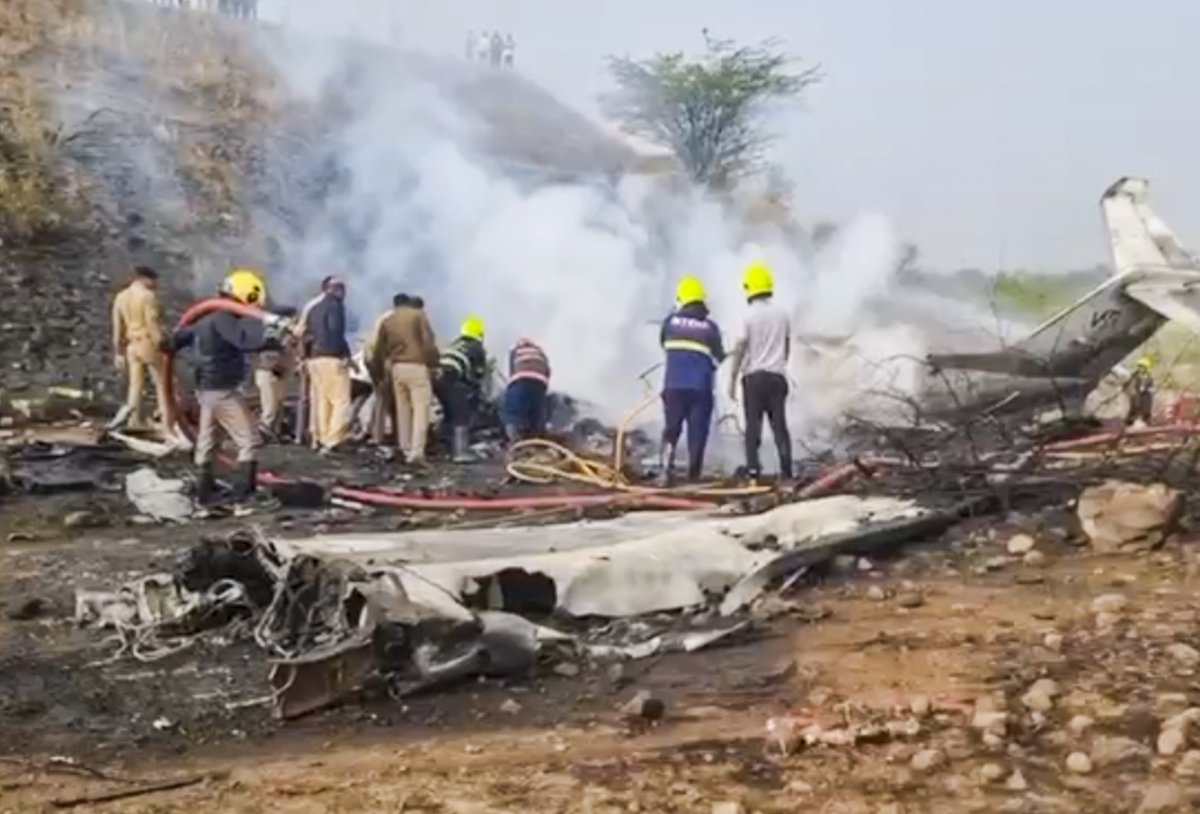
The aircraft, operated by non-scheduled operator M/s VSR Ventures Pvt. Ltd, was flying the Mumbai–Baramati sector on January 28 when it crashed during landing, killing all five people on board, including Maharashtra Deputy Chief Minister Ajit Pawar.
According to official data, Baramati is an uncontrolled airfield, where traffic information is coordinated by instructors and pilots from local flying training organisations rather than a full-fledged Air Traffic Control unit. This operational setup is now likely to be a key focus of the investigation being led by the Aircraft Accident Investigation Bureau (AAIB).
Sequence of Events
The aircraft first contacted Baramati at 08:18 IST. It was later released by Pune Approach and advised to descend under Visual Meteorological Conditions at the pilot’s discretion. The crew was informed that winds were calm and visibility was approximately 3,000 metres.
During the first approach to Runway 11, the crew reported that the runway was not in sight and initiated a go-around. On the second approach, they again reported difficulty in acquiring the runway visually, before stating moments later that the runway was in sight.
At 08:43 IST, the aircraft was cleared to land on Runway 11. However, authorities noted that no readback of the landing clearance was received. At 08:44 IST, flames were observed near the runway threshold, indicating the crash.
The wreckage was found on the left side of the runway near the threshold of Runway 11, suggesting the aircraft may have deviated from the runway centreline or experienced loss of control during the final phase of landing.
Aircraft and Operator Background
VT-SSK was manufactured in 2010 and held valid Certificates of Airworthiness and Airworthiness Review Certificate, with the ARC valid until September 2026. The aircraft had accumulated over 4,900 flight hours and nearly 5,900 cycles, within normal operational limits for its class.
The operator, VSR Ventures Pvt. Ltd, holds a valid Non-Scheduled Operator Permit, last renewed in April 2023 and valid until April 2028. The company operates a fleet of 17 aircraft, including seven Learjet 45 jets.
DGCA records show that a regulatory audit conducted in February 2025 raised no Level-I safety findings. However, the company had another Learjet 45 accident in September 2023 at Mumbai Airport, which is still under investigation by AAIB, a fact that is now likely to draw renewed scrutiny.
Crew Experience
The pilot-in-command held an Airline Transport Pilot Licence (ATPL) with more than 15,000 flying hours and had a valid medical certificate and recent proficiency checks. The co-pilot held a Commercial Pilot Licence (CPL) with approximately 1,500 flight hours and also held valid medical and proficiency clearances.
This level of experience suggests that human factors, environmental conditions and airfield infrastructure will be closely examined alongside aircraft systems and procedural compliance.
Key Questions for Investigators
With AAIB now formally in charge of the investigation, analysts say several issues will be central to the probe:
- The adequacy of visibility and weather assessment at an uncontrolled airfield
- The decision-making during the go-around and second approach
- Communication gaps, including the absence of landing clearance readback
- Runway environment, approach aids and obstacle clearance
- Oversight of charter operations at smaller regional airfields
The Directorate General of Civil Aviation has confirmed that further technical and operational findings will be shared as the investigation progresses.
The tragedy has once again highlighted the complex safety challenges associated with charter operations into uncontrolled or semi-controlled regional airports, especially under marginal visibility conditions.
