
László Krasznahorkai named 2025 Nobel Prize in Literature for visionary, apocalyptic storytelling

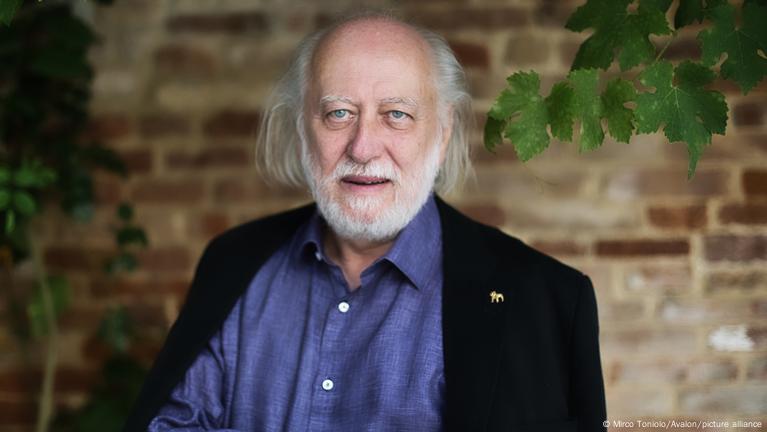
By Anjali Sharma
WASHINGTON – The Nobel Prize in Literature on Thursday was announced to a Hungarian writer who has spent his entire career staring straight into the heart of darkness, and finding beauty there.
The 2025 Nobel Prize in Literature has been awarded to Hungarian author László Krasznahorkai.
He is popular “for his compelling and visionary oeuvre that, in the midst of apocalyptic terror, reaffirms the power of art.”
Beyond novels, Krasznahorkai’s creativity extends to other art forms. He has written screenplays.
He has even collaborated with visual artists like Max Neumann, and even worked with musicians.
For many in the literary world, this announcement feels like a long-overdue recognition.
Krasznahorkai, called ‘the master of slow apocalypse’, has been one of Europe’s most challenging and profound voices for over four decades.
His writing dense, poetic, and hypnotic captures the crumbling edges of human existence.
Krasznahorkai was born in 1954 in Hungary, began writing during the last years of communist rule in the country.
In 1985, he rose to prominence with his debut novel ‘Sátántangó’.
The novel became an 8 hour cult film by his long-time collaborator, Béla Tarr, who turned several of Krasznahorkai’s works into cinematic experiences of despair and beauty.
They created some of Europe’s most memorable art films: ‘Damnation’ (1988), ‘Werckmeister Harmonies’ (2000), and ‘The Turin Horse’ (2011).
The last of these, stark and minimal, was announced as their final collaboration.
Krasznahorkai’s career has been shaped by movement across borders, cultures, and inner landscapes.
He lived in Berlin, New York, Kyoto, and various corners of Europe and Asia after the fall of the Soviet bloc.
His travels to Mongolia and China inspired two meditative works: ‘The Prisoner of Urga’ and ‘Destruction and Sorrow Beneath the Heavens’.
He spent years in Japan brought a deep fascination with Eastern philosophy and aesthetics. These experiences reshaped his writing.
The influence of Zen thought and Far Eastern art can be felt most clearly in ‘Seiobo There Below’. It is a 2014 masterpiece that earned him the Best Translated Book Award.
Krasznahorkai’s work has found readers across the globe. His books are less stories than meditations, filled with despair, absurdity, and flashes of revelation.
Beyond novels, Krasznahorkai’s creativity extends to other art forms.
He has written screenplays and has collaborated with visual artists like Max Neumann, and even worked with musicians.
In 2021 his illustrated novella ‘Chasing Homer’ combined literature, art, and sound. This blended Neumann’s visuals and a pulsating jazz score by Szilveszter Miklós.
