

GG News Bureau
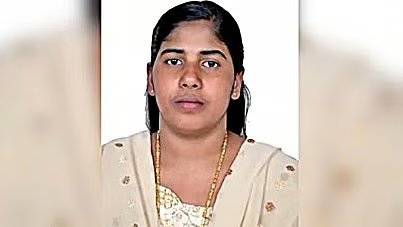
New Delhi, 10th July — The Supreme Court of India on Thursday agreed to hear an urgent petition filed to halt the execution of Kerala nurse Nimisha Priya, who faces capital punishment in Yemen. The top court scheduled the matter for hearing on July 14, just two days before the scheduled execution date.
The plea, filed as a Public Interest Litigation (PIL) by the Save Nimisha Priya International Action Council, seeks the Indian government’s immediate diplomatic intervention to facilitate the payment of “blood money” — a legal provision under Yemen’s Shariah law — that could secure a pardon from the victim’s family.
Senior advocate Ragenth Basant, representing the petitioner, mentioned the matter before a vacation bench comprising Justices Sudhanshu Dhulia and Joymalya Bagchi. He underlined the time-sensitive nature of the case and urged the court to hear the matter urgently.
“Time is of the essence,” Basant argued. “The execution is scheduled for July 16. The Yemeni appellate court had kept the door open for blood money settlement. Negotiations with the victim’s family are ongoing and may save her life if diplomatic efforts are promptly made.”
Nimisha Priya, a nurse from Kerala, was convicted in 2017 for the murder of Yemeni national Talal Abdo Mahdi. Reports suggest that she administered sedatives to Mahdi in an attempt to recover her passport from his custody, which allegedly resulted in his death. She has been in detention since and was sentenced to death under Yemeni law.
The petitioner urged the Centre to take proactive steps through diplomatic channels, including negotiations with the victim’s family to arrange for compensation — a practice permissible under Shariah — and thereby obtain clemency.
Though the bench initially proposed a Monday hearing, the petitioner’s counsel stressed the urgency, noting that diplomatic negotiations and financial arrangements would require time. The bench then agreed to list the matter on July 14.
The case has triggered widespread concern and emotional appeals from human rights groups and civil society, especially in Kerala. Online campaigns and fundraising efforts are already underway to arrange the blood money, and many are calling on the government to step in decisively.
Nimisha’s mother, who has been campaigning tirelessly for her daughter’s life, welcomed the court’s decision to hear the plea and appealed to the Union Government to act swiftly. “We have very little time. Only the government can help us save her now,” she said.
The Ministry of External Affairs has not issued an official statement yet, but sources indicate that backchannel communications may already be in motion.
This case not only raises urgent humanitarian concerns but also underscores the complexities of international law and diplomatic engagement when Indian nationals face severe punishment abroad. The coming days will be critical as the court takes up the matter and the government weighs its diplomatic options.
