
Kerala Bows to Reality: Joins PM SHRI to Boost Education
“Kerala Ends Its Year-Long Resistance to PM SHRI Scheme, Choosing Financial Realities and Student Demands Over Ideological Opposition.”

Paromita Das
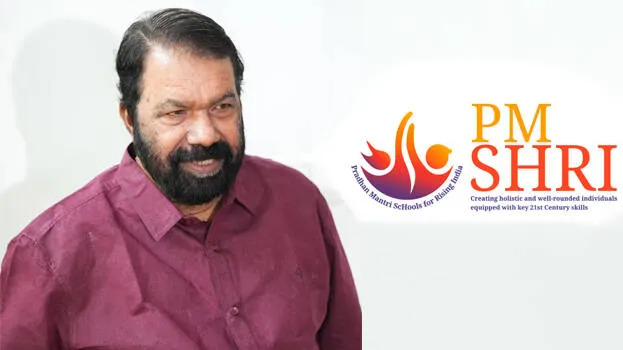
New Delhi, 23rd October: In a significant political and educational development, the CPI(M)-led Kerala government has finally agreed to join the Pradhan Mantri Schools for Rising India (PM SHRI) scheme — a flagship central initiative designed to uplift school infrastructure and improve education quality nationwide. This marks a dramatic U-turn from the state’s prolonged resistance that lasted more than a year, driven by ideological opposition and fears of “saffronisation” under the National Education Policy (NEP) 2020. Kerala’s decision to join the scheme highlights how financial realities, growing student pressures, and the steadfast approach of the Union government forced a pragmatic shift that prioritizes governance over political posturing.
Ideology vs. Educational Progress: Kerala’s Prolonged Resistance

For nearly a year, Kerala’s Left Democratic Front (LDF) government stood firm against signing the memorandum of understanding (MoU) required to access PM SHRI funds. Anchored in ideological opposition, Chief Minister Pinarayi Vijayan publicly denounced the NEP as “a danger to the nation,” while Education Minister V Sivankutty warned against undue central interference in the state’s education system. The CPI(M) has historically resisted what it perceives as attempts by the BJP-led Centre to centralize control, framing education as a sensitive cultural domain requiring local autonomy.
Kerala joined a small group of resistant states—alongside West Bengal and Tamil Nadu—in refusing agreement to the PM SHRI scheme, even as most other states swiftly signed on and unlocked substantial funding. This intransigence was a political stand, but it came with steep institutional costs.
Financial Pressure: The Hard Reality of Withheld Funds

The Centre’s move to link crucial education funding under the Samagra Shiksha umbrella programme to the signing of the PM SHRI MoU exposed Kerala’s economic vulnerability. Over ₹1,000 crore in essential funds, used for teacher salaries, infrastructure upgrades, and student grants, were withheld due to Kerala’s non-compliance. Unlike proactive states such as Madhya Pradesh, Uttar Pradesh, and Rajasthan, Kerala faced mounting fiscal challenges in running its education services.
This financial pinch was hard to ignore. Educational institutions grappled with budget shortfalls, and the sustainability of programs depended increasingly on Central assistance. The Marxist government’s ideological stand quickly collided with the stark economic realities of delivering quality education at scale.
Students Break the Silence: ABVP’s Persistent Campaign

Beyond finances, pressure from students grew steadily. The Akhil Bharatiya Vidyarthi Parishad (ABVP), the BJP’s student wing, emerged as a vocal critic of Kerala’s resistance, arguing that political posturing should never come at the cost of students’ futures. Through protests, campaigns, and memorandums, ABVP highlighted how Kerala’s students were being denied the benefits of a centrally supported quality assurance scheme.
ABVP’s Kerala State Secretary E.U. Eswaraprasad celebrated the government’s eventual decision as “a big victory for students,” emphasizing that PM SHRI would bring about transformative benefits in over 336 schools, elevating them to standards comparable to Kendriya Vidyalayas, known for academic excellence.
Centre’s Unyielding Stance: Education as a Shared Responsibility

Throughout the standoff, the Union Government maintained a firm line: participation in centrally sponsored schemes requires states to meet administrative and fiscal conditions. Education Minister Dharmendra Pradhan stressed education’s place on the Concurrent List, underscoring both Centre and state responsibilities. Funds would not be disbursed selectively—uniformity and compliance were non-negotiable.
This inflexible position effectively communicated that political games could not bypass accountability or stall vital reforms. In doing so, the Centre reaffirmed its commitment to improving educational standards throughout the country, regardless of ideological resistance.
Kerala’s Pragmatic U-Turn: Governance Over Politics

On October 19, Education Minister Sivankutty acknowledged the untenable nature of Kerala’s position. He cited the withheld ₹1,466 crore in central funds as resources essentially belonging to Kerala’s children and essential for meeting teacher salaries and ongoing grants. His announcement to join PM SHRI marked a practical retreat from earlier ideological rigidity.
This decision exposed the tension within Kerala’s Marxist governance model, revealing how political symbolism often conflicts with administrative necessities. Ideology, however vocal, cannot substitute the concrete demands of maintaining educational infrastructure and excellence.
Broader Lessons: When Governance Trumps Political Grandstanding

Kerala’s episode is a microcosm of a larger lesson for states and political formations that mix governance with rigid ideology. Political resistance may serve as a rallying cry but loses meaning if it compromises essential services. The Centre’s strict adherence to rules-based disbursement shows that uniform national schemes will not bend for political expedience.
Notably, ABVP’s successful advocacy signals shifting dynamics in Kerala’s traditionally Left-dominated political environment. The rise of student voices demanding pragmatic solutions reflects changing political undercurrents that prioritize developmental outcomes over partisan rhetoric.
Balancing Ideology with Real-World Demands

While ideological beliefs provide a vision, governance demands balancing those beliefs with practical realities, especially in critical sectors like education. Kerala’s refusal to engage had put a vital service at risk and harmed students’ opportunities. Their reversal is a testament to the fact that patriotism and progress demand cooperation beyond political divides.
Moreover, the Centre’s non-negotiable stance on compliance underscores the importance of accountability in federal programs. National educational reforms must accommodate diversity but ensure minimum uniform standards to benefit the entire nation.
Pragmatism Wins the Day in Kerala’s Education Policy
Kerala’s decision to join the PM SHRI scheme is more than a policy change; it symbolizes a shift from ideological posturing to pragmatic governance. By embracing central assistance, the state safeguards its legacy of educational excellence and signals a readiness to prioritize student welfare over political battles.
As schools in Kerala prepare to receive new funding and support to elevate quality and infrastructure, the episode reminds policymakers nationwide that governance rooted in practicality and accountability ultimately serves the people best. Kerala’s ideological fortress has yielded—not through electoral defeat but through the undeniable forces of financial necessity, student voices, and the imperative of progress.
