
Weaponizing Narratives: Why Linking Maa Kamakhya Mandir to Human Sacrifice is a Dangerous Precedent

Poonam Sharma
In a move that has sparked widespread outrage, CNN News18 aired a segment allegedly linking the revered Maa Kamakhya Mandir in Assam to an isolated case of human sacrifice reported in Meghalaya. This insinuation has drawn severe criticism from the Patriotic People’s Front Assam (PPFA), which called the report defamatory, factually baseless, and culturally insensitive. Once again, a mainstream media outlet has chosen to play fast and loose with facts, smearing a centuries-old Hindu tradition with sensationalist conjecture.
But this isn’t just about one temple or one report. This is part of a growing pattern where Hindu temples and rituals are being misrepresented, vilified, and linked with regressive or criminal activities, often without any credible evidence. The narrative is subtle, but its impact is damaging and deliberate. The question arises: why are such narratives being created? Who benefits when temples like Maa Kamakhya are painted in this grotesque light?
The Sanctity of Maa Kamakhya Mandir
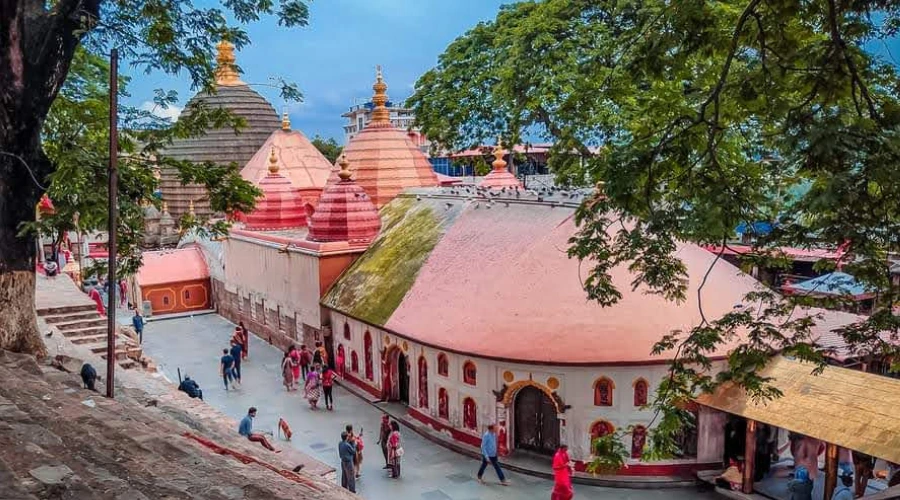
Located atop the Nilachal Hill in Guwahati, Maa Kamakhya Mandir is one of the most sacred Shakti Peethas in India, dedicated to the Mother Goddess. Known for its spiritual, tantric, and philosophical heritage, the temple draws devotees from across the world—Hindus and even scholars interested in ancient tantric traditions. The Ambubachi Mela, held annually, celebrates the menstruation cycle of the Goddess and is symbolic of fertility and creation—far removed from the dark, macabre tales now being associated with it by mainstream media.
To link such a revered temple with an isolated murder incident is not just intellectually dishonest, it is an assault on the dignity of millions of believers.
PPFA’s Response: Rightful Outrage
In its official statement, the Patriotic People’s Front Assam termed the report by CNN News18 as a malicious attempt to demonize a spiritual institution central to Assamese and broader Hindu culture. The PPFA highlighted that not only was the report factually unverified, but it also cast a shadow over an entire tradition that has historically played a positive role in the cultural fabric of Northeast India.
Such a representation, the PPFA said, not only harms the reputation of Maa Kamakhya Mandir but also fuels existing prejudices against Hindu spiritual practices, which are often misunderstood or deliberately distorted in elite media circles.
The Larger Narrative: Hindu Temples Under Fire
This isn’t the first time that Hindu institutions have come under media scrutiny with exaggerated or misleading claims. Over the years, several mainstream platforms have attempted to link Hindu festivals, temples, and rituals with violence, backwardness, or superstition, often with no empirical basis.
Sabarimala was framed as a site of patriarchal oppression without acknowledging its unique traditions and egalitarian ethos.
Diwali celebrations have been repeatedly criticized for pollution, while other festivals are spared similar scrutiny.
Hindu monks and saints are often labeled as extremists, while clergy from other faiths are treated with undue reverence.
Such selective targeting raises serious questions about media objectivity and intent. Why is it that every time a mysterious crime occurs in India, particularly in tribal or rural areas, the blame somehow circles back to a Hindu ritual or belief?
Media Responsibility and Cultural Sensitivity
Journalism is a powerful tool. It shapes public perception and, in a multicultural nation like India, it must be exercised with responsibility, cultural sensitivity, and factual rigor. When a respected media house like CNN News18 chooses sensationalism over accuracy, it erodes public trust and fuels communal discord.
Linking Maa Kamakhya Mandir to a murder case without investigation is akin to accusing a church of witchcraft because a cult in the same state committed a crime. Would such a reckless connection be tolerated if the religious institution belonged to a minority group? The answer is likely no. But when it comes to Hindu temples, the bar of journalistic scrutiny is conveniently lowered.
Protecting the Dignity of Hindu Traditions
Hinduism is a pluralistic and deeply philosophical tradition with rituals rooted in cosmic symbolism, not barbarism. While there may be fringe elements or criminal incidents that mimic religious language, it is imperative to distinguish them from mainstream belief systems. Equating ancient tantric practices with murder is not just a logical fallacy, it is an act of cultural vandalism.
The attack on Maa Kamakhya Mandir is not just an attack on a building; it is an attack on the spiritual, emotional, and historical identity of an entire community. Such acts must be condemned unequivocally, not debated in the name of journalistic freedom.
Call for Ethical Media and Respect for Faith
In light of the recent controversy, it is vital for media houses to re-examine their editorial practices. Cultural heritage sites like Kamakhya are not mere news props—they are living symbols of faith and tradition. Irresponsible reporting can stoke religious tensions and sow distrust among communities.
The need of the hour is balance, accountability, and respect. While freedom of the press must be preserved, it cannot come at the cost of defaming religious institutions and hurting the sentiments of millions.
In a time where misinformation spreads faster than facts, it is critical that temples like Maa Kamakhya are protected not just from physical threats, but from narrative attacks. This is not about politics. This is about preserving the spiritual backbone of Bharat.
If CNN News18 values its credibility, it should retract the segment, issue an apology, and commit to responsible journalism. And as citizens, we must remain vigilant—not just against those who commit crimes, but also those who distort the truth in the name of telling a story.
