
JD Vance’s H-1B Attack Backfires Amid Tech, Immigration Backlash
JD Vance's Critique of H-1Bs: A Faultline Between Political Campaign Rhetoric and America's Innovation Machine

Poonam Sharma
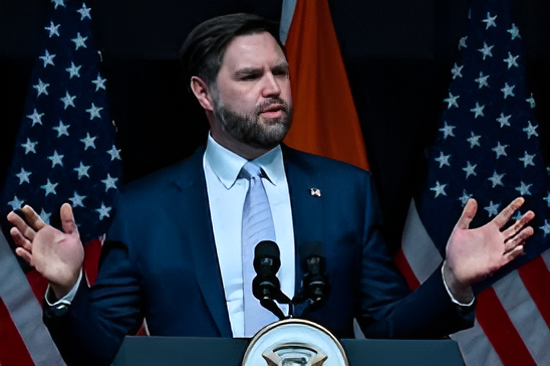
Amid the roiling election season, U.S. Vice President JD Vance has lit another firestorm. Speaking at a recent Hill and Valley Forum, Vance criticized tech firms like Microsoft for dismissing thousands of workers while seeking approval for thousands of H-1B visas. The attack appears to be on behalf of the American worker. But behind it is a subtler—and politically explosive—blend of economic reality, populism as a tactical move, and long-term implications for U.S. competitiveness.
At one level, the remarks, considered populist dog whistle by some and a legitimate grievance by others, reflect the deep fault lines in America’s tech labor policy and immigration framework. Above all, it throws a long shadow over the future of Indian tech professionals who form the lion’s share of H-1B visa holders.
Comments of Vance: Populist Framing or Policy Concern?
Vance’s remark—”You lay off 9,000 people and then request 6,000 foreign work visas? That doesn’t compute”—was intended to be dramatic. In a presidential election year in which economic uncertainty and anti-globalism are prevalent, it’s a good zinger. But as most of Vance’s critics from the immigrant and tech communities were quick to note, the remark is more misleading than substantial.
What Vance leaves out is essential: a lot of those who got laid off were themselves H-1B workers. In addition, the great majority of visa requests filed by Microsoft weren’t new hires, but renewals or transfers for current employees. These are employees who, in too many instances, have been resident in the U.S. for more than a decade, contributing reliably to the pipeline of innovation in limbo in the notorious green card backlog.
Thus, the idea that tech companies are replacing Americans with foreigners is not only inaccurate—it’s dangerously reductive.
Microsoft and the Realities of Tech Labor
Microsoft, like all leading tech companies, depends on extremely specialized skills to power its core business—artificial intelligence, cybersecurity, cloud computing, and enterprise services. These are not overnight fillable jobs by the typical job candidate. The supply of U.S. citizens with advanced STEM degrees remains behind demand.
The 85,000 annual H-1B cap, which has remained static for more than two decades, is a chokepoint for a sector that has exploded in size. Under those circumstances, Microsoft’s ongoing request for H-1B renewals is not corporate treason but business exigency.
Actually, immigration specialists contend that the majority of H-1B visa recipients are already members of the U.S. workforce. They pay taxes, contribute to Social Security, and enable U.S.-based employers to remain competitive internationally. If anything, the layoffs are an indicator of broader market realignments, not a calculated foreign-labor hiring binge.
Green Card Backlogs: The Invisible Burden
What stings Vance’s remarks most for Indian tech professionals is that they do not acknowledge the system barriers they confront. The green card backlog, brought about by outdated per-country limits, has stranded more than 1 million Indian professionals in line for permanent residence—some since decades.
These workers are not merely temporary visitors. They are long-term contributors who have married, raised children, purchased homes, and contributed to the U.S. system for years. The inability to solve this legislative morass has placed them in a state of perpetual limbo. When layoffs happen, they don’t simply lose a job—they face deportation.
In that respect, the H-1B debate is not about defending American workers. It is about reform vs. scapegoating.
Political Calculations in an Election Year
Vance’s words should be put into the larger context of the presidential campaign of 2025. On the ticket with Donald Trump, his rhetoric takes the familiar form of the “America First” creed—portraying foreign labor, global institutions, and international integration as threats to national stability.
This kind of rhetoric, though powerful with certain voter constituencies, has the potential to harm America’s international reputation as a talent magnet. The technology industry has been largely constructed on the shoulders of immigrant workers, many of whom have turned into entrepreneurs, job creators, and thought leaders. The imagery of demonizing them—even tacitly—could bite back.
Further, the backlash against companies such as Microsoft may discourage them from investing the long-term money in U.S.-based talent pipelines out of fear of political revenge or regulatory punishment.
Policy Myopia vs. Strategic Vision
Instead of bringing about reform, Vance’s remarks might dig in political opposition. The actual challenge is not the foreign workers, but a policy environment that has lagged behind reality.
Shoring up the H-1B program, abolishing discriminatory caps on green cards, and constructing open-book layoff procedures for visa-employing workers must be the bipartisan agenda. However, these meaningful conversations are overwhelmed by electioneering posturing.
India, the largest individual source of high-skilled immigrants coming to the U.S., is observing carefully. Any change in visa policy has ramifications that resonate not only across Silicon Valley, but throughout geopolitics, trade talks, and strategic partnerships. Driving away this workforce would be a strategic mistake.
The Human Dimension
At its essence, the H-1B debate is not about policy or figures, but people. They are people who quite likely left behind families, communities, and opportunities for the American Dream. They help create industries that are shaping America’s future—AI, defense technology—and yet are still dispensable in political discourse.
The moment JD Vance points his finger at the illogic of H-1B in the very same breath as layoffs, he dismisses a nuanced reality: painful, often pitiful, for those caught between two worlds—neither fully American nor fully foreign. It is a reminder of how easily human dignity can be eclipsed by political calculus.
A Fork in the Road
Vance’s comments have highlighted the paradoxes of America’s immigration debate. In seeking to elevate American workers, such remarks have the potential to alienate precisely the people and sectors integral to U.S. competitiveness.
The task before us is clear: construct an immigration system that is equitable, adaptable, and responsive to national interests—not one based on campaign rhetoric or fear. If America is to continue to be the world’s innovation hub, it must acknowledge that excellence is not bound by passport.
