
Jaishankar warns says UN in ‘state of crisis’ calls for multilateralism, UN reform

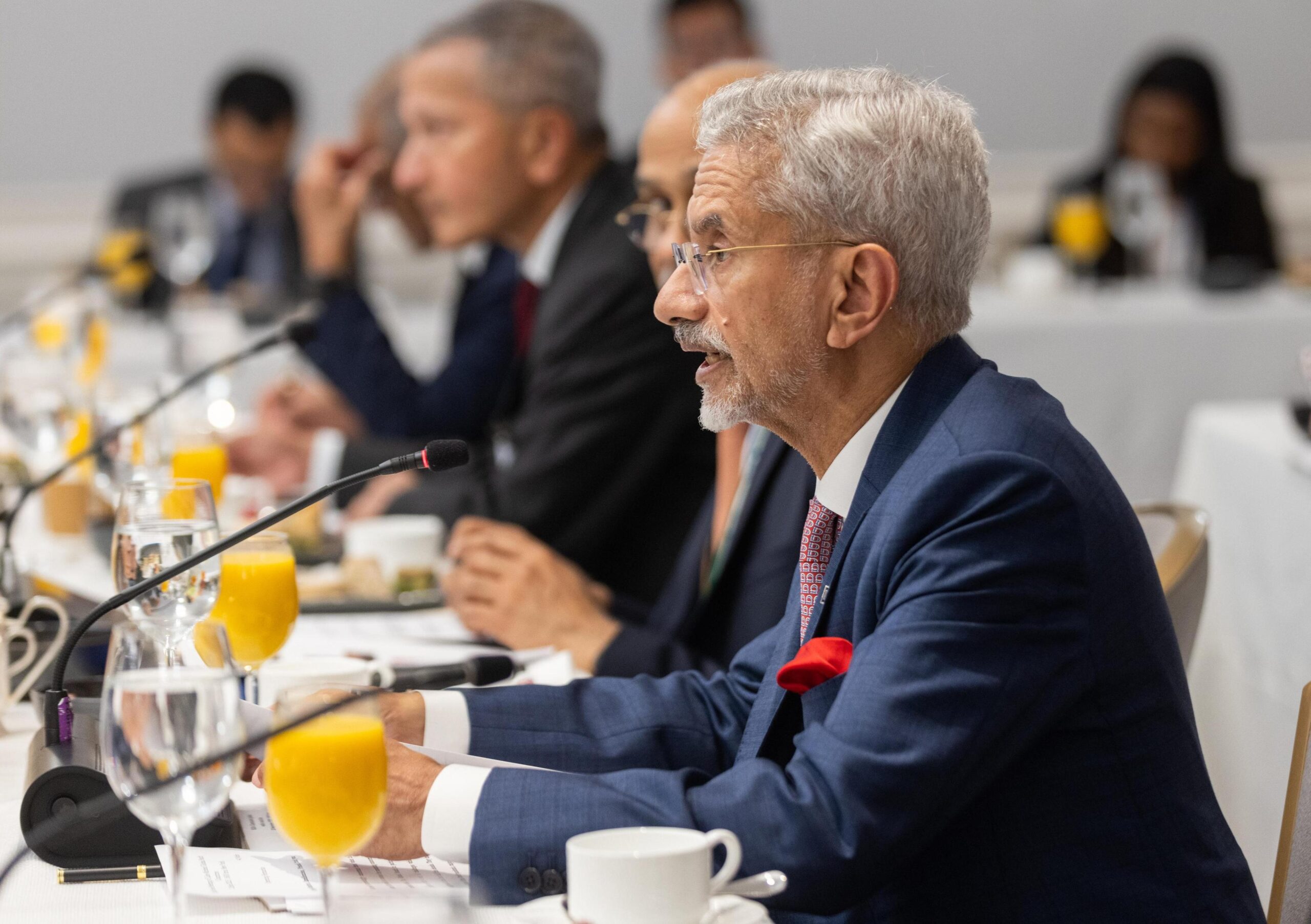
By Anjali Sharma
UNITED NATIONS – Minister of External Affairs Subrahmanyam Jaishankar on Saturday addressed the high level session of the UNGA in New York and warned the world leaders that UN is in ‘state of crisis’ outlined the failings of a “gridlocked” UN, asserted the need for multilateralism, more international cooperation and a reformed Organization.
Mr. Jaishankar asked “How has the UN lived up to expectations,” pointed to the conflicts in Ukraine and the Middle East, as well as West Asia and “innumerable hotspots” which “don’t even make the news.”
He decried a perceived lack of global solidarity on a number of issues: he described the slow progress of the Sustainable Development Goals which are way off track for completion by the 2030 deadline as “a sorry picture,” condemned the “re circulated commitments and creative accounting” that pass for climate action, and accused wealthy countries of insulating themselves energy and food insecurity, whilst resource-stressed nations “scramble to survive only to hear sanctimonious lectures thereafter.”
Jaishankar argued that global economic concerns include “tariff volatility and uncertain market access,” technological control, supply chain and critical minerals, the protection of sea lanes and restrictions on the evolution of a global workplace.
He declared that these issues point to a need for more international cooperation.
EAM suggested, whilst questioning the UN’s ability to solve them.
Mr. Jaishankar declared the UN is “in a state of crisis,” and gridlocked, partly due to a resistance to reform even though most members want change.
“It is imperative that we see through the cynicism and purposefully address the reform agenda,” he declared.
Mr. Jaishankar referred to ongoing disputes with Pakistan, asserted that for several decades, major international terrorist attacks have been traced back to India’s neighbour.
He said that India exercises its right to defend its people against terrorism and bring its perpetrators to justice. Fighting this threat, he said, is an area where much deeper international cooperation is needed, and relentless pressure put on the whole terror ecosystem.
Mr. Jaishankar portrayed India as a leader in the Global South, responsible for more than 600 development projects in 78 countries.
He said that the country steps forward to respond to the urgent needs of other countries, whether in terms of “finance, food, fertilizer of fuel.”
Jaishankar cited the emergency aid India provided after the 2024 Afghanistan earthquake, and the more recent earthquake in Myanmar, and the contribution that India makes to peacekeeping, providing troops as blue helmets in conflict hotspots from the Golan Heights to Western Sahara and Somalia.
He lauded the economic achievements of his country, particularly over the last decade. He mentioned the Indian start-up ecosystem, rapidly growing infrastructure and commitment to harnessing artificial intelligence responsibly.
Mr. Jaishankar, explained that India’s approach can be summed up as self-reliance, strong security, and the self-confidence of a rapidly growing major economy.
He concluded with a call for the 9th decade of the UN to be one of leadership and hope. “International cooperation must prevail because islands of prosperity cannot flourish in an ocean of turbulence.”
