

By Anjali Sharma
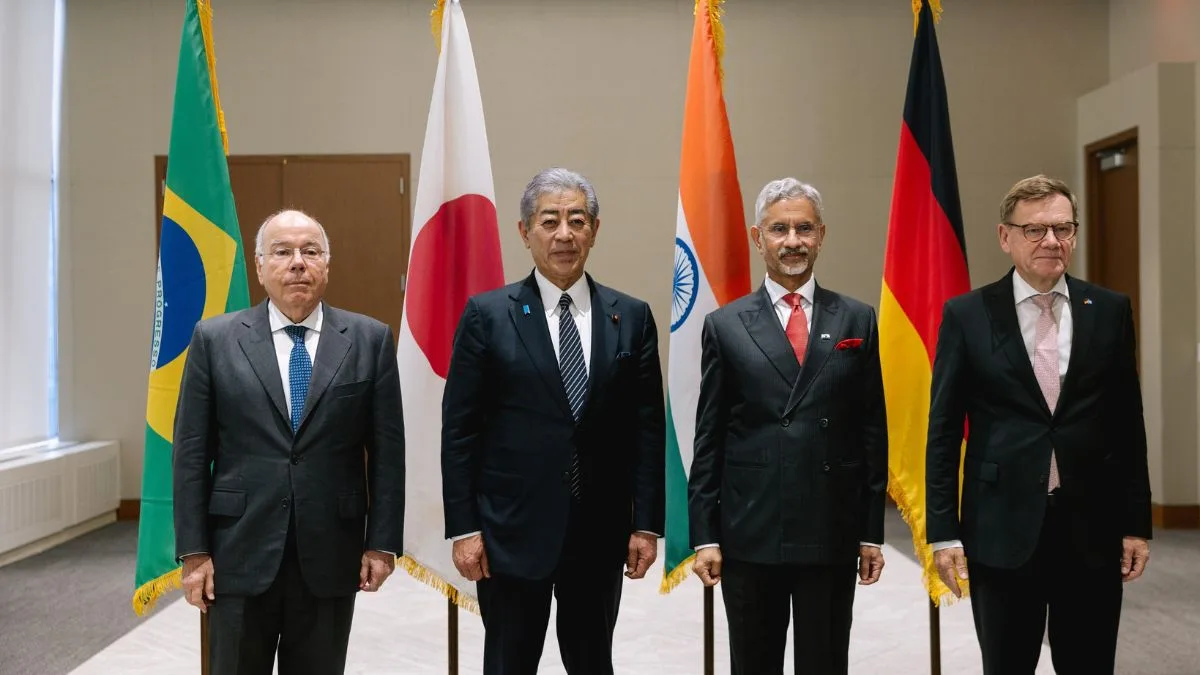
WASHINGTON – India External Affairs Minister S Jaishankar on Friday held G4 Foreign Minister meeting in New York joined by his counterparts from Japan, Germany and Brazil on the sidelines of the 80th UNGA80.
G4 reiterated its commitment to reform the UN including the UN Security Council.
Jaishankar said, in a post on X “Glad to join the #G4 Foreign Ministers Meeting along with colleagues Takeshi Iwaya, Johann Wadephul and Mauro Vieira in New York today. #G4 reiterated its commitment to reforming the United Nations, including the UN Security Council. It also assessed the current state of the Intergovernmental Negotiation #IGN process.”
G4 nations are advocating for an expanded and more representative Security Council that reflects the geopolitical realities of the 21st century, including greater representation for developing nations.
Jaishankar held separate meetings with Australian Foreign Minister Senator Penny Wong, Egyptian Foreign Minister Dr Badr Abdelatty, and Malaysian Foreign Minister Mohamad Haji Hasan on the sidelines of the UN high level summit.
He presented the case for ‘Operation Sindoor’ before G20 foreign ministers on Thursday, Jaishankar said that those taking on terrorism are performing a service to the international community.
EAM described terrorism as a threat to development and peace, he told a meeting of the Ministers here, “Given the extensive networking among terrorists, those who act against them on any front, actually render a larger service to the international community as a whole.”
He did not directly mention Operation Sindoor carried out by India against terrorist enclaves inside Pakistan earlier this year, his target was clear.
“A persistent threat to development is that perennial disruptor of peace, terrorism,” he said.
“It is imperative that the world display neither tolerance nor accommodation to terrorist activities.”
India held the Presidency of the G20 and emerging major economies, last year and handed over the charge to South Africa this year.
Jaishankar criticised the double standards in imposing sanctions on countries supposedly to pressure Russia to end the Ukraine war, although again he did not name the US, which hit India with punitive tariffs for buying Russian oil.
He added because of the sanctions and restrictions, “apart from jeopardizing supplies and logistics, access and cost themselves became pressure points on nations.”
