
Jaishankar Defends Iran Warship Docking in Kochi
EAM cites humanitarian grounds after US sinks Iranian frigate near Sri Lanka

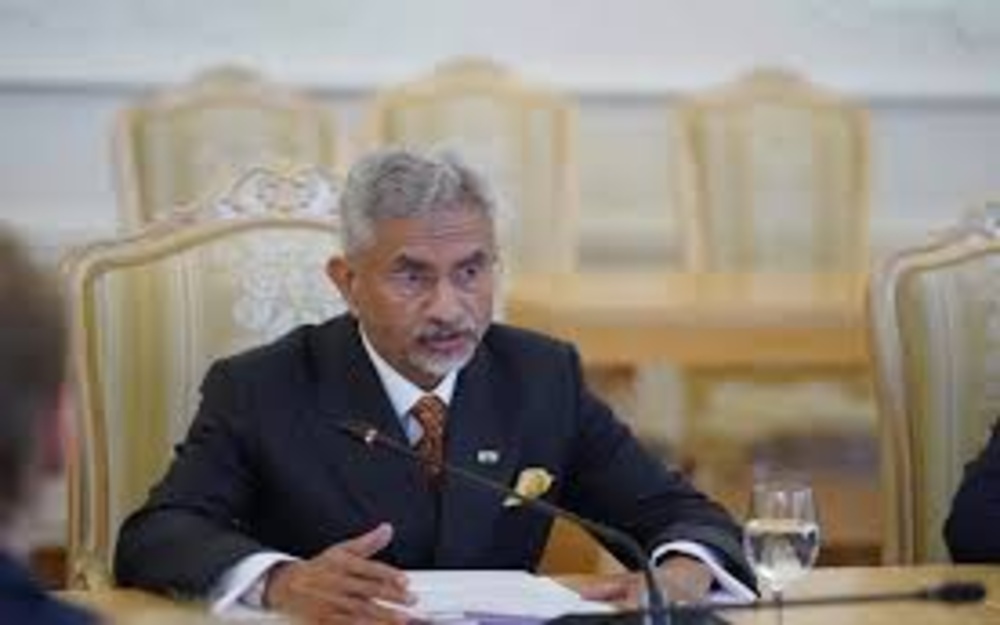
- S. Jaishankar explains India allowing Iranian naval vessel to dock in Kochi
- Decision taken on humanitarian grounds after technical distress
- Comes days after US submarine sank Iranian frigate IRIS Dena
- Minister highlights strategic realities of foreign military presence in Indian Ocean
GG News Bureau
New Delhi, 7th March: External Affairs Minister S. Jaishankar has explained India’s decision to allow an Iranian naval vessel to dock in Kochi, saying the move was guided by humanitarian considerations amid rising tensions in the Indian Ocean.
Speaking at the Raisina Dialogue 2026 in New Delhi, Jaishankar outlined the sequence of events involving Iranian ships operating in the region during the escalating conflict involving Iran, the United States and Israel.
He said India received a message from Iran stating that one of its ships was facing technical problems and needed to enter an Indian port.
“On March 1 we allowed them to come in. It took them a few days to sail and then they docked in Kochi. There were a lot of young cadets onboard. When the ships had set out and when they came here, the situation was totally different,” Jaishankar said.
He added that the vessels had originally been travelling to participate in a fleet review but were caught amid rapidly changing geopolitical circumstances.
The comments come after a United States submarine sank the Iranian frigate IRIS Dena on March 4 in international waters about 40 nautical miles off Sri Lanka’s southern coast near Galle.
The warship had earlier participated in the International Fleet Review and the MILAN 2026 naval exercise hosted by the Indian Navy in Visakhapatnam.
Sri Lankan authorities later recovered 87 bodies from the wreckage, while 32 sailors were rescued alive and taken to Galle for medical treatment. Several crew members were reported missing.
US Defense Secretary Pete Hegseth confirmed the strike, stating that an American submarine had fired a torpedo at the Iranian vessel.
He described the attack as a “quiet death” and said it marked the first time since World War II that the United States had sunk an enemy ship using a torpedo.
Jaishankar said India approached the situation with humanitarian considerations while balancing legal and security concerns.
“We approached the situation from the point of view of humanity, other than whatever the legal issues were, and I think we did the right thing,” he said.
Another Iranian vessel, IRIS Lavan, had sought emergency docking from India after reporting a technical malfunction. India approved the request on March 1, and the ship docked in Kochi on March 4, the same day the Dena sank.
The vessel remains anchored at Kochi while technical assessments continue.
A third Iranian ship, IRIS Bushehr, also reported engine trouble and sought assistance from Sri Lanka, which allowed it to dock and take custody of the vessel.
Jaishankar also pointed to the broader strategic environment of the Indian Ocean, noting that foreign military facilities have long existed in the region.
He cited the US-UK military base at Diego Garcia, operational since the early 1970s, as well as the presence of foreign forces in Djibouti and the development of Hambantota port in Sri Lanka.
“Please understand the reality of the Indian Ocean,” Jaishankar said, adding that such geopolitical dynamics are an established part of the region’s security landscape.
