
Is Rahul Gandhi Misleading BHARAT—Deliberately?
A Full Look at His Claims, Contradictions, and Controversial Connections

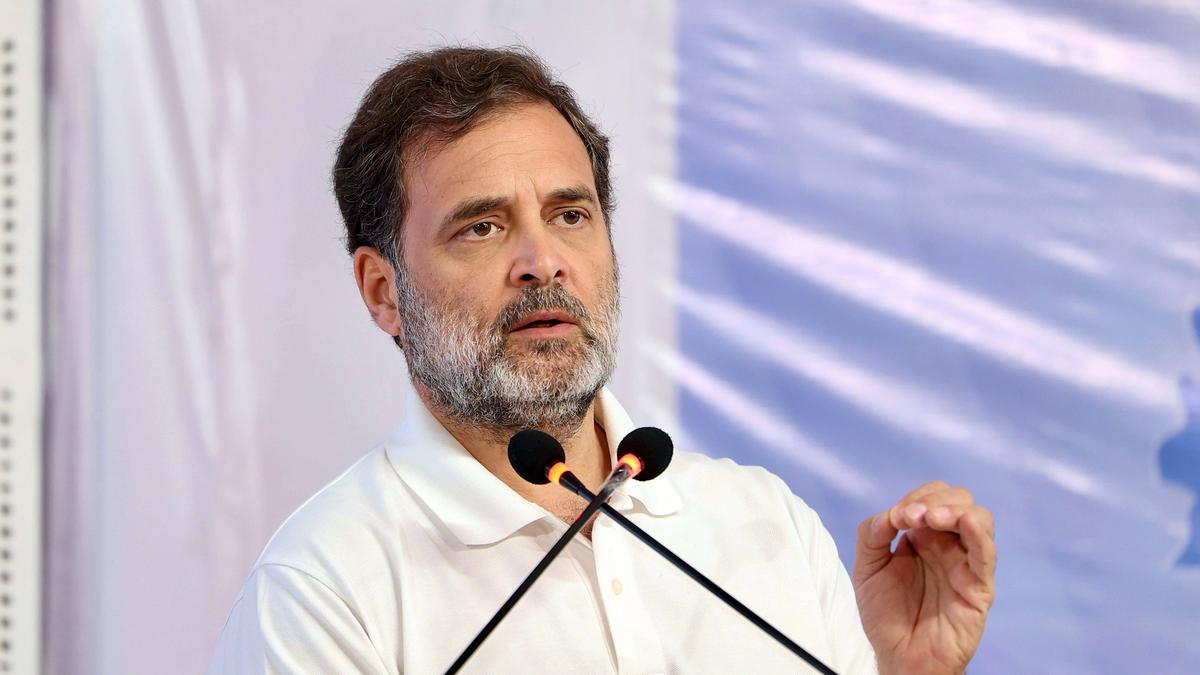
Rahul Gandhi’s latest statement accusing the Government of India of “preventing foreign leaders from meeting him” has triggered yet another debate & discussion inside and outside parliament in Bharat again. But beyond the noise lies a familiar, troubling pattern—dramatic claims made confidently, only to unravel instantly under the weight of facts. At some point, Bharat must ask whether these repeated inaccuracies are accidental or a deliberate political strategy.
The problem with his latest allegation is simple: the facts destroy it.
In the past year and a half alone, Rahul Gandhi has met a series of foreign leaders without any obstruction from the government. Bangladesh’s former Prime Minister Sheikh Hasina met him on 10 June 2024, just days after he became Leader of the Opposition. Malaysia’s Prime Minister Anwar Ibrahim met him on 21 August 2024. He also met the Prime Minister of Vietnam on 1 August 2024, New Zealand’s Prime Minister Christopher Luxon on 8 March 2025, and Mauritius Prime Minister Navinchandra Ramgoolam on 16 September 2025. These were formal, public, well-documented meetings—each arranged because the foreign delegation wanted to meet him. Nothing more, nothing less.
The Ministry of External Affairs (MEA) has already clarified its protocol. The MEA only arranges meetings for visiting dignitaries with government officials and institutions. Meetings outside the government—such as interactions with the Leader of the Opposition—are entirely the foreign visitor’s decision. This is not a personal slight, not a conspiracy, and certainly not a sign of the government being “scared.” It is standard diplomatic procedure across the world. Rahul Gandhi is fully aware of this, which makes his allegation even more questionable.
This controversy doesn’t exist in a vacuum. It fits into a long list of claims Rahul Gandhi has made over the years that were later dismantled by facts. From the Rafale accusations to the “Chowkidar Chor Hai” slogan, from alarmist statements about Life Insurance of India(LIC) and State Bank of India(SBI) to casting doubt on the Bhartiya Army’s surgical strikes, Rahul Gandhi has repeatedly taken positions that generated headlines but lacked substance. Each time, the truth emerged slowly but decisively, and each time, the credibility of his arguments weakened a little more.
In fact, this tendency to theatrics over responsibility has been visible for years. One of the most defining moments came when Rahul Gandhi dramatically tore up a directive issued by his own party leader and the country’s Prime Minister, Dr. Manmohan Singh, right in front of the media. It was a moment that shocked political observers across the spectrum. Many would argue that this act of public defiance against his own Prime Minister was the beginning of the end of Rahul Gandhi’s credibility—not just within his party, but in national politics. What else can one expect from a Leader of the Opposition whose political instincts have repeatedly undermined his own leadership?
As everybody knows Rahul Gandhi does not participate Independence Day Celebration at Lal Quila and Republic Day parade at Kartavaya Path. Why? why Rahul not participating in our national festivals? Is anyone stopping to be part of National Fest? Rahul Gandhi should also clarify his position on these very important issues.
His talk of presenting an “alternate perspective of Bharat ” also deserves examination. What exactly is this perspective? That Bharat’s economy is “dead”? That Bharat “surrendered” during Operation Sindoor? That Bharat is a “failed democracy”? These phrases have featured prominently in his speeches and foreign interactions, echoing narratives pushed by Western think tanks and Soros-backed groups. Yet these portrayals have never aligned with the lived experience of Bharatiyas or with global economic and democratic indicators. If anything, they appear designed to feed international criticism rather than reflect domestic realities.
Rahul Gandhi’s international engagements further complicate his positioning. He has chosen to meet individuals and groups whose positions are openly hostile to Bharat’s interests. His interaction with Ilhan Omar, who advocates Pakistan’s stand on Kashmir, raised eyebrows. His association with Mushfiqul Fazal Ansarey, a Bangladeshi journalist known for pushing anti-Bharat misinformation, has been repeatedly highlighted. His meeting with the Chinese Ambassador during the Doklam standoff stunned observers. That meeting was against protocol and set norms of Diplomacy for the country.
Add to this his engagement with organisations linked to George Soros, whose networks have publicly expressed a desire to “change” the Bharatiya government & destroy the Bharat, and the pattern becomes hard to dismiss. Even his participation in NRI events tied to IAMC-type groups—flagged for anti-Bharat Islamist propaganda—adds to the unease.
Together, these choices create a picture of a leader who often echoes or aligns with voices that do not always have Bharat’s best interests at heart. While any opposition leader is free to build global relationships, the nature of these interactions—and the narratives that accompany them—raise legitimate concerns about judgment and intent.
As I think, Bharat needs a strong, credible opposition. A functioning democracy depends on it. But credibility cannot be built on statements that fall apart under scrutiny. It cannot be built on sweeping accusations that contradict verifiable facts. And it certainly cannot be built on aligning with individuals and organisations known for attacking India on global platforms.
Rahul Gandhi’s supporters see him as a challenger to the establishment. His critics see him as reckless with facts. But ordinary citizens increasingly see a pattern: every major claim he makes requires immediate fact-checking, and more often than not, the facts point in the opposite direction. This consistent dissonance is not just damaging to Rahul Gandhi—it weakens the opposition’s ability to hold the government accountable on issues that truly matter.
The question before the country now is no longer whether the government is preventing foreign leaders from meeting him. The answer to that is clear. The real question is far more serious: can a leader with such a repeated history of misleading statements be trusted to represent Bharat—either domestically or globally?
Until Rahul Gandhi confronts the widening gap between his rhetoric and reality, every new allegation will continue to appear less like truth-telling and more like political theatre. And political theatre, no matter how dramatic, cannot substitute for credibility.
About Author -:
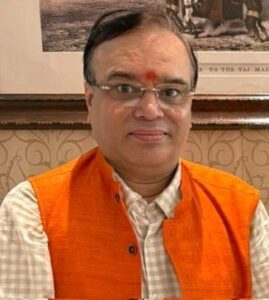
Dr Kumar Rakesh, Sr Journalist, Writer, Political Analyst, Broadcaster has been active in journalism and writing for approximately 35 years. He has worked in several esteemed media organizations in Bharat and has been instrumental in creating 9 TV news channels in the country. Through his career, he has had the opportunity to travel to over 50 countries, reporting and writing on various topics. Mr. Rakesh has received numerous accolades and honors both in Bharat and internationally for his contributions to the field of Media & Communications. Currently, he has been serving as the Editorial Chairman of Global Governance News Group & Samagra Bharat Media Group, New Delhi & 18 countries.
For any queries, please contact him – at krakesh8@gmail.com
