
Is Kashi’s History Being Bulldozed for Development?
Manikarnika trembles, heritage bleeds — and the MP of Varanasi must answer

By Harshita Rai
Kashi is not just India’s oldest city. It is one of humanity’s oldest living civilisations — a sacred geography where time does not move in decades but in millennia. Every ghat, every stone, every ritual breathes memory. That is precisely why the recent redevelopment activity at Manikarnika Ghat has unsettled the city’s conscience. Locals are not merely reacting to construction noise; they are reacting to the fear that something irreplaceable is quietly slipping away. The city is asking — not in anger alone, but in anguish — who gave permission to shake the soul of Kashi?
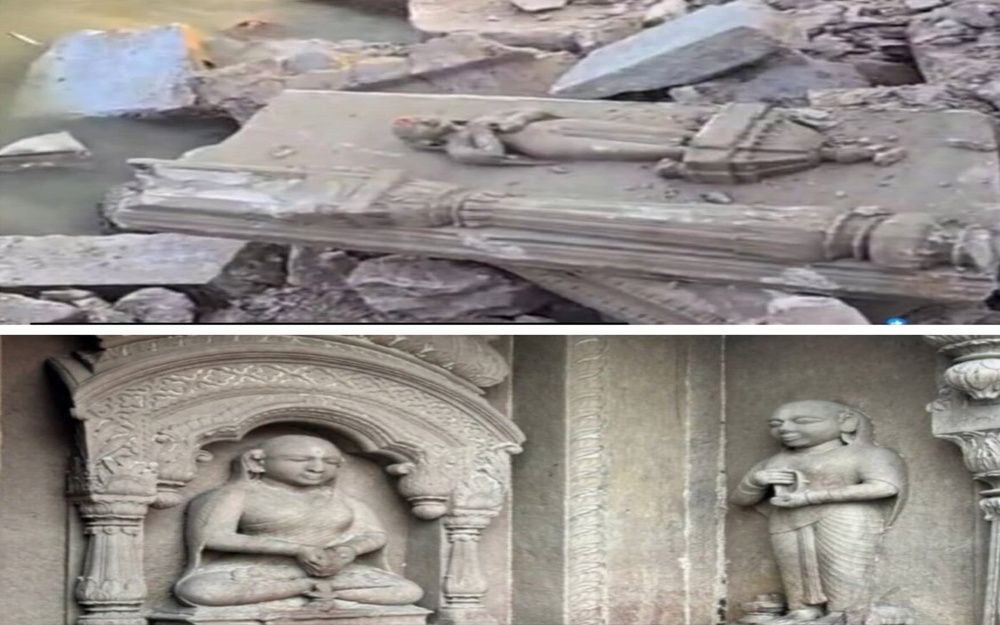
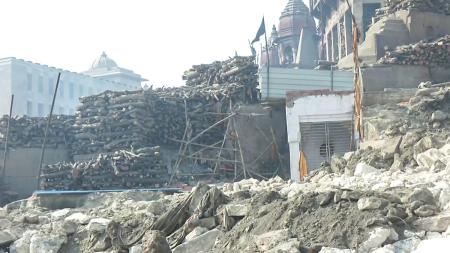
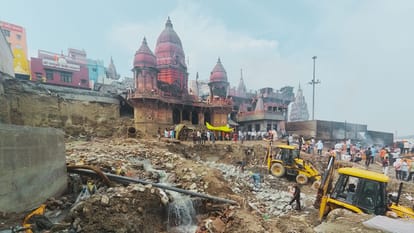
As bulldozers moved into one of Hinduism’s most sacred cremation grounds, reports emerged of damage to ancient structures and the displacement of consecrated idols, including a statue linked to Queen Ahilyabai Holkar. The administration has dismissed vandalism claims, saying artefacts are being secured for reinstallation. Yet the unease refuses to fade. If everything is truly protected, why does Kashi feel wounded? And why were devotees not shown, documented and reassured before heavy machinery altered sacred ground?
This brings the spotlight to the MP of Varanasi — who is also the Prime Minister of India and the architect of Kashi’s modern transformation. His vision has undeniably improved access, sanitation and infrastructure. But can infrastructure alone define progress in a civilisation that existed long before modern governance? When sacred ghats tremble, should not the first voice to speak be the city’s own MP?
Political reactions have already intensified the debate. The Congress has called the redevelopment an attack on Kashi’s cultural soul. Whether one agrees with the opposition or not, their charge exposes a deeper discomfort: heritage is not being defended with the same passion as concrete is being poured. If Kashi’s legacy is truly the pride of the nation, why is there no publicly released heritage audit for Manikarnika? Why is there no visible heritage protection authority overseeing every phase of work?
Development is not the enemy. But haste is. Manikarnika is not a public plaza; it is a moksha gateway. Altering it without full transparency risks more than architectural loss — it risks spiritual alienation. The question, then, becomes unavoidable: is Kashi being upgraded, or is it being redesigned for optics and tourism rather than continuity and faith?
Every generation leaves a mark on history. Some preserve it. Others overwrite it.
And when the ash settles at Manikarnika, the city will remember whether its MP stood as a guardian of civilisation — or as a silent spectator while bulldozers rewrote eternity.
Kashi does not need cosmetic modernity. It needs guardianship. It needs leadership that will stand in front of bulldozers, not behind them.
Share this report to raise your voice for Kashi’s heritage — because history survives only when people speak for it.
