
Is Asia Preparing for War as China Tests the Global Order?
Taiwan on the Edge

Poonam Sharma
The Indo-Pacific region, commonly referred to as the world’s most dynamic geopolitical stage, is again experiencing heightened tensions. At the center of this brewing tempest is Taiwan — a little island with disproportionate strategic significance. As China increases its military saber-rattling and gets ready to initiate a potential offensive, the United States and its partners are lashing back with unprecedented alacrity. Everybody is watching intently, asking themselves: is war brewing in Asia? And if it is, what is India’s part in this unfolding crisis?
Why War is Looming Over Taiwan?
China views Taiwan as a rogue province and has always indicated its desire to bring the island back into the fold — with force, if that’s what it takes. In recent years, Beijing has ratcheted up military, diplomatic, and cyber pressure on Taipei. Now, that pressure has reached a perilous level.
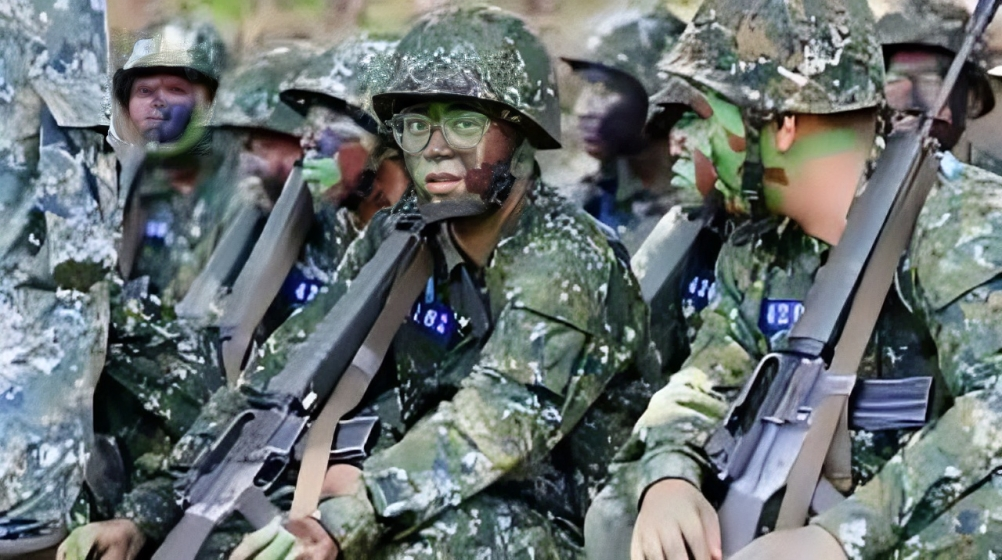
In recent weeks, China’s military has been holding massive exercises off the coast of the Taiwan Strait, launching sophisticated missiles, and intruding more frequently into Taiwan’s air defense identification zone. Satellite photographs reveal Chinese warships surrounding Taiwan in simulated blockades. The message is unmistakable: China is gearing up for an all-out confrontation.
What has further infuriated Beijing is the growing diplomatic interactions between Taiwanese officials and US lawmakers. Each official trip from Washington to Taipei is greeted with stern denunciation and even counter-measures through military drills by China. For President Xi Jinping, Taiwan is more than a territorial dispute — it’s a personal pride and political survival.
Is the United States Ready to Defend Taiwan?
In contrast to its vagueness in the past decades, America under both Democratic and Republican leadership has moved towards a more explicit promise to defend Taiwan.
In preparation for such an event, the U.S. has strengthened military cooperation with regional partners. Joint exercises are a now weekly phenomenon with Japan, South Korea, the Philippines, and Australia. America also opened up Filipino military bases to greater access and augmented its naval presence in the South China Sea.
Equally important is Taiwan’s role as the world’s top producer of advanced semiconductors. The U.S. has recognized this and begun encouraging American companies to help Taiwan scale up production and diversify supply chains — a strategic move to reduce dependency on China’s tech ecosystem.
India’s Position: Strategic Autonomy or Quiet Alignment?
India is in a special and precarious place. On the one hand, it has a contested and unsettled border with China, with military confrontations in Ladakh still smoldering below the radar. On the other, India is a crucial partner in the American-led Indo-Pacific vision.
India has joined several military and naval exercises with the U.S., Japan, and Australia under the QUAD framework. Defense cooperation, intelligence-sharing, and strategic dialogues have reached new heights. Additionally, India’s “China+1” policy — which seeks to attract companies moving away from China — has positioned it as a major alternative in global supply chains.
Yet India has thus far been non-aligned and cautious in its approach to the Taiwan question. While it favors a free and open Indo-Pacific, it has not publicly condemned China’s policy towards Taiwan. This deliberate silence could be India’s method of retaining diplomatic room for maneuver while deepening its strategic bargaining power.
The Role of Japan, Australia, and the Philippines
The U.S. is not the only country reacting to China’s rising assertiveness. Japan has made history by raising its defense expenditure to 2% of its GDP and granting U.S. troops greater access to its bases. Tokyo views any Chinese attack on Taiwan as an immediate threat to its own security.
Australia, in the AUKUS agreement, is updating its navy with nuclear-powered submarines and increasing interoperability with U.S. military forces. It perceives the stability of the Indo-Pacific as directly related to its national security and trade concerns.
The Philippines, which had oscillated between U.S. relationships for decades, has now returned to a cooperative approach. It has opened four new military bases to the U.S., explicitly indicating that it is on board with America in case of regional conflict.
China’s Ambition vs. America’s Containment Strategy
Underpinning this growing crisis is a great power struggle. China plans to become the global leading power by 2049, marking the 100th anniversary of the People’s Republic. Reunification with Taiwan is an essential stepping stone in that process. Xi Jinping’s China does not view Taiwan merely as a territory but as a symbol of its rightful place in world leadership.
America, however, sees any Chinese influence over Taiwan as threatening world democracy, the free flow of trade across critical sea lanes, and the world’s technological infrastructure. Taiwan currently manufactures almost 90% of the world’s most sophisticated semiconductors, so the stakes are enormous.
Moreover, Beijing and Moscow are seeking to challenge the U.S.-dominated financial system by advancing alternative payment mechanisms through BRICS. This bid to de-dollarize the international economy is another point of tension that Washington can no longer afford to overlook.
Is a Full-Scale War Inevitable?
Although an outright world war is not likely, analysts concur that a “soft war” is already in progress. These are cyberattacks, economic decoupling, technology race intensification, and proxy clashes. Supply chain re-aggregation, defense pacts, and collective military exercises are indicators that the world is preparing for a profounder geopolitical shift.
Taiwan will probably continue to be a high-risk flashpoint in the foreseeable future. It is possible that China may blockade, execute a limited strike, or engage in cyber sabotage. Under such circumstances, the international response will determine if deterrence pays — or war becomes inevitable.
India’s Way Forward: Walking the Razor’s Edge
India’s role in this emerging drama is vital. Being a regional power with strategic autonomy, India needs to balance its economic interests vis-a-vis China and its increasingly enhancing security engagement with the West. Its Semiconductor Mission, defense modernization, and digital diplomacy will define how it will situate itself in this new Cold War.
New Delhi’s ability to avoid entrapment while asserting influence will determine not just its regional standing but its global leadership prospects. The choices it makes in the Taiwan crisis — even if quietly — will echo for decades.
As the world prepares for a more polarized future, India’s prudence, preparedness, and principle-driven diplomacy could be the difference between escalation and equilibrium in Asia.
