

Poonam Sharma
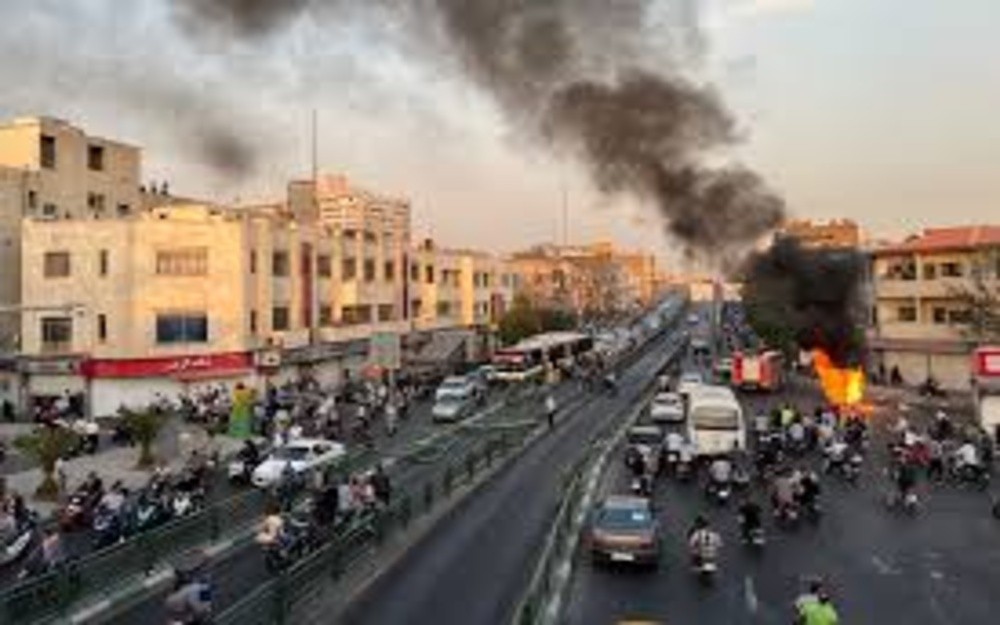
When protests erupted in Iran—first over the rising cost of living, then rapidly transforming into nationwide political demonstrations—many outside observers treated it as a familiar story. Another Middle Eastern crisis. Another authoritarian state under pressure. But in China, the reaction has been very different. People are not just watching Iran with curiosity. They are watching with recognition.
At first glance, Iran and China seem worlds apart. Different civilizations, different belief systems, different political languages. Yet beneath the surface, the way power actually functions in both countries is strikingly similar. And once that similarity is understood, a sobering conclusion follows: the same structural conditions that produced large-scale unrest in Iran are now present in China.
Ideological Power, Not Popular Consent
Both Iran and China are ideological regimes. Their legitimacy does not primarily come from elections, independent courts, or constitutional limits. It comes from belief.
In Iran, that belief is openly religious. The Islamic Republic defines itself as a theocracy, with the Supreme Leader standing above the political system. In China, the belief is ideological—rooted first in Marxism, then Maoism, and now in Xi Jinping Thought. China does not call itself a theocracy, but in practice it functions like one. Ideology is treated as sacred. Loyalty rituals are mandatory. Dissent is framed not just as opposition, but as moral betrayal.
Different symbols, same structure. In Iran, the Supreme Leader stands above all institutions. In China, the General Secretary of the Communist Party occupies the same elevated position. These systems do not evolve gradually when they weaken. They hold—until they suddenly break.
The Broken Bargain With Society
For decades, both regimes made the same deal with their people: give up political freedom, and in return you will get stability, order, and improving living standards. For a time, that bargain worked, at least partially.
Today, it has collapsed.
Iran is trapped in chronic inflation, currency collapse, sanctions, isolation, and mass youth unemployment. China faces its own version of economic exhaustion: a real-estate implosion, local government insolvency, youth unemployment, shrinking middle-class wealth, and fading optimism.
When an ideological regime loses economic credibility, economic pain does not stay economic. It turns political. That is the danger zone Iran has already entered—and China is now approaching.
A Generation Without a Future
One of the most destabilizing similarities between Iran and China is the condition of their youth.
In Iran, young, urban, educated, globally connected people are locked out of opportunity. In China, millions of college graduates face unemployment or underemployment, living off their parents’ savings. Effort no longer guarantees reward. Following the rules no longer leads upward.
These young people are not poor in the traditional sense. But they have been robbed of something more dangerous to take away: their future trajectory. When people realize that no amount of hard work will improve their lives, faith in the system collapses silently—and irreversibly.
When No One Believes Official Language
In both countries, trust in official narratives has eroded. People no longer listen to government statements at face value. Instead, they read them in reverse, assuming deception by default.
Once official language becomes noise, every crisis must be managed with police, surveillance, and force. But repression is expensive. It creates fewer believers and more silent opponents. Iran’s finances are constrained. China’s local governments are deeply indebted and increasingly broke. When repression shifts from prevention to constant reaction, the system becomes brittle.Iran has crossed that line. China is crossing it now. Looking Backward in a Moment of CrisisOne of the most overlooked warning signs of systemic crisis is nostalgia.
In Iran, protesters have openly chanted slogans calling for the return of the Pahlavi monarchy—something unthinkable just a few years ago. In moments of deep disillusionment, societies often stop imagining a new future and instead reach back to a past that feels more stable, more dignified, more humane.
Something similar is happening in China, though more quietly. Signs of nostalgia for the pre-Communist Republic of China have begun to surface—carved symbols under old bridges, incense offerings at Nationalist-era sites, and renewed public reverence for Sun Yat-sen. Authorities respond quickly, sealing off locations and blocking gatherings, but the impulse is already there.Different volume. Same meaning.
Four Warning Signals Already Visible in China
History shows that systems do not collapse overnight. They send signals.
First, effort no longer matters. Regimes fall not when everyone is poor, but when upward mobility disappears.
Second, anger turns into coldness. In China today, “lying flat,” cynicism, and emotional withdrawal are widespread. This is more dangerous than rage. It means people no longer expect to be heard.
Third, all social pain points erupt at once. In Iran it was food, fuel, and police abuse. In China it is housing, healthcare, education, jobs, and judicial injustice—all hitting at the same time.
Fourth, elites begin to exit. Capital leaves. Talent emigrates. Intellectuals fall silent. Inside the system, the rule becomes: do less, make fewer mistakes. This is not reform. It is abandonment.
Why Iran Matters to China’s Future
China’s leaders and its people are watching Iran closely because Iran is not a distant story. It is a mirror.
Both countries are ideological regimes. Both are economically strained. Both are socially cold and psychologically fragile. Iran shows what happens when the final restraints give way. China’s question now is not whether it is different—but how long it believes it is.
