

Poonam Sharma
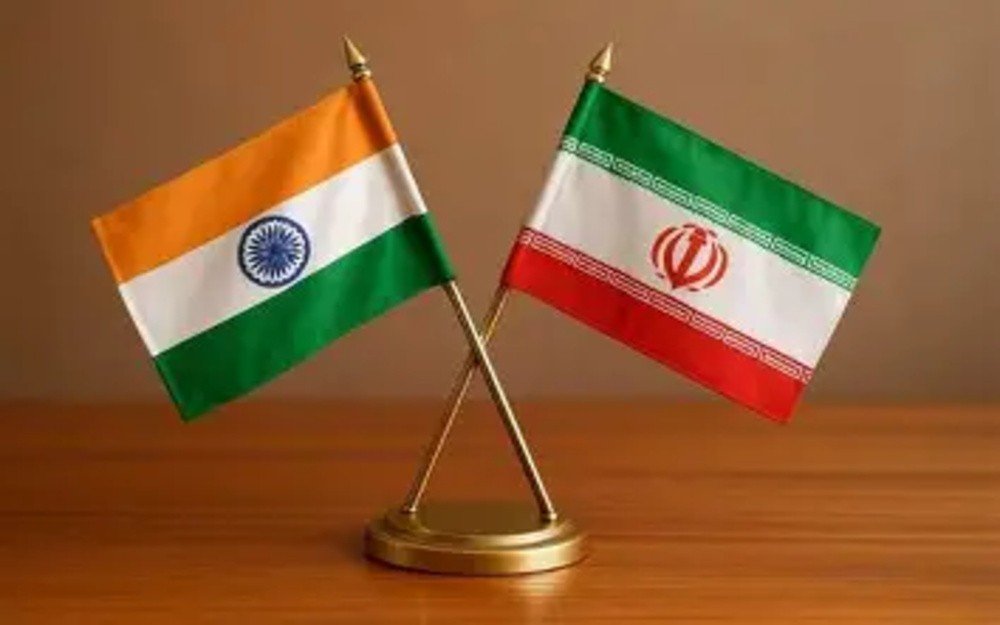
A simple message of gratitude from the Iranian embassy in New Delhi has unexpectedly spiraled into a political storm — one that says a lot about regional sensitivities, social‑media pressure tactics, and the fragility of diplomatic communication in today’s world. What should have been a straightforward acknowledgment from Iran toward Indian donors has turned into a moment that casts a shadow on India–Iran relations.
A Thank‑You Message That Shouldn’t Have Been Controversial
The entire incident began when Iran was facing a difficult phase during the COVID‑19 crisis. India, as it has done for many friendly nations, stepped forward with assistance. Alongside official support, many Indians, including people from Jammu and Kashmir, contributed donations to help Iran.
To thank these contributors, Iran’s embassy posted a message mentioning donations from “the kind people of Kashmir.” Another post clearly said, “Thank you India.”
Both statements were diplomatically correct and factually sound. Jammu and Kashmir is an integral part of India, and there was nothing unusual in acknowledging contributions from any Indian region. A message of gratitude should have been just that — simple, human, and apolitical.
But in today’s hyper‑politicized online environment, even goodwill gets twisted.
When Social Media Pressure Overrides Diplomacy
Within hours of the post going online, Pakistan‑based accounts and a group of aligned Indian handles began targeting the Iranian embassy. Their objection was predictable — the tired claim that “Kashmir is not India.” These narratives fire up instantly whenever Kashmir’s Indian identity is acknowledged, even indirectly.
As these accounts started amplifying their outrage, social‑media pressure grew. The embassy found itself at the center of a manufactured storm. And eventually, Iran’s embassy deleted the original post.
That act — deleting a simple thank‑you — was more telling than the message itself.
It suggested that even expressions of gratitude can be undone by political backlash. It showed how digital outrage from pressure groups can push a foreign mission to retreat from a neutral, factual statement.
It also highlighted a deeper problem: there are elements for whom humanity, relief work, and empathy matter far less than political and religious identity. Donations meant to help a country in crisis became a battleground for propaganda.
What This Signaled to India
For India, the issue isn’t merely about a deleted tweet. The core concern is that a foreign embassy operating in New Delhi — the diplomatic heart of India — chose to dilute a statement that indirectly acknowledged India’s territorial integrity.
India’s position on Jammu and Kashmir is not ambiguous. It is constitutionally, legally, and politically a part of India. On this matter, there is no room for negotiation, debate, or diplomatic confusion.
When a foreign mission in India revises its communication under external pressure, it raises uncomfortable questions:
Why should a foreign embassy hesitate to acknowledge a region of India as part of the country it is stationed in?
Why should online noise override facts recognized by official maps, treaties, and the constitution?
What message does it send about diplomatic consistency?
These concerns become stronger when seen in light of past statements by Iran’s Supreme Leader, who has earlier echoed Pakistan’s positions on Kashmir. This history makes the embassy’s swift retreat feel less like an isolated incident and more like part of a pattern.
A Reminder of Regional Realities
The episode underlines something important: international relations in South Asia are deeply intertwined with political narratives, identity struggles, and historical tensions.
Countries can exchange support, trade, and goodwill, but political postures do not always remain untouched by pressure groups. Iran has often balanced between India and Pakistan, but moments like this remind India that balancing acts sometimes come at the cost of clarity.
India does not oppose Iran expressing concern for humanitarian issues. But when it comes to questions about India’s territorial integrity, there is no compromise.
Diplomacy Should Resist Manufactured Outrage
Diplomacy should ideally stand above online mobs and pressure campaigns. A message thanking donors — including people from Kashmir — should never have to be deleted out of political fear. When foreign missions allow social‑media trends to dictate their language, it weakens the seriousness of diplomatic communication.
It also raises concerns about how easily misinformation ecosystems can influence international actors. A country cannot afford to let its foreign policy messaging be edited by trending hashtags.
A Lesson for the Future
For India, this incident is a reminder to stay watchful. It reinforces the importance of clear communication with partner nations and ensuring that India’s territorial claims are respected without hesitation.
For Iran, the episode should serve as a reflection on how diplomatic signals are received. Gratitude should not be conditional. It should not bend under pressure or contradict established facts.
For the region, this is another example of how sensitive issues can be exploited for political gain — even when the situation involves something as genuine and humane as charitable giving.
Conclusion
A thank‑you message should have strengthened goodwill. Instead, it exposed the fault lines of South Asian politics and the influence of online outrage. It reminded us that in a world dominated by hyperactive digital discourse, diplomacy is walking on thinner ice than ever before.
And for India, it underscored a fundamental principle: Jammu and Kashmir is not a debate. It is a reality — and no amount of political pressure or social‑media noise can erase that.
