

Poonam Sharma
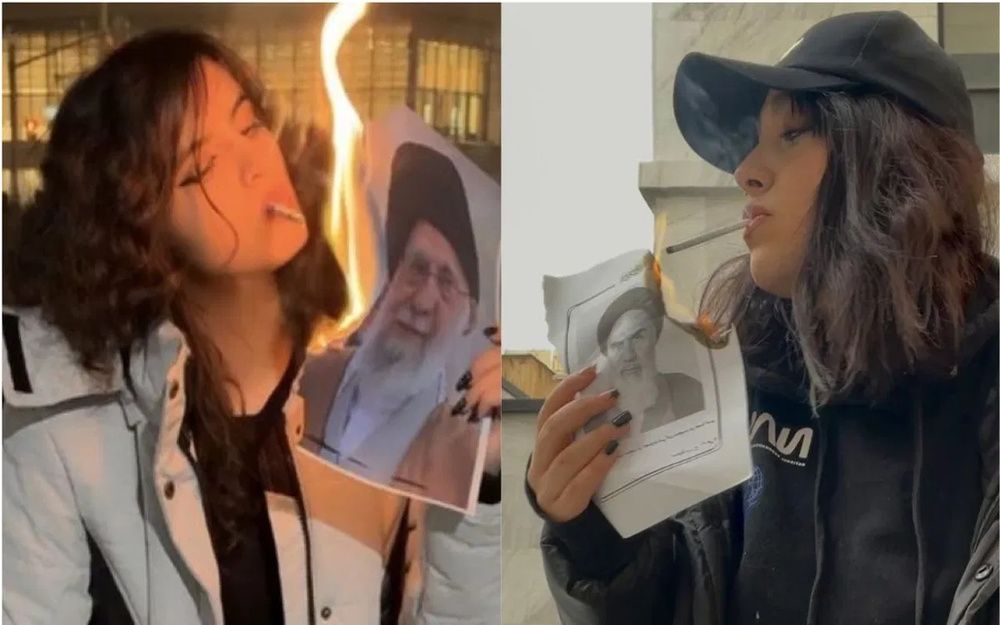
An Iranian woman lighting a cigarette in public, exhaling smoke as an image of Ayatollah Ali Khamenei burns behind her, is not merely a viral spectacle. It is a moment of political rupture. In Iran, where dissent is criminalized and symbolism is tightly controlled, such an act is not impulsive—it is calculated defiance. Smoking publicly as a woman, burning the hijab, setting fire to the Supreme Leader’s image—each act alone invites punishment. Together, they form an unmistakable declaration: fear no longer governs the streets.
This protest is not a chaotic crowd reaction or a passing wave of anger. It is visually composed, emotionally restrained, and ideologically sharp. The cigarette becomes a symbol of reclaimed autonomy. The fire consuming Khamenei’s portrait represents the erosion of enforced reverence. These women are not shouting louder; they are standing calmer—and that is what makes the moment so unsettling for power.
Symbols That Terrify Power More Than Slogans
Authoritarian systems thrive on symbols. In Iran, the hijab is not just clothing—it is a political tool. The Supreme Leader’s image is not just a portrait—it is authority made visible. When Iranian women burn these symbols publicly, they are not engaging in provocation; they are dismantling the architecture of control.
Burning the hijab is an explicit rejection of the state’s claim over women’s bodies. Burning the image of Ayatollah Khamenei is legally defined as a serious crime. Doing both in the same frame is a direct challenge to the ideological foundation of the Islamic Republic. The state can arrest individuals, but it cannot easily arrest meaning once it spreads.
What makes this phase of protest distinct is its aesthetic force. The images are striking, deliberate, and instantly global. The regime may dominate streets with police and morality squads, but it struggles to contain visuals that travel faster than repression. Once fear is replaced by symbolism, power begins to look brittle.
From Mahsa Amini to Ahu Dariyi: A Continuum of Defiance
This uprising did not begin today. It carries the memory of Mahsa Amini, whose death in 2022 ignited nationwide protests. Iranian women cutting their hair in public was not an emotional ritual—it was a political statement against ownership, control, and humiliation. Hair became resistance because the state had turned it into a crime.
In 2024, another image shook Iran: a young student, Ahu Dariyi, reportedly walking through Tehran University wearing only underwear in protest against harsh hijab enforcement. The response was swift—arrest and disappearance. Silence followed. In Iran, silence after arrest often speaks louder than official statements.
Yet even disappearance failed to restore fear. That is the turning point. These women have assessed the risks and still chosen the streets. They chant slogans expecting consequences. They protest knowing the cost. When repression becomes predictable, resistance becomes rational.
The Cracks in Mullatantra and the Future of Authority
The Islamic Republic has long depended on fear—moral policing, public punishment, religious absolutism—to maintain control. But fear has limits. When repression intensifies without relief, it loses its deterrent power. Today’s Iranian women are not reckless; they are resolved.
This movement also challenges global stereotypes. It proves that resistance to religious fundamentalism does not require external intervention. Muslim women in one of the most rigid Islamic systems are leading the revolt themselves. They are not rejecting faith; they are rejecting coercion.
Is the collapse of Ayatollah Khamenei’s authority imminent? History rarely moves that fast. But one thing is undeniable: the aura of invincibility has fractured. Once people stop fearing death, no ideology, no weapon, no doctrine can fully contain them.
What we are witnessing is not just protest—it is the unmaking of fear. And when fear collapses, power soon follows.
