

GG News Bureau
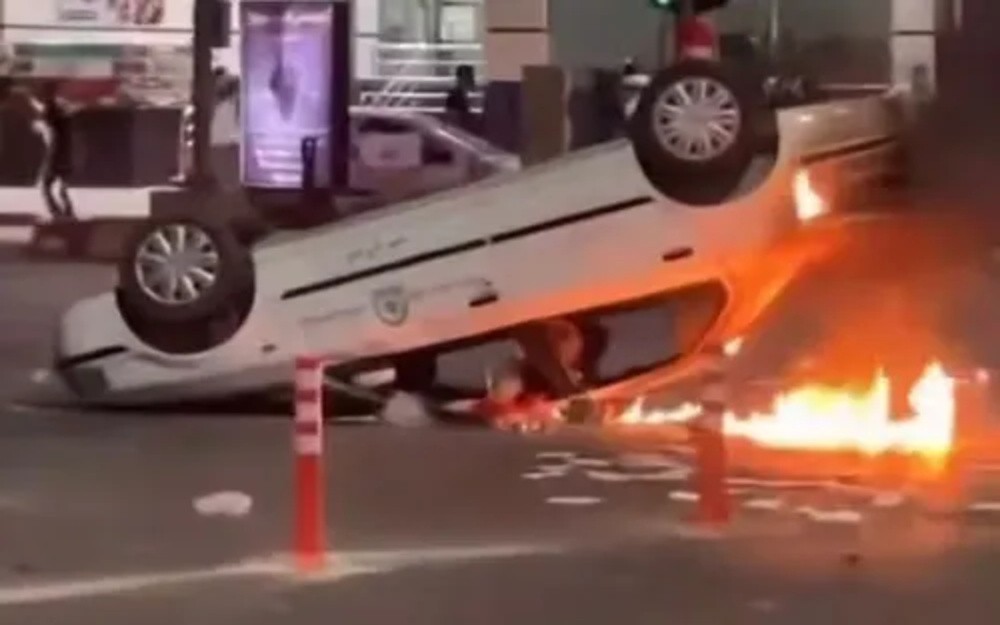
Tehran, Iran, 9th January– Tehran’s streets once again became a stage for open defiance as fresh protests erupted across Iran’s capital, with residents chanting slogans denouncing the Islamic Republic and its leadership. As night fell on Thursday, neighborhoods across Tehran echoed with cries of “Death to the dictator” and “Death to the Islamic Republic,” signaling the most intense unrest the country has seen in three years.
The demonstrations followed a public call by exiled Crown Prince Reza Pahlavi, who urged Iranians to gather at 8 pm local time on consecutive nights. Witnesses said that as the hour struck, chants rang out from rooftops and streets, spreading rapidly before communications with the outside world were abruptly cut.
Iranian authorities responded by shutting down the internet and international telephone services, a move rights groups say is often used to mask violent crackdowns. Cloudflare and NetBlocks later confirmed that the outage appeared to be the result of deliberate government interference.
Protesters, many angered by soaring prices and the collapse of the rial, also voiced nostalgia for Iran’s pre-1979 era. Some shouted slogans praising the former monarchy, including chants declaring that “Pahlavi will return,” language that once carried the threat of execution. Whether this reflects support for Reza Pahlavi himself or simply a rejection of the current system remains unclear.
The protests have spread far beyond Tehran. Markets and bazaars in several cities shut their doors in solidarity, while demonstrations were reported in rural towns as well. According to the US-based Human Rights Activists News Agency, at least 42 people have been killed since the unrest began, with more than 2,270 detained.
President Masoud Pezeshkian’s government has attempted to strike a conciliatory tone. The reformist leader acknowledged protesters’ “legitimate demands” and warned that failing to address people’s livelihoods would have moral consequences. However, his influence remains limited under Iran’s power structure, which is ultimately controlled by Supreme Leader Ayatollah Ali Khamenei.
Security forces have signaled little tolerance for dissent. State-aligned media reported attacks on police and Revolutionary Guard members, while hard-line outlets claimed drones were being used to identify demonstrators.
The unrest was sparked by Iran’s deepening economic crisis. Inflation reached 52 percent in December, and the rial has plunged to nearly 1.4 million to the US dollar, leaving many families struggling to survive.
Despite the scale of the demonstrations, the movement remains leaderless. Analysts note that the regime’s long-standing strategy of arresting or exiling potential opposition figures has left protesters without a clear alternative leadership—yet the anger driving them shows no sign of fading.
