

By Anjali Sharma
WASHINGTON – Indian strategic affairs expert Brahma Chellaney on Sunday has highlighted how Iran’s growing use of drones and ballistic missiles is increasingly challenging US and allied defenses in the Gulf region.
The US-Israel-Iran conflict has expanded across the Middle East with sustained airstrikes on Iranian military infrastructure and retaliatory missile and drone attacks targeting US and allied assets across the Gulf.
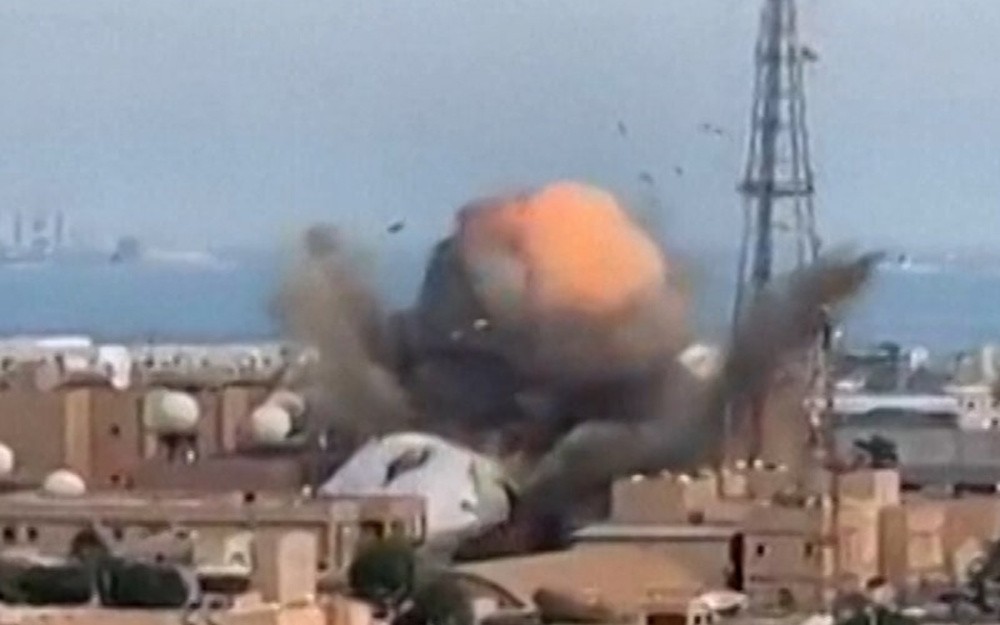
The explosions have been reported in multiple Iranian cities, including Tehran, while Iranian strikes have hit or threatened installations in several Gulf countries, raising fears that the war could spiral into a wider regional confrontation.
Strategic affairs expert Brahma Chellaney has highlighted how Iran’s growing use of drones and ballistic missiles is increasingly challenging US and allied defenses in the Gulf region, even as Iran faces overwhelming air superiority from the United States and Israel.
Chellaney said Iran currently lacks a modern air force, and its air defense network has largely been neutralized, enabling US and Israeli forces to dominate Iranian airspace. However, he noted that Tehran’s retaliatory strikes using ballistic missiles and drones are still proving effective and deadly.
According to Chellaney, Iran’s use of Shahed drones has already demonstrated their impact in modern warfare.
Russia had deployed tens of thousands of these Iranian-made drones during the war in Ukraine, causing significant destruction before beginning domestic production of similar variants.
He said Iran is now employing the same drone systems to target US military facilities across the Gulf as well as Israeli installations.
Chellaney pointed out that Iranian drone attacks in Qatar reportedly destroyed a $1-billion Raytheon AN/FPS-132 radar, a key component supporting Patriot missile system and THAAD air-defense networks.
The reports have indicated that Iranian strikes in recent days have hit radar, communications, and air-defense systems across multiple Gulf states, including the United Arab Emirates, Jordan, Bahrain, Kuwait, and Saudi Arabia.
According to reports cited from The Wall Street Journal, these attacks have degraded the ability of the US and its regional partners to track incoming missiles by targeting radar installations, communications nodes, and command-and-control systems.
Chellaney noted that such strikes, if sustained, could weaken early-warning networks in the Gulf and increase the chances of Iranian missiles penetrating defensive shields in the region.
