

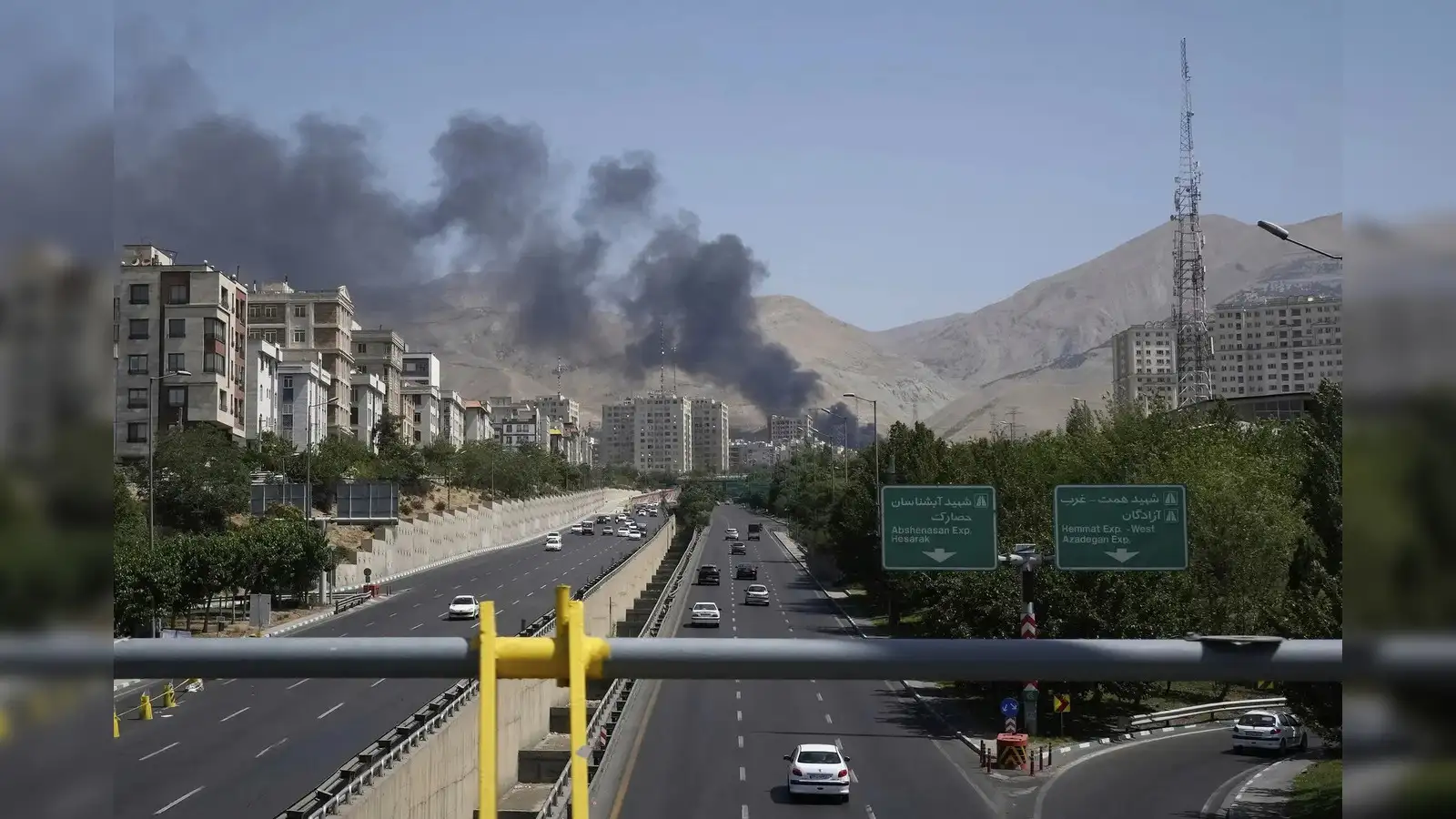

The Middle East is once again teetering on the edge of a broader regional conflict as Iran and Israel engage in their most direct confrontation in decades. What began as a calibrated tit-for-tat has now escalated into a full-blown military standoff, drawing in global powers and unsettling energy markets. With ballistic missiles flying and nuclear sites under attack, the Iran-Israel war is no longer a shadow conflict — it’s dangerously close to a regional explosion.
Genesis of the Current Crisis
The recent flare-up began with a coordinated Israeli airstrike on June 13, targeting Iran’s nuclear and military infrastructure in Isfahan and Natanz. Israel claimed the strikes were a preemptive move to derail Iran’s uranium enrichment capabilities, a long-standing concern for Tel Aviv. In retaliation, Iran launched a volley of over 470 ballistic missiles and UAVs into Israeli territory, marking one of the most intense assaults the country has faced since the 2006 Lebanon war.
The United States then joined the conflict by bombing three Iranian nuclear facilities — Fordow, Natanz, and Esfahan — escalating tensions and raising fears of a wider war that could drag in regional allies and global superpowers.
Strategic Stakes for Israel and Iran
For Israel, this war is about survival and deterrence. With Iran edging closer to nuclear weapon capability, Tel Aviv sees no room for error. By striking nuclear facilities, Israel aims to delay or destroy Tehran’s nuclear program while sending a clear message to Hezbollah and other Iranian proxies.
For Iran, the war is about sovereignty and regional dominance. The strikes on its nuclear sites were seen as a violation of its territorial integrity. Iran’s use of Khorramshahr-4 — its heaviest and longest-range missile — underscores its intent to project strength and retaliate decisively. Tehran’s calculus also includes rallying domestic support and sending a regional message: Iran will not be intimidated, even by the US.
The Role of the United States and Global Response
The US bombing of Iranian nuclear sites marked a dramatic shift from restraint to open involvement. President Trump justified the strikes as necessary to “obliterate Iran’s nuclear threat.” However, the move has drawn criticism from allies in Europe and the UN, with fears that Washington’s intervention may spark a wider Middle East war.
Russia, China, and North Korea have thrown their diplomatic weight behind Iran, while NATO countries have backed Israel in principle but warned against unchecked escalation.
Meanwhile, oil prices have surged past $80 per barrel, and global markets remain jittery. With Iran threatening to shut the Strait of Hormuz — a chokepoint for a fifth of global oil — the conflict is now as much an economic crisis as it is a military one.
Impact on India and the Wider Region
India, which imports over 2 million barrels of oil per day via the Strait of Hormuz, has reason to be concerned. While it has diversified its energy sources, a prolonged closure of the waterway could inflate import bills and fuel domestic inflation.
Additionally, the conflict jeopardizes the safety of thousands of Indian students and workers in Iran, prompting ‘Operation Sindhu’ — a mass evacuation led by the Ministry of External Affairs.
Strategically, India must walk a tightrope. With strong ties to both Israel and Iran, New Delhi’s diplomatic messaging has focused on “immediate de-escalation, dialogue and diplomacy” — as reiterated by Prime Minister Narendra Modi during his recent call with Iranian President Masoud Pezeshkian.
Is a Regional War Inevitable?
While both Iran and Israel have demonstrated military capability and willingness to escalate, a full-scale regional war still remains a worst-case scenario. Neither side wants to incur the heavy political and economic costs of prolonged conflict. However, miscalculations or further involvement of proxy actors in Lebanon, Syria, or Iraq could spiral matters out of control.
There is also the nuclear shadow. While Iran maintains its program is peaceful, Israel and the West remain unconvinced. The destruction of nuclear infrastructure may delay Tehran’s ambitions but not eliminate them.
Conclusion: A Call for Diplomacy Amid Firepower
The Iran-Israel conflict is a stark reminder of how volatile the region remains, even amid global calls for peace. The use of advanced weaponry, cyber capabilities, and third-party interventions has transformed this into a multidimensional conflict.
As the smoke of war rises, the international community must push for a diplomatic ceasefire. The alternative is a broader regional war that could engulf the Middle East — and echo dangerously across the globe.
