
Iran Claims Pakistan Would Launch Nuclear Strike on Israel if Tehran is Attacked

GG News Bureau
Tehran/Jerusalem/Islamabad, 16th June: As missiles continue to streak across the skies over Iran and Israel in one of the most dangerous military escalations the Middle East has witnessed in years, a top Iranian military official has made a controversial and alarming claim on national television: Pakistan, he alleges, has promised to launch a nuclear strike on Israel if the Jewish state uses nuclear weapons against Iran.
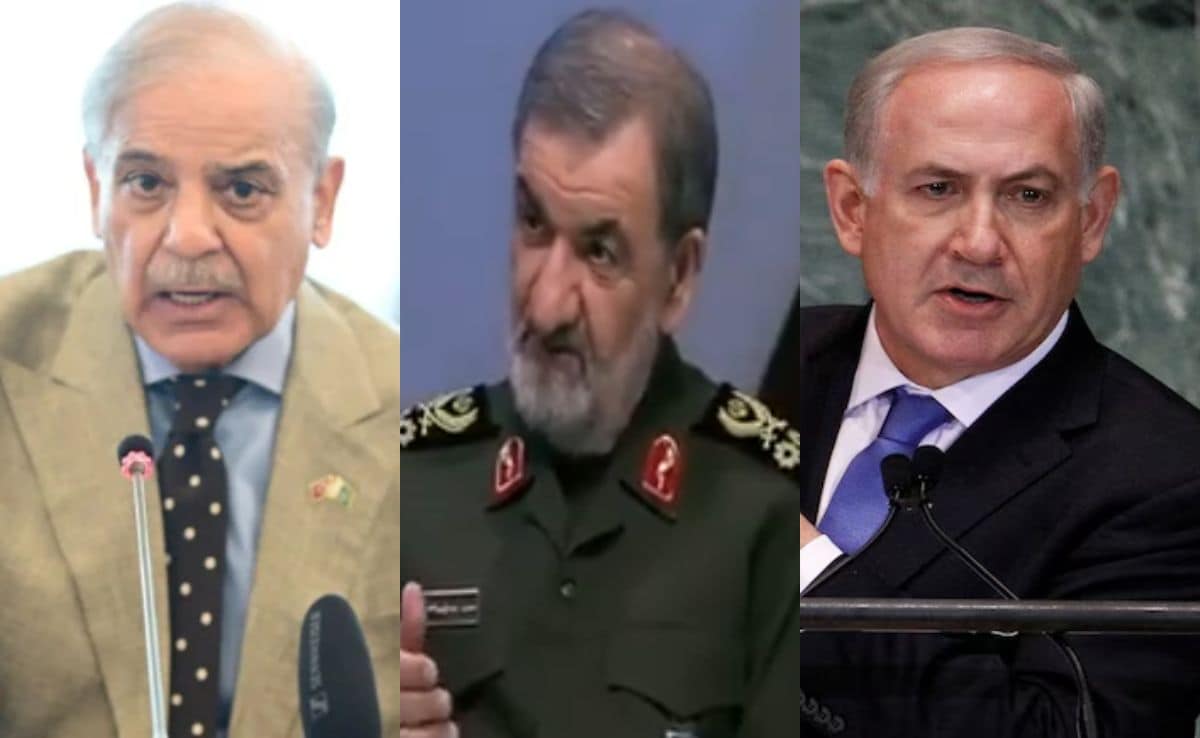
The claim was made by General Mohsen Rezae, a senior commander in Iran’s elite Islamic Revolutionary Guard Corps (IRGC) and a member of the country’s powerful National Security Council. Speaking during a televised interview, Rezae stated, “Pakistan has assured us that if Israel uses a nuclear bomb on Iran, they will attack Israel with a nuclear bomb.”
The declaration, made amidst intense military conflict, has raised fresh concerns about the risk of nuclear escalation in the already volatile region. So far, at least 248 people have been confirmed dead in the ongoing conflict—230 in Iran and 18 in Israel—as both nations continue to exchange missile fire.
A New Nuclear Flashpoint in the Middle East
General Rezae’s remarks come just months after Iran and Pakistan briefly exchanged missiles across their shared border in early 2024—a flashpoint that was defused through rapid diplomatic engagement. Despite that incident, ties between Tehran and Islamabad appear to have been recalibrated in the face of mounting tensions with Israel.
While Islamabad has yet to officially confirm the nuclear threat alleged by Rezae, Pakistan has shown vocal support for Iran amid its confrontation with Israel. Iran has long positioned itself as a leader of the Muslim world in opposing Israel, and recent messaging from Pakistani officials suggests increasing alignment with Tehran on this front.
Speaking on the broader regional conflict, Rezae added that Iran possesses “hidden capabilities” that have not yet been revealed to the world. The vague assertion further intensified anxieties over Iran’s military posture and its potential retaliatory arsenal.
Global Alarm Over Nuclear Rhetoric
Both Pakistan and Israel are known nuclear powers and are among the nine countries officially recognized as possessing nuclear weapons by the International Campaign to Abolish Nuclear Weapons (ICAN). The suggestion that a third-party nation could be drawn into a nuclear exchange has triggered alarm bells in diplomatic and defense circles around the globe.
The United States has responded with a stern warning. President Donald Trump, who returned to the White House in January, stated emphatically, “Any attack on the United States will be met with the full strength and might of the US Armed Forces—at levels never seen before.” Trump also said his administration is working toward a ceasefire between Iran and Israel, but acknowledged the difficulty of negotiation amid rising hostilities.
Pakistan’s Sharp Rebuke of Israel
Pakistan’s Defence Minister Khwaja Asif weighed in on the situation through a strongly worded statement on social media. “The Western world must worry about conflicts being generated by Israel. It will engulf the whole region and beyond. Their patronage of Israel, a rogue state, can have catastrophic consequences,” he wrote, echoing Tehran’s accusations of Western bias in the conflict.
Asif’s remarks reflect growing outrage in parts of the Islamic world, where Israel’s recent strikes—allegedly targeting Iranian nuclear facilities and strategic sites—have been widely criticized. Iran has portrayed the attacks as aggressive and unprovoked, despite evidence that they followed Iranian missile launches targeting Israeli civilian zones.
No Signs of De-escalation Yet
The current confrontation marks a dangerous shift in Middle Eastern geopolitics, with non-Arab, nuclear-capable Islamic powers increasingly aligning against Israel. The looming threat of nuclear involvement—even as a rhetorical strategy—has injected a new level of danger into a conflict that has already claimed hundreds of lives and destabilized regional security.
So far, neither Iran nor Israel has signaled willingness to de-escalate, and Pakistan’s alleged nuclear assurance to Tehran—if validated—could open a new and perilous front in the broader West Asia conflict.
As the world watches anxiously, the potential for further escalation remains high, and the consequences of miscalculation could be catastrophic.
