

Poonam Sharma
On March 10, 2026, the dust has far from settled in the streets of Tehran. While the horizon glows with the fire of incoming projectiles from the US-Israeli coalition, a deeper, perhaps more destructive fire is consuming the internal architecture of the Islamic Republic. The assassination of Ayatollah Ali Khamenei on February 28 didn’t just create a power vacuum; it cracked the very foundation of the Iranian state, splitting the nation into two irreconcilable factions at a time when national unity is a matter of survival.
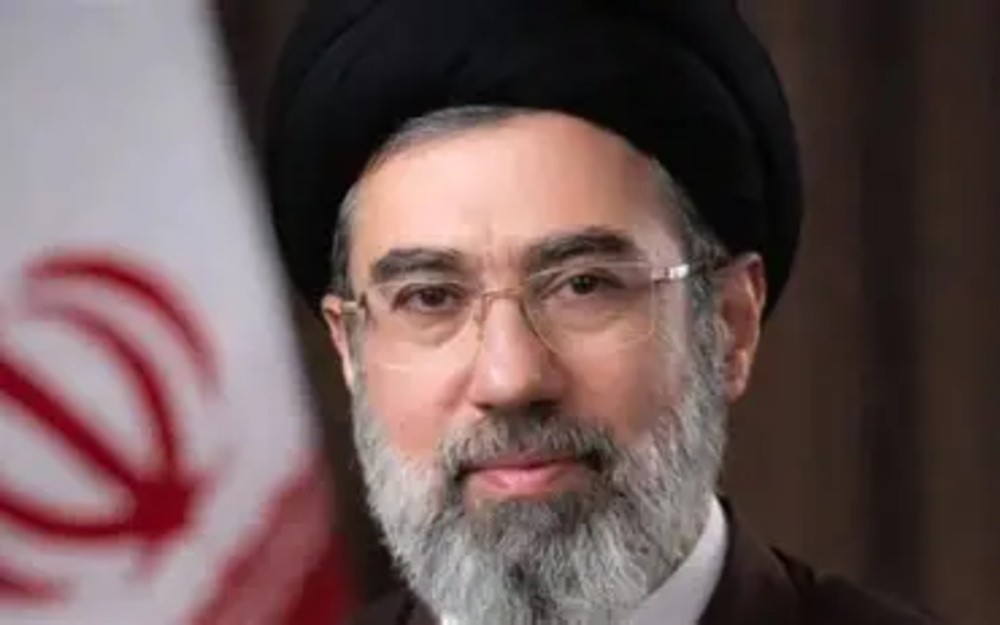
The appointment of Mojtaba Khamenei as the new Supreme Leader was intended to be a masterstroke of continuity. Instead, it has become a lightning rod for dissent, sparking a domestic crisis that threatens to achieve from within what foreign missiles could not: the total destabilization of the Iranian clerical establishment.
A Dynasty Under Siege: The Legitimacy Crisis
For decades, the succession of the Supreme Leader was the most guarded secret in Middle Eastern politics. Mojtaba Khamenei, often described as the “shadow man” of the Iranian deep state, has long controlled the levers of the security apparatus and the Basij paramilitary forces. However, his swift elevation to his father’s throne has bypassed the traditional clerical consensus that the Islamic Republic prides itself on.
One faction, comprised of the ultra-hardliners and the top brass of the Islamic Revolutionary Guard Corps (IRGC), views Mojtaba as the only figure capable of maintaining a “war footing.” To them, any hesitation in leadership during an active conflict with the United States and Israel is equivalent to treason. They argue that the “Fourth Successor” plan—a blueprint for a long-term war of attrition—requires a leader who is inextricably linked to the previous regime’s ideology.
Opposing them is a growing coalition of pragmatists, disillusioned clerics in Qom, and a weary civilian population. This faction views the hereditary nature of this succession as a betrayal of the 1979 Revolution’s anti-monarchical roots. For these Iranians, the installation of a son to replace a father feels less like a divine appointment and more like the return of the Pahlavi-style dynastic rule they once overthrew.
The Two Irans: Resistance vs. Reform
The fracture is not merely political; it is operational. Reports from the ground suggest that while the IRGC continues to launch retaliatory strikes against US assets in the Gulf, certain elements of the regular army and civil administration are paralyzed by indecision. The “Two Factions” mentioned in recent reports represent two fundamentally different visions for Iran’s survival.
The first faction believes in “Victory through Escalation.” They are the ones pushing the Brent crude prices toward $120, betting that global economic pain will force the West to blink first. They see the war not as a disaster, but as a “cleansing fire” that will finally rid the region of American influence.
The second faction, however, fears “Collapse through Isolation.” They look at the crumbling infrastructure, the sky-high inflation, and the growing number of casualties—including the 100 sailors lost off the coast of Sri Lanka—and see a path to national suicide. This group quietly advocates for a diplomatic off-ramp, a move the Mojtaba-led hardliners characterize as a “surrender to the Great Satan.”
The Geopolitical Trap: When Domestic Strife Meets Foreign War
The timing of this internal schism could not be worse for Tehran. Israel has already claimed the destruction of the IRGC’s air force headquarters, and the US military is tightening a naval blockade that is choking the Iranian economy. In the past, external threats served to unite the Iranian people under the banner of nationalism. But in 2026, the weight of the “Maximum Pressure” campaign combined with the controversial succession has exhausted the public’s patience.
As Mojtaba Khamenei attempts to consolidate power, he faces a recursive loop of violence. To prove his strength, he must escalate the war; but as the war escalates, the domestic suffering increases, further fueling the factionalism that undermines his authority. The “Board of Peace” proposed by Donald Trump in Washington stands in stark contrast to the “Long War” promised by Tehran, leaving the Iranian people caught between a vengeful superpower and a rigid, divided leadership.
Iran stands at a crossroads. The coming weeks will determine if Mojtaba Khamenei can bridge the gap between these two factions or if the Islamic Republic will succumb to the same internal pressures that have toppled empires throughout Persian history. In 2026, the most dangerous enemy Iran faces might not be the missiles in the sky, but the divisions in its heart.
