
Inside the Sanchaar Saathi Uproar: Security Upgrade or Digital Overreach?
“Sanchaar Saathi Debate: Bharat’s New Telecom Rule Sparks Confusion, Politics and Big Questions About Digital Freedom.”

Paromita Das
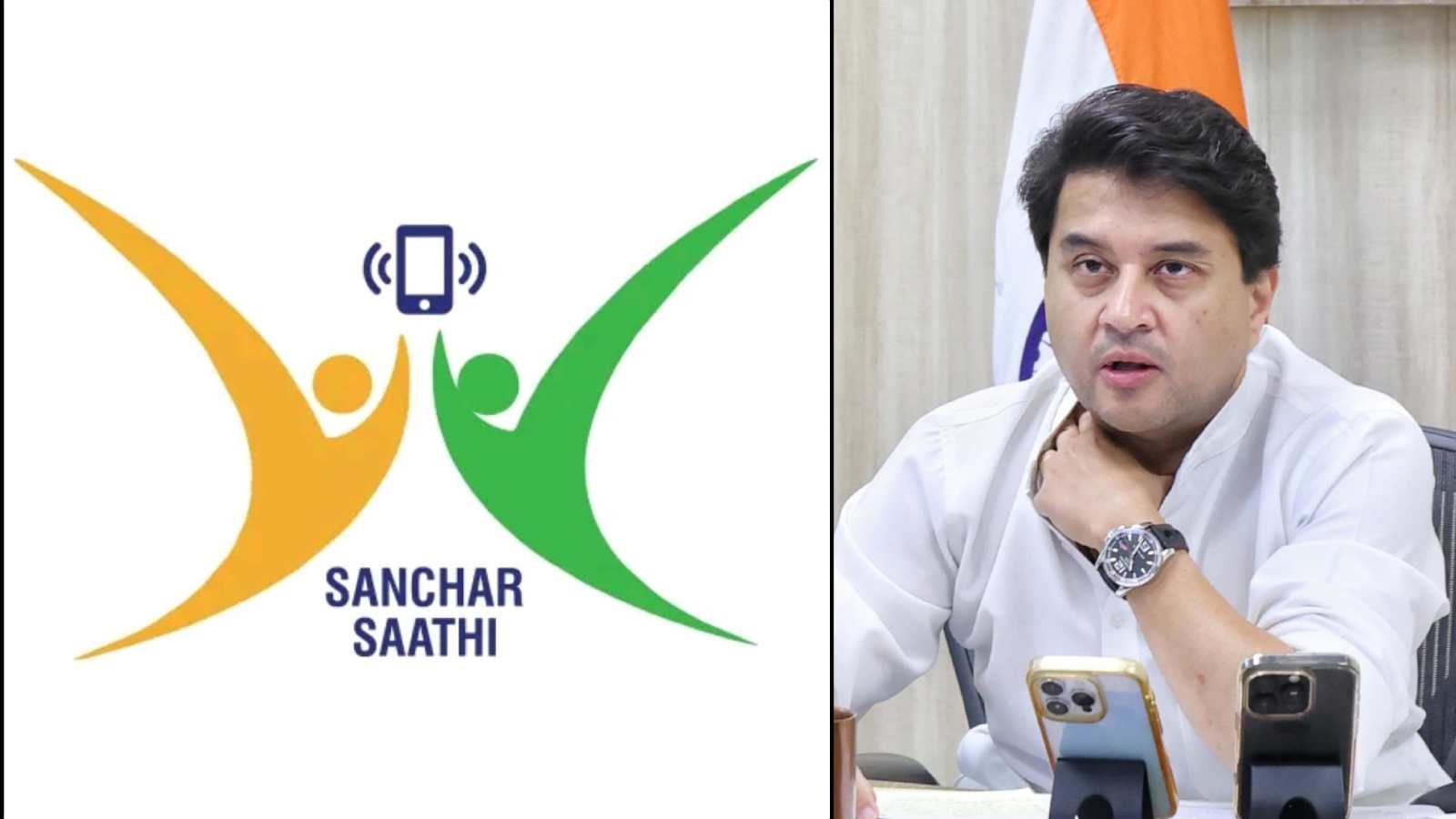
New Delhi, 3rd December: The latest controversy sweeping across Bharat’s digital landscape began with a single government notification—one that instantly ignited a fierce national debate. The Department of Telecommunications (DoT) announced that every mobile manufacturer selling devices in Bharat must ship their phones with a pre-installed “Sanchaar Saathi” app. On paper, the app is a citizen-protection tool, designed to curb mobile thefts, SIM fraud and counterfeit phone circulation. But in the age of rising digital anxieties and political polarisation, even a safety tool can be interpreted as surveillance. What followed was a storm of accusations, clarifications and sharp political attacks that turned a technical policy into a heated ideological battle.
A Tool Built for Protection, Not Monitoring — At Least on Paper
To understand the uproar, it helps to unpack what the Sanchaar Saathi app actually does. Its core functions are simple and, in many ways, beneficial. When a user enters their phone number, the app shows the name under which the number is registered and how many SIMs are linked to that identity. If the count doesn’t match, it alerts the user to the possibility of fraudulent SIMs issued in their name — a common tactic in cybercrime networks.
The second key function aims to tackle Bharat’s huge phone-theft problem. If a device is stolen or lost, and the thief switches it on with a different SIM, the app and the CEIR (Central Equipment Identity Register) system can help authorities trace the IMEI number, locate the device, and block it entirely. A phone that cannot connect to any network becomes meaningless to the thief.
A third benefit helps consumers verifying second-hand phones. By cross-checking a device’s IMEI through the app, buyers can instantly know whether the handset is genuine or tampered with — a frequent problem in Bharat’s expanding refurbished market.
In fact, according to DoT data, the CEIR system — along with this mechanism — has already helped save around seven lakh devices from falling permanently into the hands of criminals. With features like these, the app is hardly the villain the opposition has portrayed. But the controversy lies not in what the app does — but whether users should be forced to keep it.
Where the Controversy Began: Mandatory or Optional?
The original DoT notification required all manufacturers to ship new phones with the app pre-installed and in a visible, accessible mode when the user first opens the device. Nowhere did the notification say the app must remain permanently on the phone, nor did it mandate registration or usage. But political reactions magnified a single line into a full-blown allegation of government surveillance.
When Union Minister Jyotiraditya Scindia clarified that the app is optional, deletable and dormant unless a user registers, opposition MPs immediately accused the government of lying. Shiv Sena (UBT) MP Priyanka Chaturvedi cited the notification to argue that the app cannot be deleted and is meant to track citizens — an interpretation not supported by the document itself.
In reality, the notification only states that the app must be present and functional when the device is first activated. It does not say the user cannot uninstall it. This nuance, however, got buried under political noise.
Apple Steps In — And Sparks a Second Debate
Apple’s firm stance added fuel to the fire. The company openly stated it does not allow government-mandated apps on its devices — not in Bharat, nor in any country. Apple maintains strict control over what comes pre-installed on its operating system, and its policy does not allow forced government apps that bypass its architecture.
This global policy put Bharat’s regulation under fresh scrutiny. If countries like the US and most European nations fight cybercrime without mandating government apps, why should Bharat take a different route? Singapore has a scam-tracking app, but its installation is voluntary. Western nations, too, rely on strong cyber systems instead of mandatory tools. The debate now shifted from “Is this surveillance?” to a deeper, more structural question: “Should citizens have the right to choose what stays on their devices?”
The Political Theatre Behind a Technical Policy
In a democracy, even a minor technological policy can become a political flashpoint. The opposition quickly framed the Sanchaar Saathi rule as an attempt to access private data. Social media amplified the claim that the government wants to monitor calls, track locations or read WhatsApp messages — even though none of these features exist in the app.
On the other hand, the government argued it was only trying to ensure every citizen has easy access to a tool that protects them from fraud. According to Scindia, the app remains inactive unless a user registers. That means no data collection, no monitoring, no forced usage — unless the user chooses to engage.
This tug-of-war revealed a deeper truth: mistrust between political groups has reached a point where even a safety app becomes a battlefield.
The Real Issue Is Not the App—It’s the Communication Gap
Bharat’s digital ecosystem is vast, diverse and constantly evolving. In such a landscape, transparency matters just as much as technology. The government may have had the right intention, but the communication was unclear and incomplete. When people fear surveillance, ambiguity only fuels suspicion. The opposition, instead of seeking clarity, rushed to weaponise the confusion for political mileage. Both sides contributed to the panic.
What Bharat truly needs is a robust digital policy framework — one that prioritises user rights, data security and transparency over political messaging. Citizens deserve clear answers, not half-explained notifications or exaggerated accusations.
The Sanchaar Saathi debate is more than a fight about one app — it reflects Bharat’s struggle to balance safety and freedom in a digital age. The app itself is not a threat. It does not track calls, record conversations or monitor messages. It is designed to combat fraud, theft and cybercrime, and millions could benefit from it.
But a democratic society must always defend the principle of choice. Tools meant for public safety must be introduced with clarity, consent and complete transparency. As long as the app remains optional, deletable and user-controlled, it can serve its purpose without compromising citizens’ trust.
In the end, Bharat doesn’t need fear-driven narratives. It needs informed citizens, responsible politics and digital policies that strengthen both security and freedom — not one at the cost of the other.
