

Poonam Sharma
For centuries, India’s education system was shaped less to empower minds than to condition them. Colonial rulers dismantled vibrant traditions—from Nalanda to Gurukuls—and replaced them with rigid syllabi that glorified outsiders while minimizing India’s own knowledge systems. Children were forced into rote memorization, stripped of cultural pride, and locked into conformity.
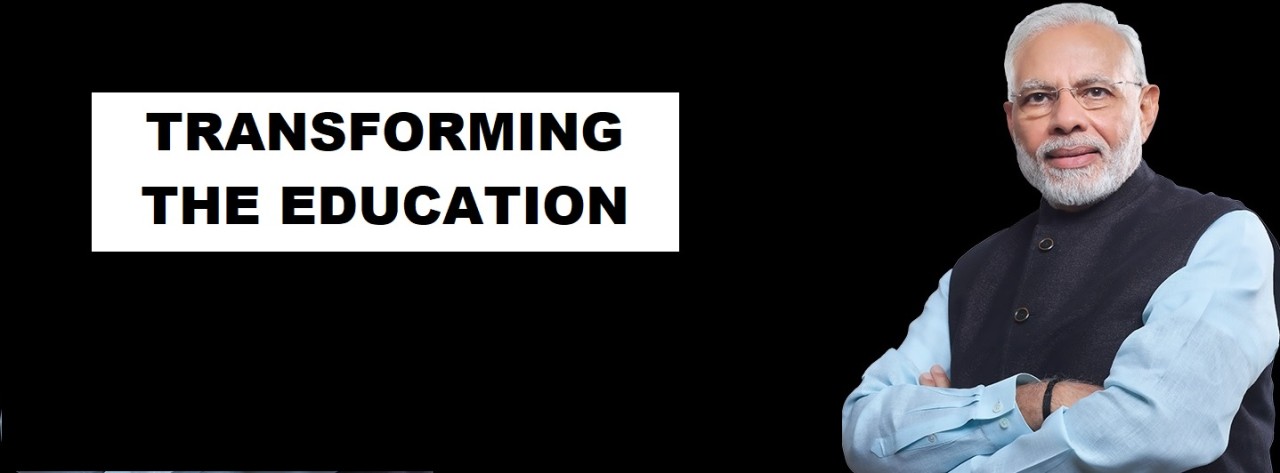
But with Prime Minister Narendra Modi, a radical transformation is happening. India’s New Education Policy (NEP) is no mere bureaucratic overhaul—it is a civilizational initiative, a deliberate effort to reshape learning both nationally and internationally. With over 150 nations already evincing interest in its aspects, India is getting set to present the world with an alternative to the Western “one-size-fits-all” approach to education.
From Rote to Relevance
The Western system, particularly the American, has traditionally been founded upon uniformity. Students are regarded as factory products, individuality flattened by homogenized exams and repetitive drill. In India as well, colonial remnants left education grade-oriented instead of skill-based.
The NEP defeats this old stereotype. Indian children from as early as Grade 6 are now studying vocational training, artificial intelligence, robotics, and skill-based practical courses. Thus, learning is fun, not heavy, and prepares the students for actual problems.
A small but indicative instance lies in multiplication. In English, tables are mechanical—”two twos are four.” But in Hindi, the cadence of “दो दूनी चार, दो तिया छः” makes learning a cultural tune. The NEP brings back this learning joy, making lessons experiences and not drills.
Reviving Ancient Strengths
One of the most astonishing aspects of India’s reforms is the re-emergence of Gurukul-type whole-brain education. In certain schools around Indore, children learn to write with both hands at once—Hindi with the left hand and English with the right hand. This engages both sides of the brain and doubles the capacity of the mind.
Such practices echo India’s ancient methods, where learning was interactive, multidimensional, and rooted in daily life. While invaders destroyed institutions like Nalanda, Modi’s reforms are reviving their essence in modern form. Education is no longer confined to memorized formulas; it is about creativity, innovation, and lifelong curiosity.
Breaking Language Barriers
For years, English was the key to Indian higher education. Talented children from rural towns and villages were kept out just because they were not proficient in English. The NEP breaks this inequality. Exams and courses are provided in local languages—Telugu, Tamil, Marathi, Hindi, and others.
This one change has democratized education. Lakhs of children now chase dreams in mother tongues, infusing classrooms with inclusivity and cultural self-respect. Knowledge is not bound to colonial language hierarchies anymore—it is for every child in the language they love.
India as a Global Classroom
The impact of the NEP is not limited to India. Delegations from nearly 70 countries have already toured Indian campuses, and more than 150 countries are examining elements of the policy. In Asia, Africa, and Latin America, governments are grappling with increasing fees, alienated students, and low results. India’s model—low-cost, inclusive, skill-based—is gaining popularity as an appealing option.
Foreign students are coming to India in increasing numbers. For African and Southeast Asian families, it is safer, less expensive, and more culturally rewarding to send children to Indian universities. Fees are sometimes only 20 percent of Western rates. This turnabout—from Indians abroad to foreigners opting for India—is telling. Just as India has made itself the “pharmacy of the world” by making medicines accessible, it is now making itself the “classroom of the world” by offering accessible education.
Meanwhile, known international universities are being encouraged to establish campuses in India. By cutting costs by 20–30 percent relative to Western nations, these institutions will make world-class education affordable and boost India as a global hub.
Practical Knowledge Over Degrees
A key insight behind Modi’s reforms is that the future does not belong to certificates but to skills. Employers worldwide now value innovation, problem-solving, and flexibility more than degrees. Indian universities, accordingly, are prioritizing internships, labs, vocational training, and real-world projects.
From medicine to artificial intelligence, Indian graduates are becoming ever more “job-ready.” Online sites, virtual universities, and international research partnerships are taking this reach even further. By fusing tradition with technology, India is gearing up its youth for the 21st century complexities.
Self-Reliance as the Core
The greatest gift of India’s education policy might be its spirit of self-reliance. Western and Chinese systems tend to promote dependency—on foreign aid, costly degrees, or centralized state models. India’s model is different. It exhorts each country to utilize its own resources, construct around its own culture, and depend on its own strength.
When Indian professionals travel to Africa, they tend to instruct locals: “We made errors in copying others blindly. Do not make the same mistakes. Develop systems that can sprout from your soil.” This is the NEP philosophy: education should liberate the mind, not confine it in borrowed shapes.
Cultural Integration
In contrast to Western models that isolate students from their traditions, India’s education merges modern science with yoga, music, philosophy, and local epistemologies. The balance produces not only workers, but well-rounded human beings.
Foreign students who come to India to study come back not only with degrees, but with respect for Indian values—family, community, spirituality. This soft power aspect of education can, in the long run, be more effective than even India’s economic or military emergence.
Towards A Generational Change
Education reform cannot take place overnight. Specialists pin the complete outcome of the NEP on 5–10 years and its true potential to materialize in 20–25. The students learning under the system now will be the leaders, thinkers, and innovators of tomorrow.
Already, CEOs of international companies—from Microsoft to Google—are living testimony to India’s education base. Their success is an indication to the world that India is churning out not only graduates, but trendsetters. With the NEP, this talent pool will only increase.
Out of the Box, Into the Future
The Western model of education has traditionally functioned as a “cell”—trapping young minds within strict confines. India’s vision is to burst open that cell, granting liberty to think, to create, and to innovate.
Through the resurrection of ancient knowledge, the acceptance of languages, the emphasis on skills, and the opening-up of the world, India under Modi is reshaping global education. Over 150 countries are observing closely, with many already implementing pieces of the policy.
In the decades ahead, India will not only be the world’s pharmacy but its classroom. And when it does, it will not only impart to humankind knowledge, but also values: inclusivity, creativity, and the strength of self-reliance.
