
India, US Close to Landmark Trade Pact Aimed at $500 Billion Bilateral Trade by 2030

GG News Bureau
New Delhi, 3rd June: In a major development that could redefine the economic relationship between the world’s two largest democracies, India and the United States are nearing the conclusion of a comprehensive trade agreement dubbed ‘Mission 500’. The deal, currently in its final stages of negotiation, aims to boost bilateral trade from $190 billion to an ambitious $500 billion by 2030.
The pact is expected to create new avenues for economic cooperation, streamline investment flows, and enhance market access for key sectors in both countries.
“India Has One of the Most Extraordinary Economies”: US Commerce Secretary
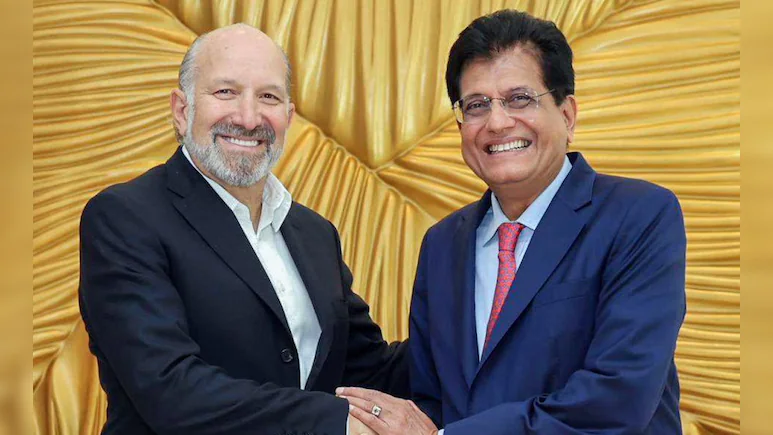
Following a meeting with India’s Union Minister for Commerce and Industry Piyush Goyal, US Commerce Secretary Howard Lutnick praised India’s economic potential.
“India has one of the most extraordinary economies,” Lutnick said. “Its people have the drive and ambition that makes an economy thrive. That’s why you can do things in India that many other countries can’t get done.”
He also signaled that an agreement was imminent, stating,
“You should expect a deal in the not-too-distant future. We’ve found a place that really works for both countries.”
Long Road to a Game-Changer
The trade pact follows years of turbulent negotiations, including the fallout from reciprocal tariffs imposed during the Trump administration. However, with diplomatic efforts now bearing fruit, analysts believe the deal could be transformational for India’s export-driven sectors, especially pharmaceuticals, agriculture, engineering, textiles, and electronics.
India’s agricultural exports, currently valued at $4 billion, are poised for a substantial boost.
What ‘Mission 500’ Entails
Far from being a mere trade pact, ‘Mission 500’ is being seen as a visionary initiative for bilateral economic expansion. It proposes smoother capital movement, reduced trade barriers, and enhanced investment frameworks between India and the US.
For Indian industries, this would mean greater access to American markets, particularly in labour-intensive sectors like footwear, garments, and electronics—paving the way for broad-based growth and job creation.
Consumer Impact and Global Supply Chains
Indian consumers stand to benefit directly, with reduced import duties making high-end American fashion brands, FMCG products, and dairy items more affordable. The US alcoholic beverage industry is also set to gain, with popular brands such as Jack Daniels and Jim Beam expected to become cheaper in Indian markets.
Beyond consumer goods, the pact is also seen as a strategic tool for realigning global supply chains, especially in the wake of sustained US-China trade tensions.
Challenges and Next Steps
While optimism remains high, free movement of labour and data-sharing norms are expected to be key sticking points due to differing political and regulatory stances in New Delhi and Washington.
India is currently prioritising trade negotiations with both the United States and the European Union. Speaking recently, Minister Goyal confirmed,
“We are well on track in our bilateral trade agreement with the US and making fast progress with the EU.”
The Indian government’s economic outlook predicts that a successful deal with the US will “turn the current headwinds into tailwinds”—a bold step toward realizing India’s aspiration of becoming a global trade powerhouse.
