

By Anjali Sharma
WASHINGTON – The Comprehensive Economic and Trade Agreement between India and the United Kingdom on Saturday is being considered as a ‘bonanza’ for the marine sector since it removes import tariffs on a wide range of seafood products, enhancing Indian exporters’ competitiveness in the UK market.
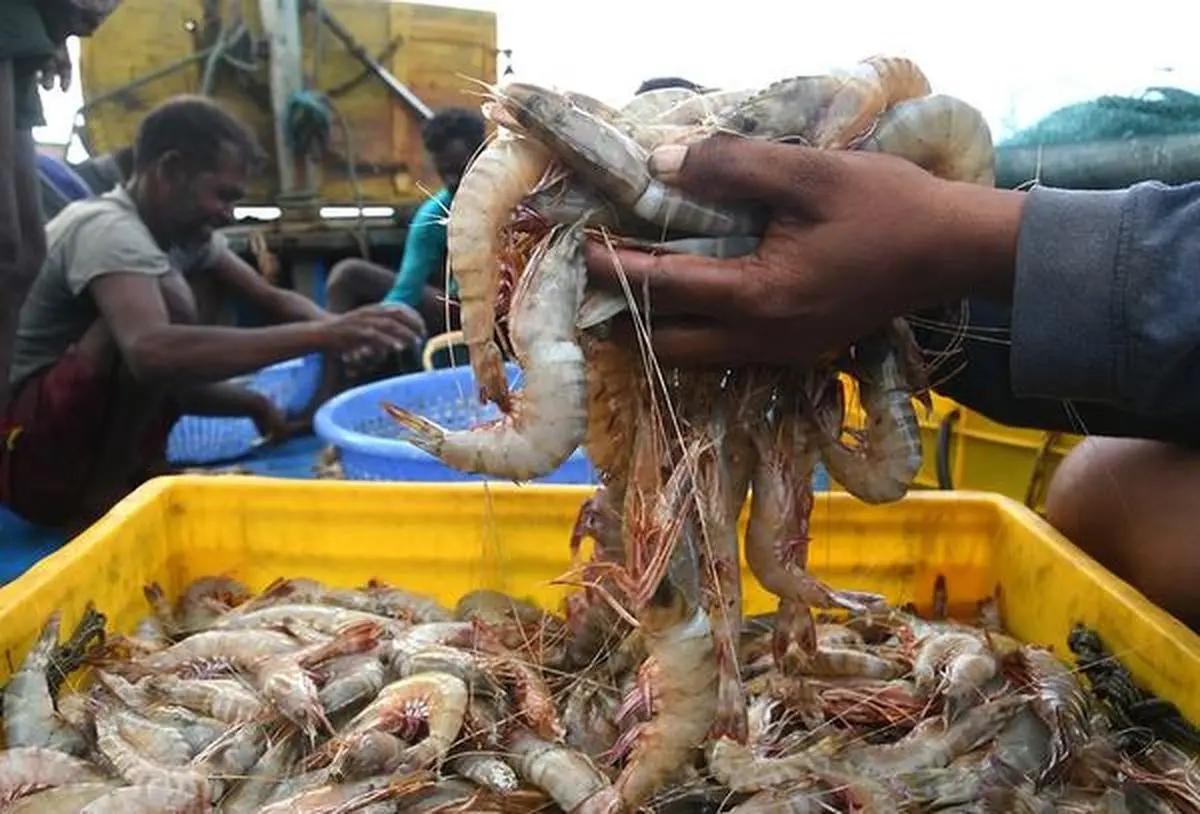
The pact is expected to benefit exports of shrimp, frozen fish, and value-added marine products—boosting India’s presence in one of its major seafood destinations alongside labour-intensive sectors like textiles, leather, and gems and jeweley.
India’s key seafood exports to the UK currently include Vannamei shrimp (Litopenaeus vannamei), frozen squid, lobsters, frozen pomfret, and black tiger shrimp—all of which are expected to gain further market share under CETA’s duty-free access.
Under the India–UK pact, all fish and fisheries commodities falling under the UK tariff schedule categories marked ‘A’ now enjoy 100% duty-free access from the date of entry into force of the agreement.
These products were subject to tariffs ranging from 0% to 21.5%, all of which have now been removed, substantially improving their cost competitiveness in the UK market.
The products under HS 1601 (sausages and similar items) remain excluded under staging category ‘U’ and receive no preferential treatment.
India’s total seafood exports in 2024–25 reached $7.38 billion (₹60,523 crore), amounted to 1.78 million metric tonnes. Frozen shrimp remained the top export, accounting for 66% of earnings with $4.88 billion.
Marine exports to the UK, specifically, were valued at $104 million (₹879 crore), with frozen shrimp alone contributing $80 million (77%).
India’s share in the UK’s $5.4 billion seafood import market is just 2.25%.
CETA now in force, industry estimates project a 70% surge in marine exports to the UK in the coming years.
The fisheries sector supports the livelihoods of about 28 million Indians and contributes around 8% of global fish production. Between 2014–15 and 2024–25, India’s seafood exports rose from 10.51 lakh metric tonnes to 16.85 lakh metric tonnes (60% growth), while value increased from ₹33,441.61 crore to ₹62,408 crore (88% growth).
The number of export destinations expanded from 100 to 130 countries, with value-added product exports tripling to ₹7,666.38 crore, signaling a shift towards high-end global markets.
The coastal states like Andhra Pradesh, Kerala, Maharashtra, Tamil Nadu and Gujarat, key players in seafood exports, are well-positioned to capitalize on CETA.
These states can expand their export footprint and enhance compliance with international norms with targeted efforts to meet UK sanitary and phytosanitary standards,.
India–UK CETA marks a turning point for India’s fisheries sector, not just by offering duty-free access to a premium market but also by uplifting coastal livelihoods, enhancing industry revenues, and strengthening India’s reputation as a reliable supplier of high-quality, sustainable seafood.
