
India-UK FTA a lesson for US to shed transactional lens, adopt empathetic posture

By Anjali Sharma
WASHINGTON – According to the report by Washington-based nonprofit Middle East Media and Research Institute (MEMRI) on Saturday stated that India-UK free trade agreement (FTA) is a lesson for the current US administration has an opportunity to reframe its engagement with India not as a competitor, but as a strategic partner whose growth can amplify shared prosperity.
According to the report by Washington-based nonprofit Middle East Media and Research Institute, the India-US negotiations, if they are to succeed, must rediscover it.
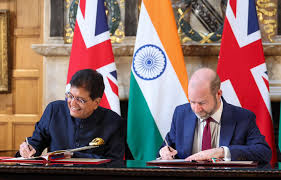
The report noted “India’s recent achievement in concluding a Free Trade Agreement (FTA) with the United Kingdom stands in stark contrast to the tense and protracted negotiations that continue to mark its trade dialogue with the United States.”
It added that the India-UK FTA is not merely a trade pact, it reflects mutual understanding, strategic alignment, and a shared vision for inclusive growth.
MEMRI report stressed “It was forged through three years of fractured but ultimately fruitful negotiations between two mature economies that chose pragmatism over posturing. The UK, navigating its post-Brexit economic identity, saw in India not just a market but a partner whose economic ascent could complement its own industrial ambitions.
Britain’s modern industrial strategy, with its focus on advanced manufacturing, clean energy, and digital technologies, found resonance with India’s reform-driven growth trajectory and its aspiration to become a $5 trillion economy by 2027, it added.
The India-UK agreement was not confined to tariff reductions. It offered zero-duty access to 99 percent of Indian exports, streamlined mobility for professionals, and addressed social security contributions through the Double Contribution Convention, it emphasized.
The report stressed “It was, in essence, a pact of mutual respect and forward-looking trust… In contrast, the Indo-U.S. trade negotiations remain mired in structural disagreements and ideological friction. The disagreements, whether on agricultural subsidies, digital trade, or Special and Differential Treatment at the WTO, are not new. But what exacerbates them is the persistent perception gap,”.
According to the report, despite its macroeconomic strength and global ambitions, India remains a country where MSMEs form the backbone of employment, where agriculture is still vulnerable to price shocks, and where per capita consumption lags far behind developed economies.
It highlighted “The US administration, in its pursuit of reciprocal concessions, often overlooks these structural realities. It perceives India’s rise as a zero-sum game, every gain for India, it fears, comes at the expense of American manufacturing. This mindset not only stifles progress but risks alienating a partner whose strategic alignment with the U.S. is otherwise robust”.
The lesson lies in the UK’s approach, the report said.
Britain did not dilute its interests; it simply chose to engage with India on equal terms, acknowledged its sensitivities and aspirations.
“The result was a comprehensive, high-quality agreement that promises to unlock significant opportunities for both sides. The US, if it wishes to conclude a meaningful FTA with India, must shed its transactional lens and adopt a more nuanced, empathetic posture. It must recognize that India’s insistence on developmental safeguards is not obstructionism, it is a principled stand rooted in lived realities,” the report concluded.
