
India, Russia Reaffirm Zero-Tolerance on Terrorism at 23rd Annual Summit
Leaders Condemn Pahalgam and Crocus City Attacks; Pledge Deeper Security, Climate and Regional Cooperation

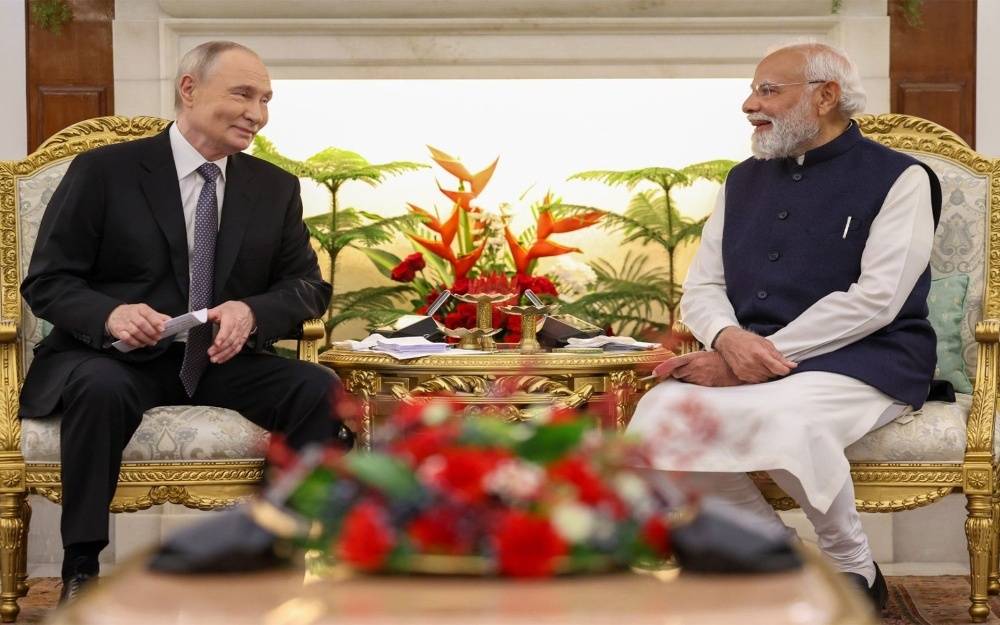
- Modi and Putin condemn recent terror strikes, call for action against all UN-listed groups
- Leaders reiterate zero-tolerance policy and seek early adoption of global anti-terror convention
- India and Russia strengthen cooperation on Afghanistan, Middle East and climate action
- Both sides express satisfaction with strategic partnership and commit to multipolar global stability
GG News Bureau
New Delhi, 6th Dec: India and Russia on Friday reaffirmed their commitment to intensifying bilateral and multilateral cooperation to combat terrorism, extremism, transnational organised crime, money laundering, terrorist financing and illicit drug trafficking. The pledge came as Prime Minister Narendra Modi and Russian President Vladimir Putin issued a Joint Statement following the 23rd India–Russia Annual Summit in New Delhi.
Both leaders strongly condemned recent terror attacks in India and Russia, including the Pahalgam attack in Jammu and Kashmir and the Crocus City Hall attack in Moscow, calling such acts “criminal and unjustifiable” irrespective of motive, ideology or perpetrators. The statement underlined the shared resolve to prevent cross-border movement of terrorists, dismantle financing networks and eliminate safe havens.
The two sides also urged decisive action against all UN-listed terrorist organisations, including Al-Qaeda, ISIS/Daesh and their affiliates. They called for global cooperation without “hidden agendas or double standards,” stressing the importance of adhering to international law and relevant UN Security Council resolutions. India and Russia reiterated support for the early adoption of the Comprehensive Convention on International Terrorism (CCIT).
The leaders welcomed the Delhi Declaration adopted at the 2022 UNSC Counter-Terrorism Committee meeting, which addresses misuse of emerging technologies—including drones, digital payments and social media—by terror groups. They noted the need to expand joint efforts to prevent online radicalisation and counter extremist propaganda, highlighting growing cooperation within SCO and BRICS.
On Afghanistan, the statement reflected close India-Russia coordination. Both sides welcomed counter-terrorism action against ISIS, ISKP and other groups, and emphasised the role of the Moscow Format in fostering regional stability. They also called for uninterrupted humanitarian assistance for the Afghan people.
The two countries expressed concern over the humanitarian situation in Gaza, urged restraint in the Middle East and West Asia, and called for adherence to international law. They also stressed the need for dialogue to resolve issues around the Iran nuclear deal.
In the climate domain, India and Russia agreed to intensify dialogue for implementing the Paris Agreement, expanding cooperation on low-carbon technologies and sustainable finance. They welcomed the first meeting of the Joint Working Group on climate change and the launch of the BRICS Climate Research Platform and BRICS Laboratory for Trade, Climate and Sustainable Development.
The statement underlined continued coordination within G20, BRICS and SCO, especially as India prepares to chair BRICS in 2026.
Concluding the declaration, both sides expressed satisfaction with the resilience of the India–Russia Special and Privileged Strategic Partnership and reaffirmed their intent to deepen cooperation. They said India and Russia, as major global powers, will continue working toward peace and stability in a multipolar world and multipolar Asia.
