
India–EU Finalise Historic Free Trade Agreement, Ushering in New Phase of Economic Cooperation
After years of negotiations, India and the European Union seal a comprehensive FTA aimed at boosting trade, services, jobs and global supply chain resilience

-
Over 99% of Indian exports to receive preferential access to EU markets, benefiting labour-intensive sectors
-
Sensitive areas like agriculture and dairy protected, while select farm and processed food exports gain better access
-
Services trade expanded significantly, including IT, professional services, education and finance
-
Clear framework created for mobility of skilled professionals, students and business visitors
GG News Bureau
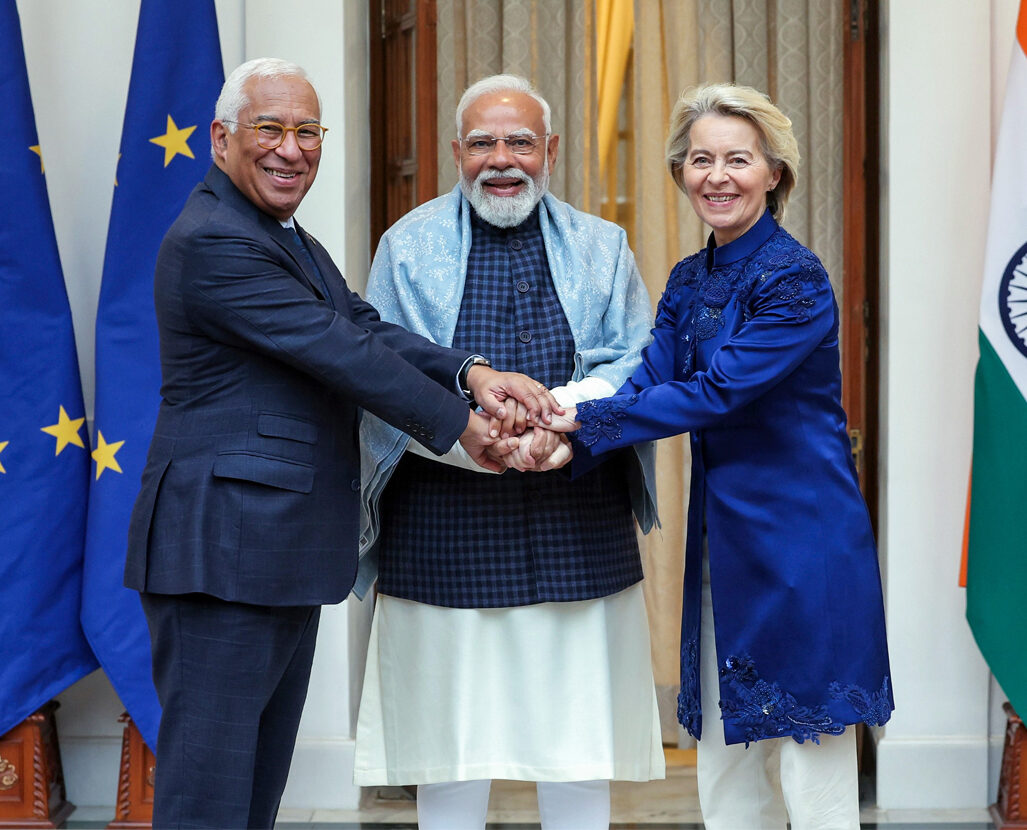
New Delhi | January 27,India and the European Union on Tuesday announced the successful conclusion of their long-awaited Free Trade Agreement (FTA), marking a major milestone in bilateral relations. The announcement was made at the 16th India–EU Summit by Prime Minister Narendra Modi and European Commission President Ursula von der Leyen during the visit of senior European leaders to India.
The agreement is being viewed as a strategic breakthrough that brings together two of the world’s largest economies at a time of shifting global trade dynamics and supply chain realignments.
Strengthening a Global Economic Partnership
India, now the world’s fourth-largest economy, and the European Union, the second-largest, together account for nearly 25% of global GDP and around one-third of international trade. According to the Ministry of Commerce and Industry, the FTA is designed to promote inclusive growth, economic resilience and deeper integration into global value chains.
The pact positions both sides as trusted trade partners and reflects a shared commitment to rules-based global commerce.
Major Gains for Indian Exporters
A standout feature of the agreement is the unprecedented market access offered to Indian goods. More than 99% of Indian exports by value will enjoy preferential entry into the EU. This is expected to significantly boost sectors such as textiles and apparel, leather, footwear, marine products, gems and jewellery, handicrafts, engineering goods and automobiles.
Government estimates indicate that exports worth over USD 75 billion are set for accelerated growth, with nearly USD 33 billion coming from labour-intensive sectors where tariffs of up to 10% will be eliminated. The expansion is expected to generate large-scale employment, particularly benefiting women, youth, artisans and MSMEs.
Balanced Approach on Agriculture and Automobiles
India has ensured strong safeguards for sensitive sectors. Agricultural products such as dairy, cereals, poultry, soymeal and select fruits and vegetables have been excluded from market access commitments to protect farmers’ interests.
At the same time, favourable access has been secured for exports of tea, coffee, spices, fresh produce and processed foods. In the automobile sector, a quota-based liberalisation framework allows EU manufacturers to introduce premium models in India while encouraging future manufacturing and exports under the Make in India initiative. Indian-made vehicles will also gain entry into EU markets.
Services and Mobility Take Centre Stage
Services, a key growth driver for both economies, feature prominently in the agreement. India has secured meaningful access across 144 EU service subsectors, including IT and IT-enabled services, professional services, education, financial services, tourism, construction and business services. The EU will gain access to 102 service subsectors in India.
The FTA also establishes a future-ready mobility framework, offering predictable pathways for the temporary movement of skilled and semi-skilled professionals. Provisions cover intra-corporate transferees, business visitors, contractual service suppliers and independent professionals, along with work and entry rights for dependents. Student mobility, post-study work opportunities and the groundwork for future social security agreements are also included.
Climate, Regulations and Emerging Technologies
Beyond tariff reductions, the agreement addresses non-tariff barriers through enhanced regulatory cooperation, simplified customs procedures and stronger sanitary and phytosanitary standards. On climate-related trade issues, including the EU’s Carbon Border Adjustment Mechanism (CBAM), the FTA provides for flexibility, technical cooperation, recognition of carbon pricing systems and financial assistance to support India’s low-emission transition.
The pact reinforces intellectual property protections under the TRIPS framework, recognises India’s Traditional Knowledge Digital Library, and opens doors for collaboration in emerging areas such as artificial intelligence, clean technologies and semiconductors.
Union Commerce and Industry Minister Piyush Goyal described the FTA as a defining achievement in India’s global economic engagement, saying it goes beyond a traditional trade deal to represent a comprehensive strategic partnership aligned with the vision of Viksit Bharat 2047.
