
India calls for global plastics treaty to save oceans at UNOC3

By Anjali Sharma
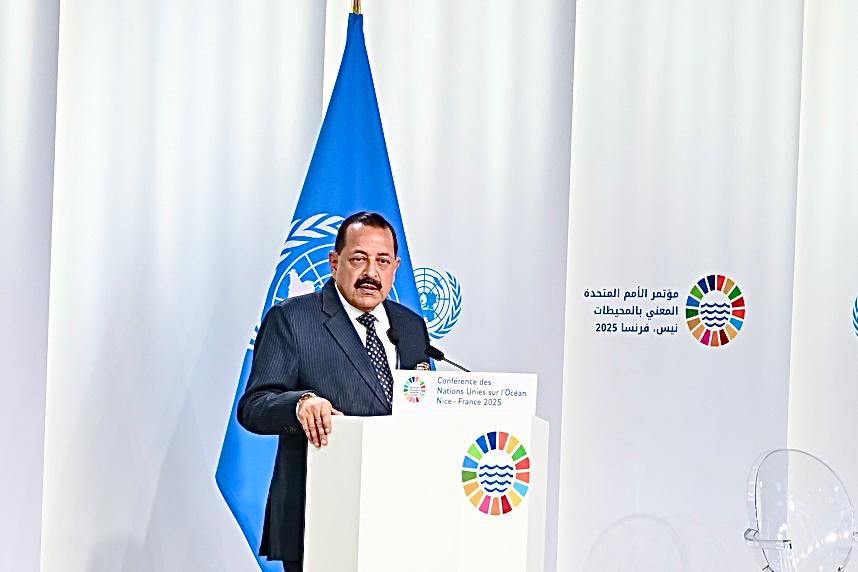
UNITED NATIONS – India on Tuesday reiterated its support for a legally binding Global Plastics Treaty at the Third UN Ocean Conference (UNOC3) in Nice, France, which aimed to end plastic pollution by 2040.
The proposed treaty introduced by the World Wildlife Fund in 2022, seeks adoption by UN member states in 2025.
India Union Minister of Earth Sciences Jitendra Singh called for an urgent global action on ocean health.
He underlined India’s commitment to curb plastic pollution through its nationwide ban on single-use plastics use an effort aligned with the UN’s World Environment Day theme.
Singh highlighted India’s progress in tackling marine pollution through the ‘Swachh Sagar, Surakshit Sagar’ (Clean Ocean, Protected Ocean) campaign.
The initiative was launched in 2022 has cleaned over 1,000 km of coastline and removed more than 50,000 tonnes of plastic waste.
India actively support negotiations on the Global Plastics Treaty and has drafted a national marine litter policy to bolster its commitment.
Minister Singh underscored India’s commitment to conserve marine biodiversity.
He shared that India has signed the Biodiversity Beyond National Jurisdiction agreement, or High Seas Treaty, and is now in the process of ratification.
Singh spoke of expanding India’s Marine Protected Areas, which now cover 6.6% of the Exclusive Economic Zone, contributing to global biodiversity goals.
He emphasized climate resilience, Jitendra Singh noted the restoration of over 10,000 hectares of mangroves and the implementation of shoreline management plans using nature-based solutions.
India has also integrated ocean-based climate actions into its Nationally Determined Contributions under the Paris Agreement.
He called for a robust ‘Nice Ocean Action Plan.
Jitendra Singh urged the international community to invest in innovation, ratify the BBNJ Agreement, and finalize the plastics treaty.
“The ocean is our shared heritage and responsibility,” he said.
He expressed India’s readiness to work with all stake holders governments, private sector, civil society, and indigenous communities to ensure a sustainable ocean future.
