
High Court, Hills : Meghalaya’s Crackdown on Illegal Coke Plants

Poonam Sharma
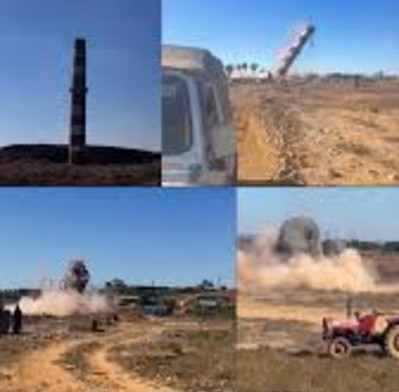
The demolition of 11 illegal coke plants in Meghalaya’s East Jaintia Hills district is more than a routine administrative exercise. It marks the latest chapter in a long, uneasy confrontation between extractive industry, fragile ecology, and constitutional governance in one of India’s most environmentally sensitive regions. Acting on directions from the High Court of Meghalaya, district authorities completed the demolition drive on December 15, underscoring the judiciary’s continuing role as the final guarantor of environmental rule of law.
What Happened in East Jaintia Hills
According to the district administration, all 11 unauthorised coke plants identified in East Jaintia Hills have now been taken down. Seven were demolished by a joint enforcement team constituted under the supervision of the Sub-Divisional Officer, while four had already been dismantled by their owners. The team included officials from the Meghalaya State Pollution Control Board and the Police Department, indicating that the operation was not symbolic but regulatory in intent.
The Deputy Commissioner confirmed that 16 coke plants had been found operating without mandatory approvals in violation of government notifications. Five of these had been demolished earlier, suggesting a phased but sustained enforcement process rather than a one-off action triggered by public outrage.
Coke Plants and the Coal Economy of Jaintia Hills
To understand the significance of this action, one must look beyond the numbers. The Jaintia Hills region has long been associated with coal extraction and processing, particularly through small-scale, often informal operations. Coke plants, which convert coal into coke for industrial use, have proliferated in this landscape, frequently operating without environmental clearances, pollution control mechanisms, or safety oversight.
For local communities, these units have offered employment and income in a region with limited industrial alternatives. But they have also contributed to air pollution, water contamination, and land degradation—problems that have haunted the Jaintia Hills for decades. The tension between livelihood and legality has remained unresolved, often exploited by operators who thrive in regulatory grey zones.
Judicial Oversight and Environmental Governance
The High Court’s intervention must be read within India’s broader constitutional framework on environmental protection. Over the years, courts have repeatedly interpreted Article 21—the right to life—to include the right to a clean and healthy environment. In ecologically vulnerable states like Meghalaya, judicial scrutiny has frequently stepped in where enforcement has faltered.
The demolition drive reflects this dynamic. Rather than new legislation or policy announcements, it was a judicial directive that compelled coordinated administrative action. This is consistent with the judiciary’s evolving role as an environmental sentinel, particularly in regions where economic pressures and local political realities complicate enforcement.
The Role of Institutions on the Ground
What distinguishes this operation is the visible coordination between civil administration, pollution control authorities, and the police. Environmental regulation in India often fails not because of lack of laws, but because of fragmented enforcement. Here, the joint team model suggests an attempt to bridge that gap.
However, the fact that several plants were already dismantled by owners before official action raises uncomfortable questions. Were operators given advance notice? Did they act out of fear of penalties, or to avoid scrutiny into past violations? Transparency around these processes will be crucial if public trust is to be maintained.
A Region Marked by Legal Precedent
East Jaintia Hills is no stranger to judicial intervention in environmental matters. From restrictions on coal mining to repeated warnings over unregulated industrial activity, the region has often been cited as an example of how economic activity can outrun governance. Each court-ordered crackdown has brought temporary relief, but long-term compliance has remained elusive.
This raises a critical question: does demolition alone address the systemic problem, or does it merely reset the cycle? Without sustainable alternatives for employment and clearer regulatory pathways for lawful industry, the incentive for illegal operations may persist.
Beyond Demolition: What Comes Next
The immediate outcome of the High Court’s order is clear—illegal coke plants have been removed. But the deeper challenge lies ahead. Meghalaya must now reconcile environmental protection with economic realities in its coal-bearing districts. This requires not just enforcement, but planning: cleaner technologies, lawful licensing regimes, and livelihood diversification.
The demolition in East Jaintia Hills sends a strong message that environmental laws are not optional. Yet, for that message to endure, it must be followed by governance that is consistent, transparent, and humane. Otherwise, the ruins of demolished plants may stand less as symbols of justice and more as reminders of a conflict still unresolved.
