
“If You Don’t Like It, Don’t Buy It”: Jaishankar on Oil Imports
Foreign Minister defends India's energy choices and emphasizes that the country will not compromise its core interests in trade talks with the US.

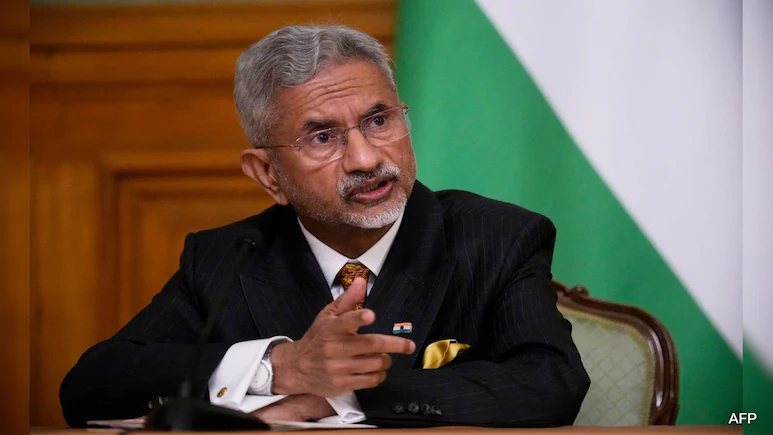
- S. Jaishankar said India has “red lines” in trade negotiations with the US.
- He confirmed that India will not compromise on the interests of its farmers and small producers.
- The Foreign Minister defended India’s oil imports from Russia as being in the national and global interest.
GG News Bureau
New Delhi, 23rd Aug: Foreign Minister S. Jaishankar has sent a clear message to the US. Speaking at the ET World Leaders Forum, he defended India’s oil imports from Russia.
“It’s funny to have people who work for a pro-business American administration accusing other people of doing business,” Jaishankar said.
He challenged US criticism directly. “If you have a problem buying oil or refined products from India, don’t buy it. Nobody forces you to buy it.”
Jaishankar argued that India’s oil purchases serve both national and global interests by helping to stabilize oil prices.
India’s “Red Lines” on Trade
Jaishankar stressed that India has “red lines” in trade negotiations with the US. These are non-negotiable points.
The core interests of India’s farmers and small producers are his government’s top priority. “We are very determined on that,” he stated.
Negotiations are still underway, he confirmed. There has been no permanent fallout.
Protecting India’s Farmers
The main roadblock in the trade talks is the US’s push for market access.
The US wants India to open its markets to American dairy, poultry, and agricultural products. This includes genetically modified (GM) corn and soybeans.
India has refused these demands. The government considers GM food crops a health risk.
The dairy sector, in particular, provides livelihoods for millions of small and landless farmers.
Prime Minister Narendra Modi has also reinforced this stance. He has publicly declared that India will not compromise on the interests of its farmers.
