
IAEA explains monitoring, promoting peaceful nuclear use to Iran ‘crucial’

By Anjali Sharma
UNITED NATIONS – UN watchdog agency IAEA on Thursday said that before Israel launched a bombing campaign against Iran, the agency monitoring Iran’s nuclear activities warned that the country was in violation of its non-proliferation commitments.
The International Atomic Energy Agency dated back to 1957 and was set up in response to global fears following the first use of nuclear and atomic weapons and alarm over the advent and spread of nuclear technology.
An autonomous part of the UN system, it works on issues as varied as food safety, cancer control and sustainable development – and also on promoting peaceful uses of nuclear energy.
The principal responsibility, perhaps less well understood, is the agency’s framework of nuclear ‘safeguards’ agreements.
These agreements are voluntarily entered into by countries and are key to preventing the spread of nuclear weapons by independently verifying whether countries are meeting their non-proliferation commitments.
As of 2024, some 182 countries have safeguards agreements with the IAEA.
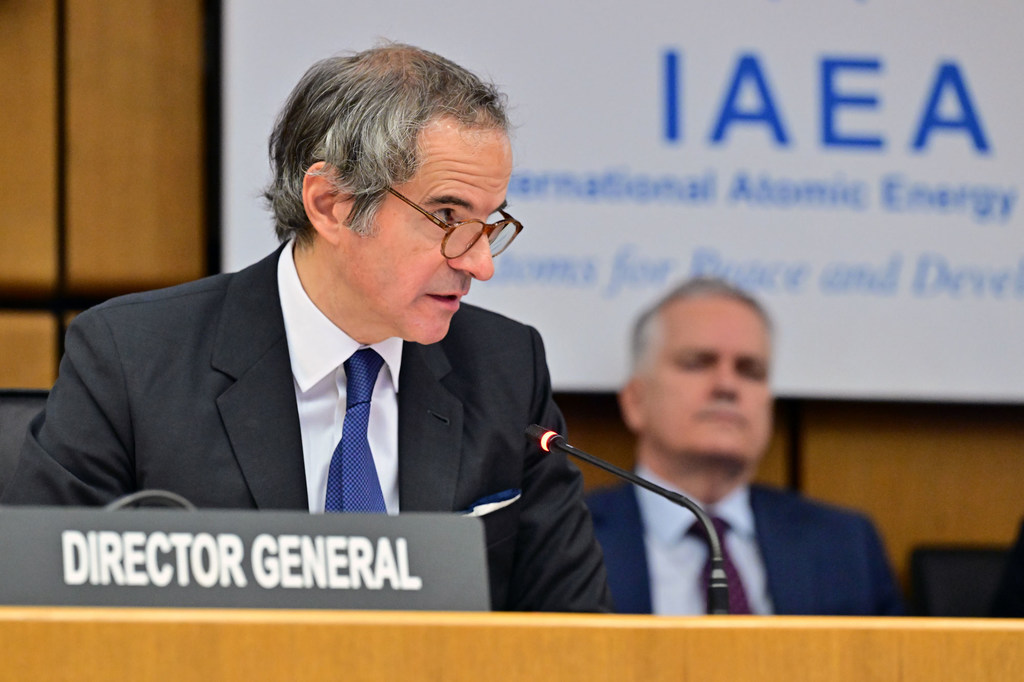
IAEA Director General Rafael Grossi laid out to its board troubling findings, raising fresh concerns about Iran’s compliance with global nuclear agreements.
“Iran has repeatedly either not answered” IAEA requests “or not provided technically credible answers,” Mr. Grossi told the 35-nation board.
He said, Iran has sought to “sanitize the locations,” which the agency has now concluded were part of a “structured” nuclear programme in the early 2000s.
“Unless and until Iran assists the agency in resolving the outstanding safeguards issues, the Agency will not be in a position to provide assurance that Iran’s nuclear programme is exclusively peaceful,” he said.
Mr. Grossi expressed alarm at the rapid accumulation of over 400 kilograms of highly enriched uranium, which has serious implications (highly enriched uranium is one of the necessary components for the creation of a nuclear bomb).
The statement to the board underlined the significant role the IAEA plays in Iran, which can be broken down into four main areas.
The agency uses safeguard agreements under the Nuclear Non-Proliferation Treaty a key international accord designed to prevent the spread of nuclear weapons. The vast majority of safeguards agreements are those that have been concluded by the IAEA with non-nuclear-weapon States.
The safeguards are implemented in three States that are not party to the NPT – India, Pakistan and Israel – on the basis of item-specific agreements they have concluded with the IAEA.
As a non-nuclear armed signatory to the treaty, Iran is banned from acquiring nuclear weapons and is required to allow the IAEA to inspect and verify all nuclear materials and activities, including at short notice, if asked.
The agency regularly inspects Iran’s nuclear facilities, including sites like Natanz, Fordow, and Isfahan.
The aim is to ensure that nuclear materials are only used for peaceful means and are not diverted for weapons use.
Mr. Grossi noted that man-made uranium particles had been found at three more, undeclared sites (Varamin, Marivan and Turquzabad). Iran, he said, had failed to provide “technically credible explanations” for the presence of the particles, despite years of consultations.
The agency regularly reports to its Board of Governors on the nuclear activities of Iran (and other countries), using methods such as inspections, monitoring equipment, environmental sampling, and satellite imagery to gather data and prepare technical reports. In the case of countries under special scrutiny – such as Iran – these reports are typically issued every quarter.
If Iran or any non-nuclear weapon country party to the NPT fails to comply with the IAEA’s requirements by limiting access or not explaining the presence of uranium particles), the agency can report Iran to the UN Security Council, which may lead to diplomatic pressure, sanctions or calls for further negotiations.
The IAEA calls for diplomatic solutions and emphasized the importance of dialogue to resolve concerns about Iran’s nuclear intentions.
Director General Grossi has engaged directly with Iranian authorities and international stakeholders to maintain communication and transparency.
Mr. Grossi addressed the UNSC and said that his agency was in constant contact with the Iranian Nuclear Regulatory Authority to assess the status of affected facilities and determine broader impacts on nuclear safety and security.
The critical part of the IAEA’s broader mission to prevent nuclear accidents, ensure that nuclear energy is used for peaceful purposes, and protect people and the environment.
The IAEA works with the Iranian authorities to ensure that nuclear facilities like Natanz, Fordo, and Esfahan operate safely, by assessing the design and operation of the facilities, monitoring radiation protection measures, and evaluating emergency preparedness, it stated.
IAEA confirmed that Natanz had been impacted but reported no elevated radiation levels.
It emphasized that any military attack on nuclear facilities is a violation of international law and poses serious risks to safety and the environment.
