
Humped Cattle: From Indian Heritage to Global Livestock Powerhouse
India’s Indigenous Zebus Shaping Global Livestock and Sustainable Practices

By Dr Kumar Rakesh
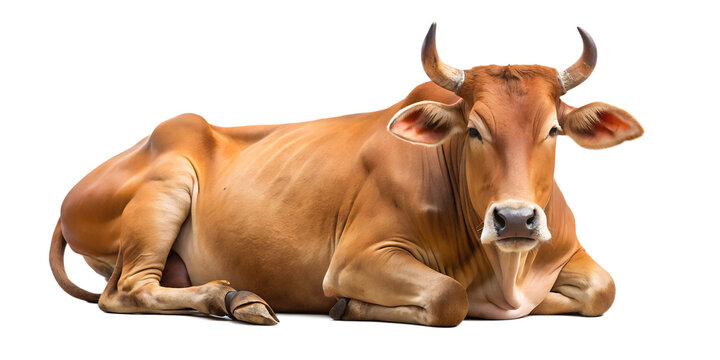
Humped cattle, scientifically known as Bos indicus or zebu, hold a unique place in Bharat’s cultural traditions and the global livestock industry. Long celebrated by sages and farmers for their resilience and utility, these indigenous breeds have spread across continents, becoming the backbone of beef and dairy production in many countries. The defining feature of these animals—the hump—not only symbolizes their adaptability to tropical climates but also reflects their superior thermoregulation and historical link to Bharat’s pastoral heritage. In a world increasingly focused on sustainability, localization, and indigenous practices, humped cattle deserve renewed recognition—both within Bharat and globally.
Humped cattle possess unique traits that set them apart. Their hump, primarily muscular and sometimes fat-storing, provides both biomechanical support and energy reserves. Their loose skin, dewlap, and short coat make them naturally heat-tolerant, unlike European Bos taurus breeds. Originating in the Indus Valley, these cattle gradually spread to Africa, East Asia, the Middle East, and later to the Americas and Oceania through trade and colonial exchanges, leaving an enduring genetic legacy across the world.
Bharat remains the cradle of zebu breeds. Indigenous varieties like Gir, Sahiwal, Red Sindhi, Tharparkar, Kankrej, and Ongole are prized for their milk, draught power, and adaptability. The Ongole, in particular, was exported to Brazil, where it evolved into the globally dominant Nellore cattle, which today form the bedrock of Brazil’s beef export industry. Traditional Bharatiya knowledge also emphasized the agricultural and medicinal value of cow dung and urine. With Prime Minister Narendra Modi’s Independence Day call on August 15 to adopt Swadeshi for a self-reliant Bharat, experts believe that indigenous cattle can play a key role in aligning with the vision of Atmanirbhar Bharat. RSS Sarsanghchalak Dr. Mohan Bhagwat further reinforced this idea on August 27, underlining Swadeshi as central to the nation’s holistic development.
In Africa, humped cattle are equally vital. The Boran cattle of Kenya and Ethiopia are celebrated as premier beef breeds due to their fertility and heat resistance, and they are widely sought after for crossbreeding. In West Africa, White Fulani and Sokoto Gudali cattle serve as dual-purpose breeds, providing both dairy and draught support. In South Africa, Nguni cattle hold deep cultural significance, with their multicolored hides woven into tribal traditions and heritage.
South America, particularly Brazil, now houses the largest population of zebu outside Bharat. The Nellore, derived from Ongole stock, dominates the beef sector, while crossbreeds like Indubrasil, Tabapuã, and Girolando have become central to Brazil’s cattle industry. The Girolando, a Gir × Holstein cross, is especially notable, as it now contributes to more than 80 percent of Brazil’s milk production, demonstrating how Bharatiya genetics underpin global food security.
In the United States, zebus imported in the 19th century gave rise to the American Brahman, formally recognized in 1924. This hardy breed became the foundation for several composites, including Brangus (Brahman × Angus), Braford (Brahman × Hereford), and Beefmaster. In the Caribbean, Jamaica developed the Jamaica Hope breed by combining Jersey, Sahiwal, and Holstein genetics, producing a dairy animal tailored for tropical climates.
Australia too relies heavily on humped cattle. Its northern cattle industry is dominated by Brahmans derived from American imports of Bharatiya stock. Their resistance to heat, parasites, and poor forage makes them indispensable for ranching in tropical regions, and they form the backbone of Australia’s beef exports.
The global spread of humped cattle is testimony to Bharat’s ancient livestock wisdom. Yet while other nations have commercially benefited from these breeds, experts say it is time for Bharat to reclaim cultural and intellectual credit. This requires a focused effort: investing in research on indigenous breeds, integrating ministries such as Culture, Livestock, Rural Development, and External Affairs to build global awareness, and positioning cow-based products—such as dung, urine, and dairy—within sustainable agriculture and organic farming frameworks worldwide.
Some even point out, with a hint of sarcasm, that while former US President Donald Trump is often humorously “thanked” for promoting Bharat’s Swadeshi mission at lightning speed, the real strength lies within Bharat’s own heritage of Panchagavya and self-reliance. The vision, rooted in tradition, can contribute meaningfully to Viksit Bharat @2047 while also inspiring sustainable practices across the world.
Humped cattle are far more than livestock—they are a living heritage of Bharat that has sustained economies worldwide. From the deserts of Rajasthan to the ranches of Brazil, from African savannas to the Australian outback, their resilience and productivity highlight a simple truth: indigenous knowledge, when respected and nurtured, can shape global futures. As Bharat reclaims its rightful place in this narrative, the zebu stands not merely as cattle but as a cultural and scientific gift to humanity.
Dr Kumar Rakesh is Pro-Vice Chancellor of Panchgavya Vidyapeetham, Kanchipuram , Tamilnadu.
