

Poonam Sharma
From One-Way Dependence to a Shifting Equation
For years, India’s economic engagement with China followed a predictable script. Indian markets opened wider, Chinese goods flowed in effortlessly, and a quiet dependence took shape. It was never charity—China gained a vast consumer base, while India gained access to low-cost products. For a long time, this arrangement appeared mutually beneficial.
Yet beneath the surface, concerns kept growing. Any serious disruption with China, experts warned, could rattle India’s economy. Stock markets might fall, the rupee could weaken, and policymakers would be forced into damage control. A trade war, it was said, would hurt India more than it hurt China.
That assumption is now being tested.
Official numbers show that nearly a third of India’s exports to China are gaining traction. More telling is what traders and observers are noticing on the ground: Indian products appearing in Chinese markets. Until recently, this was almost unheard of. China’s domestic market has traditionally been closed and tightly protected, with foreign goods—especially Indian ones—rarely visible. What once seemed like a one-off anomaly has begun to look like a pattern.
The shift signals something deeper than just rising export figures. It suggests a recalibration of economic roles, where India is no longer only a buyer, but increasingly a supplier.
Feeding the Dragon: How Fish, Circuits, and Copper Changed the Game
Contrary to earlier expectations, this change did not come from software services or a surge in white-collar jobs. It came from fundamentals—food and raw materials.
China’s massive population has seen a dramatic change in consumption. Two decades ago, seafood was a luxury. Today, it is a daily necessity. Rising incomes made it affordable, but environmental limits made it scarce. Rivers and coastal waters have been overfished, leaving China with depleted stocks and rising demand.
India, despite being a country where a large population does not consume seafood regularly, has a strong fisheries base. With policy support and export facilitation, fish and shrimp exports to China increased nearly twelvefold in a short period. The value of this trade now runs into thousands of crores, marking one of the quiet success stories of India’s export strategy.
The story does not end at seafood. China has also started importing electronic circuits from India—components central to modern machinery and electronics. This has surprised many. After all, China is still the world’s manufacturing hub. Why look to India for such critical inputs?
The answer lies in supply-chain shifts. Pressure from the US and Europe, rising costs, and geopolitical uncertainty have exposed China’s dependencies. Imports from Western economies are becoming costlier. India, with competitive pricing and growing capability, has emerged as an alternative supplier.
Trade data reflects this clearly: fisheries, circuit boards, refined copper, and agricultural products have seen export growth of 35–37 percent. In simple terms, India has begun feeding the dragon—supplying the raw materials that keep China’s industrial engine running.
Strategy Without Sentiment: Trade, Red Lines, and a New Balance
But this engagement comes without illusions. This is not friendship. International trade does not run on emotion or goodwill. If China buys from India today, it is not out of affection—it is out of necessity.
Recognizing this, India has drawn clear red lines. Chinese companies are barred from government infrastructure projects, including roads, bridges, power plants, and sensitive construction. They are excluded from defense-related outsourcing, oil storage facilities, border-area tunnels, and military-linked work. Strategic sectors remain firmly protected.
At the same time, India has not slammed the door shut. In non-sensitive areas, limited Chinese investment may still be allowed. This calibrated openness reflects realism rather than hesitation.
China’s economy itself is under stress. Its once-booming real estate sector has weakened sharply. Factories, machines, and labor remain underutilized, waiting for contracts. India understands this pressure—and the leverage it creates.
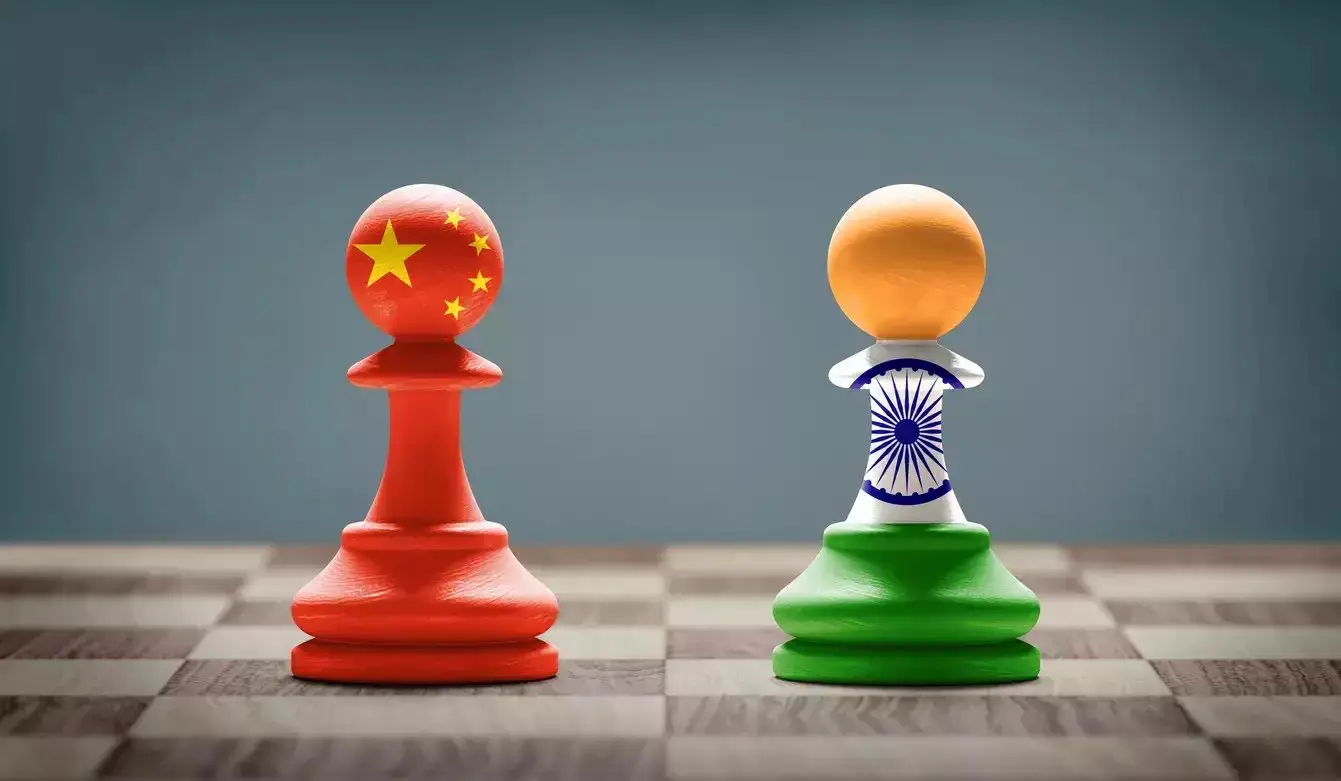
What is unfolding is a tightrope walk. India is balancing relations with China, Pakistan, and the United States simultaneously. Trade with China is being used as a tool—not as surrender, not as alliance, but as strategy.
China, in this framework, is a “sensible adversary.” It calculates costs and benefits. It negotiates when it sees advantage. That does not mean trust—it means pragmatism. Conflict today is not always fought with weapons. It is fought through supply chains, tariffs, technology, and influence.
India appears to have grasped this reality. Step by step, it is negotiating, leveraging, and protecting its interests. In a world where the rules are changing daily, India is no longer a passive player. This is not about emotions. It is about survival, growth, and power in an age where economics itself has become a battlefield.
