
Home Ministry Announces India’s First Digital Census in Two Phases Starting October 2026

GG News Bureau
New Delhi, 16th June: The Union Home Ministry on Monday formally announced the timeline for India’s much-awaited population census—the country’s first since 2011 and its first-ever digital census. The massive exercise will be conducted in two phases, beginning October 1, 2026, and concluding on March 1, 2027.
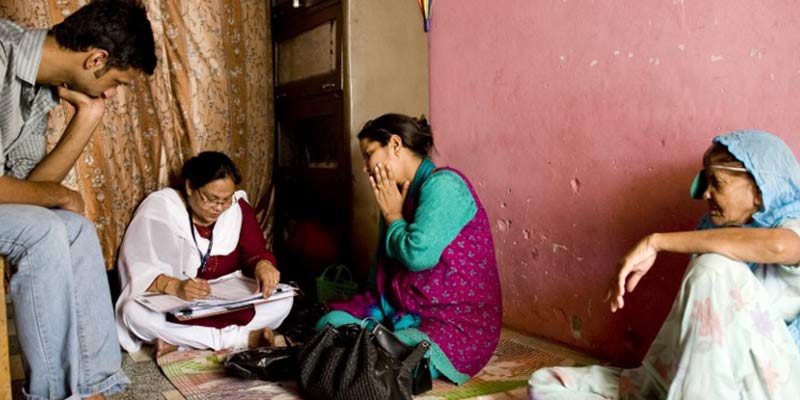
According to the ministry, the first phase, known as the Houselisting Operation (HLO), will gather data on housing conditions, ownership of assets, family income, and access to basic amenities like water, electricity, and sanitation. Significantly, for the first time in India’s census history, citizens will be able to respond digitally—either through a self-enumeration portal or with the assistance of enumerators using digital tablets.
The second phase, termed Population Enumeration (PE), will commence on March 1, 2027. This phase will focus on collecting detailed demographic, socio-economic, and cultural information about every individual residing in the country. Data will include age, sex, education level, occupation, religion, and language.
A major new feature of the 2027 Census will be caste enumeration, which is being included for the first time in nearly a century. The move is expected to generate crucial data for policy-making related to social justice, reservations, and welfare schemes.
Paving the Way for Key Legislative Moves
The government’s announcement also holds significant political implications. By providing a definitive timeline for the Census, the Centre has now cleared a key hurdle in implementing the Women’s Reservation Bill, which mandates 33% reservation for women in the Lok Sabha and state legislatures, but only after a census and delimitation process.
The upcoming census will also provide the data required for delimitation, the redrawing of parliamentary and assembly constituencies based on population changes—a politically sensitive and controversial exercise that could alter the balance of political representation across states.
First Census in Over 15 Years
India’s last census was held in 2011. The 2021 edition was postponed due to the COVID-19 pandemic and subsequent logistical delays. The upcoming census is expected to be the largest digital enumeration project ever undertaken in the country.
Officials said that preparatory work—including training enumerators, developing secure data systems, and rolling out awareness campaigns—will begin in early 2026. All data collected will be encrypted and stored securely to ensure privacy.
With the announcement of fixed dates and the introduction of a digital-first approach, Census 2027 is being seen as a milestone moment not just in governance and data collection, but also in the evolution of India’s electoral and social policy landscape.
