
Hindu Group Appeals Supreme Court to Unseal Area in Gyanvapi Case

GG News Bureau
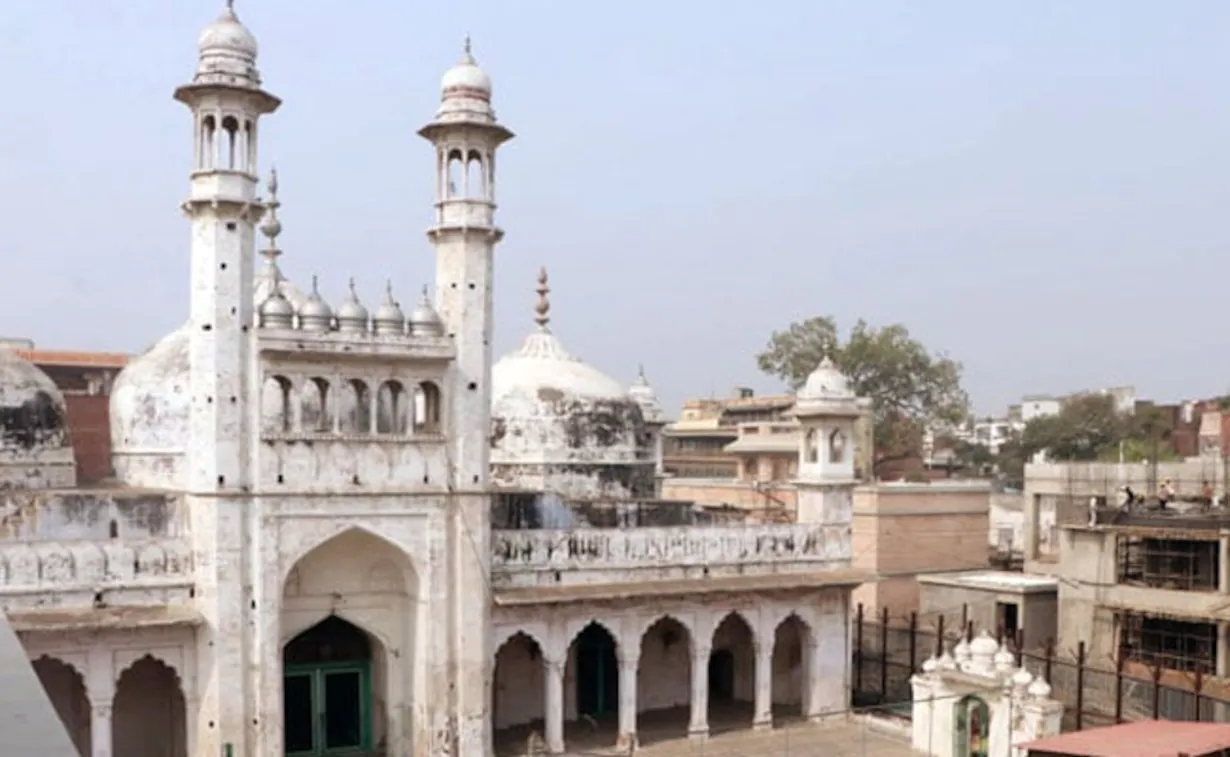
Lucknow, 30th Jan. The Hindu side on Monday filed a request with the Supreme Court to unseal the wazukhana area in the Gyanvapi complex, following the findings of a survey conducted by the Archaeological Survey of India (ASI) at the mosque.
The Wazukhana area was sealed in 2022 as per a Supreme Court order.
In their plea, filed by advocate Vishnu Shankar Jain, the Hindu side requested that the ASI be allowed to conduct another comprehensive survey in the wazukhana area without causing any harm to the Shivling.
Vishnu Shankar Jain stated that the ASI should be permitted to carry out a study.
“I have filed an application in the Supreme Court requesting the vacation of the stay order given on May 19, 2023. The ASI should be allowed to conduct a study and feature study of the Wazukhana area. Only after the study will it be known if it is a fountain or a Shivling,” he said.
The survey of the Gyanvapi mosque premises began after the Allahabad High Court rejected a petition filed by Muslim litigants seeking a stay on the Varanasi court’s order for a scientific survey by the ASI.
During the survey, which began on August 4, the ASI used ground-penetrating radar and other scientific instruments to determine what lay beneath the surface of the Gyanvapi mosque premises.
The team also surveyed the inner and outer walls, the cellar, and other parts of the premises, except for the wuzukhana (the place where Muslims perform ablution before prayers).
Vishnu Shankar Jain previously claimed, citing the ASI report, that there was evidence to prove that the Gyanvapi mosque had been constructed after demolishing a Hindu temple in the 17th century.
Jain stated that the ASI’s 800-page report mentioned the discovery of ancient scriptures in Kannada, Devanagari, and Telugu languages inside the mosque premises. These scriptures were about Rudra, Janardan, and Vishweshwar, and the pillars of the demolished temple were used to build the mosque.
The ASI report on the Gyanvapi mosque complex revealed that a pre-existing structure appeared to have been destroyed in the 17th century, and part of it was modified and reused. It also stated that based on scientific studies, it can be concluded that there was a large Hindu temple before the current structure was built.
The ASI also mentioned that the western wall of the existing structure is the remaining part of a pre-existing Hindu temple.
An Arabic-Persian inscription found inside a room indicates that the mosque was built in the 20th regnal year of Aurangzeb (1676-77 CE). Therefore, it appears that the pre-existing structure was destroyed in the 17th century, during Aurangzeb’s reign, and part of it was modified and reused in the current structure.
The ASI stated in its report that based on scientific studies, architectural remains, exposed features and artifacts, inscriptions, art, and sculptures, it can be concluded that there was a Hindu temple before the current structure was constructed.
